 look news india

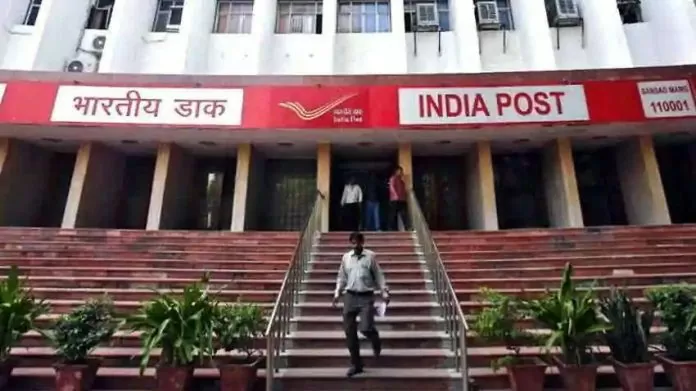
5-year FD is called tax free FD. Many people invest in this FD to save tax. But there is a scheme of Post Office which will not only save your tax but can also give you better interest than 5-year FD. We are talking about Post Office's National Saving Certificate, this is also a deposit scheme like FD in which money is deposited for 5 years. Currently, this scheme is giving interest at the rate of 7.7 percent. Know the special things related to this scheme here.
First know where and how much interest is available on tax free FD?
Post Office – 7.5%
State Bank – 6.5%
Punjab National Bank – 6.5%
Bank of India – 6.5%
HDFC – 7%
ICICI – 7%
You can also invest in NSC in the name of your child
Any Indian citizen can invest in the National Savings Certificate of the post office. If you want to open an account in the name of your child, you can do that too. A child above 10 years of age can also buy NSC in his name. Two or three people can also open a joint account together.
How much can you invest?
You can invest in NSC with a minimum of Rs 1000 and in multiples of 100 thereafter. There is no maximum limit on investment. This scheme matures in just 5 years. Interest is compounded on an annual basis and guarantees returns. Interest for 5 years is calculated as per the interest rate applicable at the time of your investment. Even if the interest rate changes in the meantime, it does not affect your account.
Tax exemptions available
The amount deposited in NSC is tax exempted under section 80C, that is, you can get tax exemption on deposits up to Rs 1.50 lakh every year. However, unlike other schemes, partial withdrawal before 5 years is not possible in this scheme. That is, you will get the entire amount in one go only after 5 years. Premature closure can also be done only under special circumstances such as-
On death of one or all the account holders in a single or joint account.
On seizure when the mortgagee is a gazetted officer.
On the order of the court.
rules of expansion.
If you want to continue NSC for the next 5 years even after maturity, then you will have to apply for it again. In such a situation, it will be considered as a deposit of a new date and the benefit of interest on it will also be given according to the interest of the new certificate taken on the same date.