 look news india

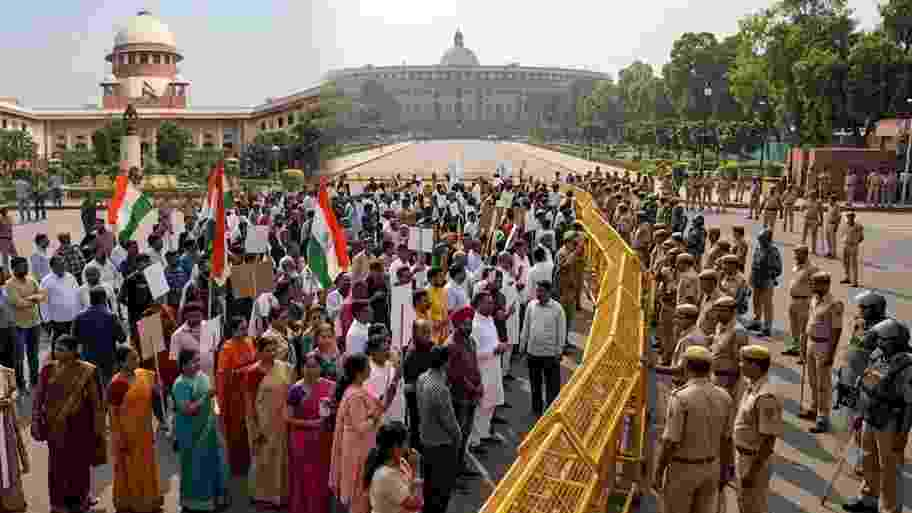
‘Parliament March’ is often called for by political parties, student organizations and social workers during sessions of Parliament or any major issue. However, immediately after such announcements, the police administration imposes Section 163 of BNSS (formerly Section 144 of IPC/CrPC) in the area and warns of strict legal action under Section 223. In such a situation, it is natural to raise the question whether the citizens of India can take to the streets and protest without prior permission? If seen from a reporter’s perspective, while the Indian Constitution gives citizens the right to raise their voice, many historical decisions of the Supreme Court have set limits and rules for this right.
What the Constitution says: Rights and their limits
of the Indian Constitution Article 19(1)(a) freedom of expression and Article 19(1)(b) The fundamental right to assemble peacefully without arms provides:
-
Not unlimited rights: This right is not absolute. Under Articles 19(2) and 19(3) of the Constitution, the state has the full right to impose ‘reasonable restrictions’ to maintain public order, sovereignty and security of the country.
-
No place for violence: If the demonstration becomes violent or causes damage to public property, it immediately falls outside the scope of the fundamental right.
Is it mandatory to take police permission?
Yes, you can get permission from the local police for organizing a procession, rally or dharna around any public place, road or government building in India. ‘No Objection Certificate’ (NOC/Permission) It is legally mandatory to take:
-
No-Protest Zone (Zero Tolerance Zone): Lutyens’ Delhi, the area around the Parliament House complex, Rashtrapati Bhavan and the Prime Minister’s residence are declared ‘high-security zones’ for security reasons. Here any gathering without permission is completely prohibited.
-
Designated Spot: According to the guidelines of the Supreme Court, peaceful demonstrations can be held only at designated places like Jantar Mantar or Ramlila Maidan in the capital Delhi after getting permission.
3 most historical decisions of the Supreme Court which decide the rules
-
Jantar Mantar Judgment (2018): While removing the ban on Jantar Mantar, the Supreme Court had said that protesting is a part of democracy, but it is necessary to strike a balance between the peaceful life of the citizens and the rights of the protesters.
-
Shaheen Bagh Verdict (2020): The Supreme Court had given a clear verdict that using public roads or paths to express dissent Indefinite occupation cannot be done indefinitely.. The right to movement of passengers and general public is equally important.
-
Latest comment (2026): In the recent hearing, the apex court has reiterated that ‘Peaceful protest is everyone’s right, but it should not go to the extent of harassing the general public or disturbing the law and order situation.’
What action can be taken if protest is held without permission?
If any group tries to hold ‘Parliament March’ or block a road without permission, the administration has the right to take the following action:
-
Unlawful Assembly: Under the Indian Justice Code (BNS), the police can declare a crowd gathering without permission as illegal and take them into custody.
-
Obstruction in government work and preventive detention: An FIR can be registered under Section 223 (violation of government order) and the organizers can be taken into preventive detention.