 look news india

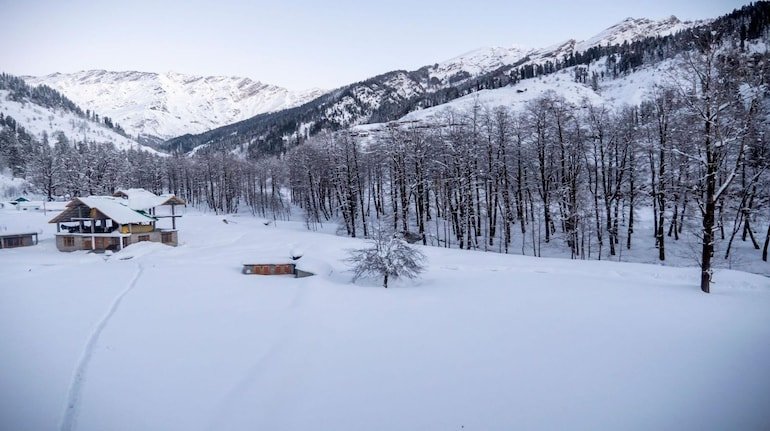
This time, the sound of winter has hit the atmosphere of the hilly state of Himachal Pradesh in North India, much before the scheduled time. The grand Dhauladhar mountain range, called Sirmaur of Kangra Valley, and the skyscraper peaks of the tourist city Manali have covered the sparkling white sheet of nature with the first fresh snowfall of the season. Intermittent snowfall in the world famous Rohtang Pass, Shinkula Top, Baralacha La, Kunzum Pass and the upper residential areas of Lahaul-Spiti Valley, located at an altitude of 13,058 feet above sea level, has engulfed the entire state in the grip of severe cold. This sudden snowfall on the mountains in the second fortnight of October has not only changed the routine of local life but has also mesmerized the tourists coming from the plains. With the accumulation of white layer of snow on the peaks, the icy and cold winds rising from the valleys have started descending rapidly in the lower areas. Dense fog has started covering the hill slopes of Kullu, Dharamshala, Palampur and Shimla in the morning and evening and the local people have taken out heavy woolen clothes, sweaters, jackets and quilts and blankets from the shelves, barely in the month of October.
Fresh snowfall and continuous post-monsoon farewell rain in the low-lying areas have brought the temperature graph of Himachal down drastically. According to the official data of India Meteorological Department (IMD) Shimla, the average maximum temperature of the state has recorded a huge drop of 6.7 degrees to 10 degrees Celsius within a single day. The minimum temperature in Kukumseri in the tribal district of Lahaul-Spiti dropped to a very cold level of 0.5 to 1.8 degrees Celsius, while the minimum temperature in Tabo was recorded at 2.3 to 3.4 degrees and in Kalpa it was 5.6 to 6.0 degrees Celsius. The maximum temperature in Manali has fallen 7.2 degrees below normal to between 11.2 and 14.6 degrees Celsius, due to which a prickling feeling is felt in the air even in the afternoon. The maximum temperature in the capital Shimla has fallen to 16.4 degrees Celsius and in Kufri to 13.1 degrees Celsius. Due to dense dark clouds and cold winds that suddenly appear during the day, tourists and local shopkeepers visiting the Mall Road of Shimla and Manali have to resort to bonfires and heaters during the day.
While this untimely snowfall on the mountains has brought beauty, it has also created serious challenges for movement on strategic and tourist important hill routes. Due to heavy snowfall and freezing of water on the road surface, a layer of dangerous ‘black ice’ (invisible slippery ice) has been spread on the 16,580 feet high Darcha-Shinkula road connecting Lahaul-Spiti and Zanskar valley. In view of the increasing risk of vehicles slipping on the road and falling into the ditch, the district administration and police have completely stopped the movement of all types of two-wheelers and light vehicles on the Darcha-Shinkula road as a precautionary measure. Snow-cutter machines of Border Roads Organization (BRO) and beacon personnel are busy removing snow from the tracks. Police patrolling has also been increased around the Manali-Leh National Highway and the South and North portals of Atal Tunnel Rohtang. The District Disaster Management Authority has put the emergency response system on alert mode and issued a toll free number 1077 and has appealed to the tourists not to go towards unknown icy roads, sensitive slopes and fast flowing banks of Beas and Chandra rivers under any circumstances.
According to meteorologists, behind this unexpected seasonal change is a powerful Western Disturbance active in the troposphere of North India and the pressure area of cyclonic winds induced by it. Meteorological Center Shimla has issued a yellow alert for many districts of the state in view of the possibility of thunderstorm, lightning and heavy rain. It has been clarified in the bulletin of the Meteorological Department that in the central and lower hilly areas of Kangra, Dharamshala, Palampur, Chamba, Kullu, Mandi, Shimla and Sirmaur, strong gusty winds can blow at a speed of 40 to 50 kilometers per hour and there is every possibility of torrential rains along with thunder and lightning. At the same time, moderate to heavy snowfall is expected to continue on all the Himalayan peaks having a height of more than 3500 meters. Meteorologists say that this effect of western disturbance will continue for the next 48 hours, after which the sky is expected to gradually clear in the western Himalayan region, but there will be no relief in the temperature due to the moisture present in the air and frozen snow.
As soon as the news of snowfall spread through social media and news channels in the month of October itself, a flood of tourists from the plain states – Punjab, Haryana, Chandigarh, Delhi-NCR and Uttar Pradesh flocked to the mountains. A sudden huge jump of 35 to 40 percent has been recorded in the occupancy of hotel bookings and homestays in Manali, Solang Valley, Gulaba, Sisu, Koksar and Mcleodganj of Dharamshala. This snowfall, which occurred just before the festive season and Diwali holidays, is being considered a boon for the tourism industry of Himachal. However, with tourism businessmen looking bright, the local police administration has issued a strict security advisory for private vehicle drivers coming from outside states. Drivers have been advised not to drive at high speed and avoid applying sudden brakes on snowy turns as there is a risk of the vehicle skidding and falling into a ditch. Tourists have been strictly instructed to keep adequate amount of woolen innerwear, wind-proof jackets, waterproof shoes, snow goggles and essential medicines related to cold and respiratory diseases with them.
The first snow of the season that fell on the Dhauladhar and Pir Panjal ranges of Himachal Pradesh is not going to be limited to the hilly state only, but its direct and widespread impact has started being visible on the entire plains of North India. Dry and cold north-westerly winds hitting the snowy peaks of the mountains have created shivers in Punjab’s Amritsar, Jalandhar, Haryana’s Karnal, Ambala and the national capital Delhi-NCR as well as in the western and central districts of Uttar Pradesh. In major cities like Lucknow, the capital of Uttar Pradesh, Kanpur, Agra, Aligarh and Bareilly, the night minimum temperature has dropped rapidly to the range of 19 to 21 degrees Celsius. In the morning, a blanket of light mist has started appearing in the sky and people walking in the parks have started feeling a slight shiver and a clear feeling of ‘pink cold’. The air conditioners (ACs) that run throughout the day in homes have now started switching off and the speed of the fans has also slowed down. This quick transition period of the weather has made it clear that this year the harsh winters in North India will be in full swing much before the scheduled time, the impact of which is going to deepen in the coming days.