 look news india

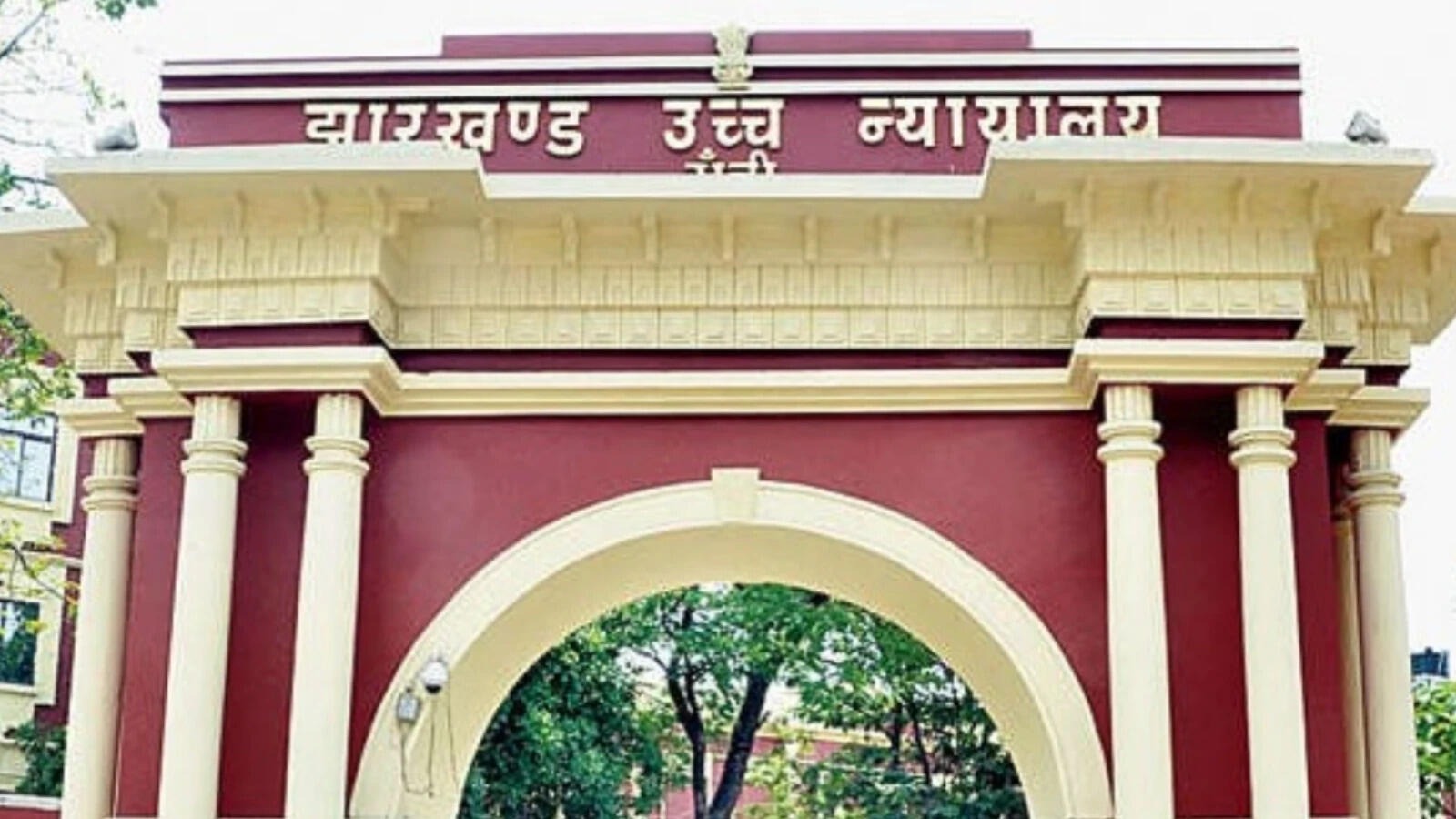
Many times in the history of Indian judiciary, such strange and complex cases come to light, on which it takes decades for the court to give its decision. One such much-discussed and surprising legal decision has come out from the Jharkhand High Court, which has sparked a new debate in the legal circles across the country. While delivering the verdict in a criminal case registered exactly 26 years ago i.e. almost two and a half decades ago, the Jharkhand High Court has completely overturned the old order of the lower court, in which a person was held guilty of Attempt to Rape for the incident of breaking into a house and picking up clothes. The High Court, after its careful legal review, has made it clear that merely entering someone’s house at night and taking away clothes or doing such an act there may legally fall in the category of theft or any other crime, but it cannot be directly termed as attempt to rape or attempt to rape under the Indian Penal Code. After the arrival of this important decision, a wide discussion has started among different sections of the society and legal experts as to what social and legal consequences have emerged from this long-running legal battle.
That 26 year old dreadful case and the initial tough decision of the lower court
This entire legal episode dates back to about 26 years ago, when a domestic intrusion and humiliating incident involving a woman came to light in a local area of Jharkhand. The local police of that time had immediately registered a case on the basis of the complaint of the victim and took legal action against the accused person under serious sections. When the case reached the trial court, the court there convicted the accused on the basis of the prosecution witnesses and circumstances and sentenced him to jail. The trial court was of the view that breaking into a woman’s house at night and tampering with her personal belongings or clothing is a serious crime which directly indicates an intention to attempt rape. But the specialty of the Indian justice system is that every citizen has the right to appeal to the higher courts against the decisions of the lower courts, and under this right, this case reached the Jharkhand High Court through appeal, where the debate on its legal validity was going on for the last two and a half decades.
In-depth review and legal interpretation of the case by a division bench of the Jharkhand High Court
When this old case came up for hearing before the Jharkhand High Court, the judges analyzed every single aspect of the incident, the police diary, statements of witnesses and the circumstances at that time very minutely. The court looked at whether the prosecution had been able to prove by strong evidence that the accused actually intended to commit rape, or whether the case was related to some other criminal intention such as theft or home invasion. Citing established principles of law, the High Court underlined that to prove the allegation of any serious crime, solid and irrefutable evidence is required and no one can be convicted on the basis of mere conjecture or suspicious circumstances. The Court clearly underlined in its judgment that every wrongful act or illegal act under the criminal law cannot be directly lumped into the ambit of the most serious category of crime, and the law has its own limits and definition which it is the duty of the judiciary to follow.
‘Lifting clothes can be theft or trespassing, but not an attempt to rape’ – court bluntly
The most important point raised by the Jharkhand High Court in its decision was that entering the house at night and picking up someone’s clothes or doing such an act there is an inappropriate act, but on the basis of this, it is not legally correct to impose a serious section like attempt to rape on the accused. The court said that there was no direct evidence or eyewitnesses to prove that the accused had used physical force or made any attempt to rape the victim. Such acts should generally be viewed as cases of house trespass, attempted theft or breach of privacy, and not as serious attempts at direct sexual violence. This reasoning of the High Court has once again emphasized that the justice process should be based only on concrete evidence and sections of the law instead of emotions or anger spread in the society, so that injustice is not done to anyone.
Social and legal impact of this long legal battle that lasted for two and a half decades
This decision is another great example of how the Indian justice system sometimes takes a long time to resolve cases, causing both parties to the case to face mental and social struggle for decades. When the High Court overturned the decision of the lower court after this long period of 26 years, it also raises the question whether speedy justice is not the biggest need of the hour. However, from a legal point of view, this judgment has become an important precedent for other future cases, which will guide the subordinate courts in how deeply they should examine the quality of evidence before framing serious charges in such cases. There is also a consensus among the society and legal experts that maintaining the balance between ensuring that the laws related to women’s safety are not misused and at the same time providing justice to the real victims at the right time has always been a big challenge for the judiciary, and this decision adds a new legal chapter in the same direction.