 look news india

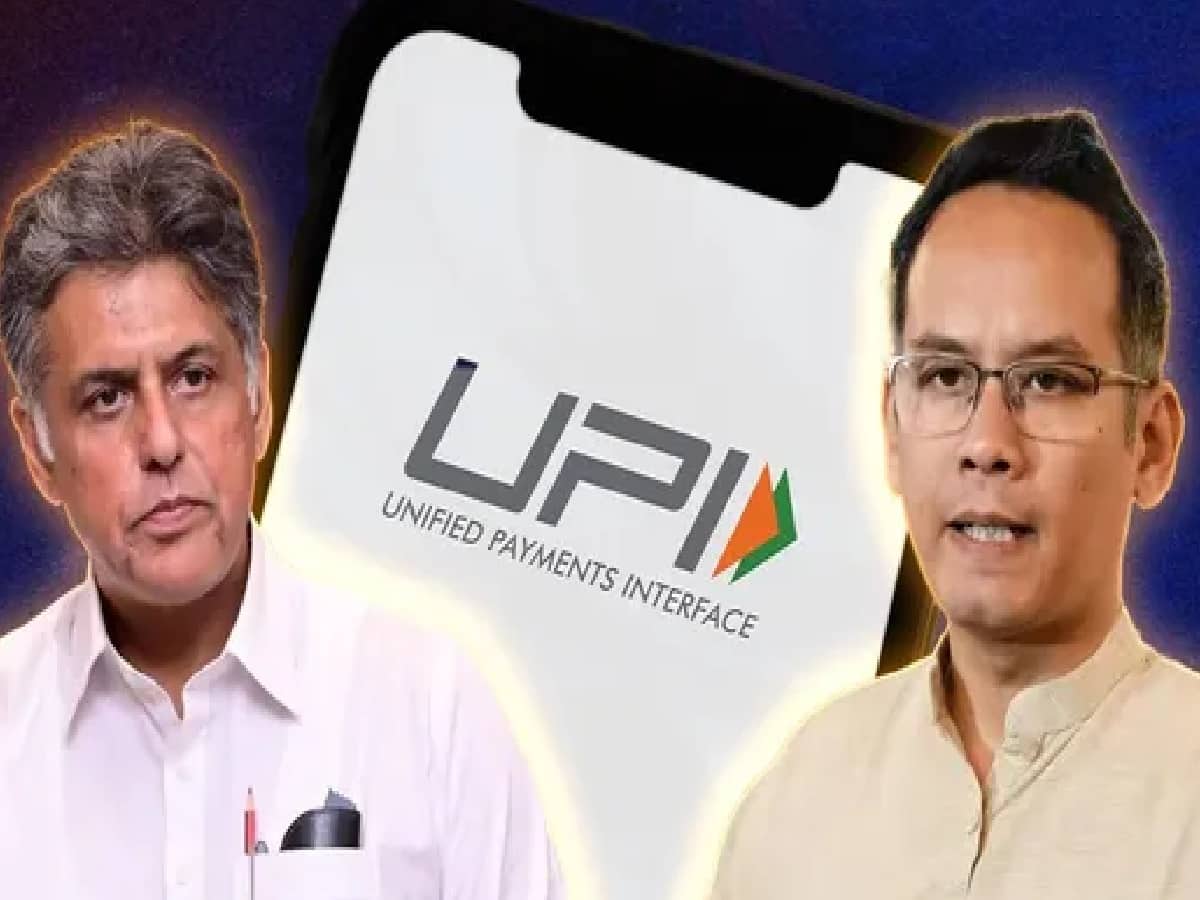
There has been a fierce battle in national politics over the discussions and recent administrative steps to impose transaction fees on the Unified Payments Interface (UPI), which has become the lifeline of the country’s digital payment system. The main opposition party Congress, which is strongly opposing the proposals to impose additional charge or tax on digital transactions of more than Rs 2,000, has completely rejected the official narrative of the Central Government, in which it was being claimed that Congress MPs in the Standing Committee on Finance of Parliament had not raised any objection to it. The Congress party has launched a scathing attack on the Centre, alleging that fearing the widespread public anger of crores of common consumers, small shopkeepers and street vendors of the country, the government machinery is resorting to misleading propaganda and false arguments to divert the attention of the public.
The entire political impasse started when it was claimed in the media, quoting government and ruling Bharatiya Janata Party sources, that the Parliamentary Standing Committee on Finance on August 12 had unanimously approved a report recommending notifying and implementing the Merchant Discount Rate (MDR) revenue framework without any delay. Government sources said that when this draft report was approved, the committee included former Finance Minister P. Chidambaram, Anandpur Sahib MP Manish Tewari, MP from Assam and Deputy Leader in Lok Sabha Gaurav Gogoi, Kishori Lal and K. Five prominent Congress MPs, including Gopinath, had not filed any formal dissent note. The government’s argument was that after agreeing on the parliamentary platform, now opposing it on public platforms is a double political standard of the opposition parties.
Taking a direct hit at these claims by government sources, Congress’s deputy leader in the Lok Sabha, Gaurav Gogoi, issued a long clarification on the social media platform X. Gogoi bluntly said that there was no formal or detailed discussion on the recently announced UPI tax or transaction charges before the Parliamentary Standing Committee on Finance. He highlighted that when senior officials of the Union Finance Ministry had come for the consultation meeting with the members of the Standing Committee, they did not have any written, well-organized or concrete proposal to tax UPI transactions or fix MDR charges. Gogoi said that the committee members had raised serious questions on the unreasonableness and actual necessity of imposing MDR on digital payments, but at that time the representatives of the Finance Ministry did not have any satisfactory or factual answer.
MP Gaurav Gogoi has sharply criticized the digital economy policies of the central government, saying that putting any kind of additional financial burden on the UPI system is a direct attack on the backbone of India’s domestic economic structure. He alleged that these UPI tax policies will cause huge losses to crores of small traders, independent vendors, local kirana stores and new entrepreneurs in India, while its direct strategic and financial benefits will go to large multinational corporations and giant American financial tech companies. Gogoi made a direct appeal to the Prime Minister demanding that the government withdraw this anti-people UPI tax policy with immediate effect while protecting the interests of common citizens and small businesses and stop succumbing to global pressure.
Senior Congress MP and eminent jurist Manish Tewari strongly supported Gaurav Gogoi’s statements and expressed deep concern over the violation of parliamentary traditions. Tiwari said that the internal workings, meetings and deliberations of parliamentary standing committees are highly confidential and privileged, which the government is using through misleading leaks to burnish its image and garner political applause, which is highly condemnable. Manish Tiwari clarified in detail that the basic technical parameters of the MDR framework like rates, transaction volume, fixed amount of fee, capping and relief discount slabs applicable on UPI transactions were never placed on the table of the Finance Committee for formal consideration. In the meetings, the MPs only expressed deep concern that if public participation in the cashless economy is to be increased, then such additional charges will deal a serious blow to the digital revolution. Tiwari said that spreading the news that ‘some members’ of the committee had given consent is a completely fabricated and false story.
Congress party’s general secretary in-charge of communications Jairam Ramesh also jumped into the controversy and took on the official machinery of the government. He said that the Central Government’s unfair attempt to open the way for additional charges on UPI to benefit foreign companies is being met with spontaneous and strong protest across the country. From common citizens to business organizations are raising their voice against this tax. Jairam Ramesh alleged that to avoid this huge public anger and widespread protest and to hide its disgrace, the Modi government is carrying out fabricated publicity under the guise of parliamentary proceedings. He reiterated that the Congress Party will continue to fight from Parliament to the streets against any covert or overt UPI charges that are cutting into public pockets in the name of Digital India.