 look news india

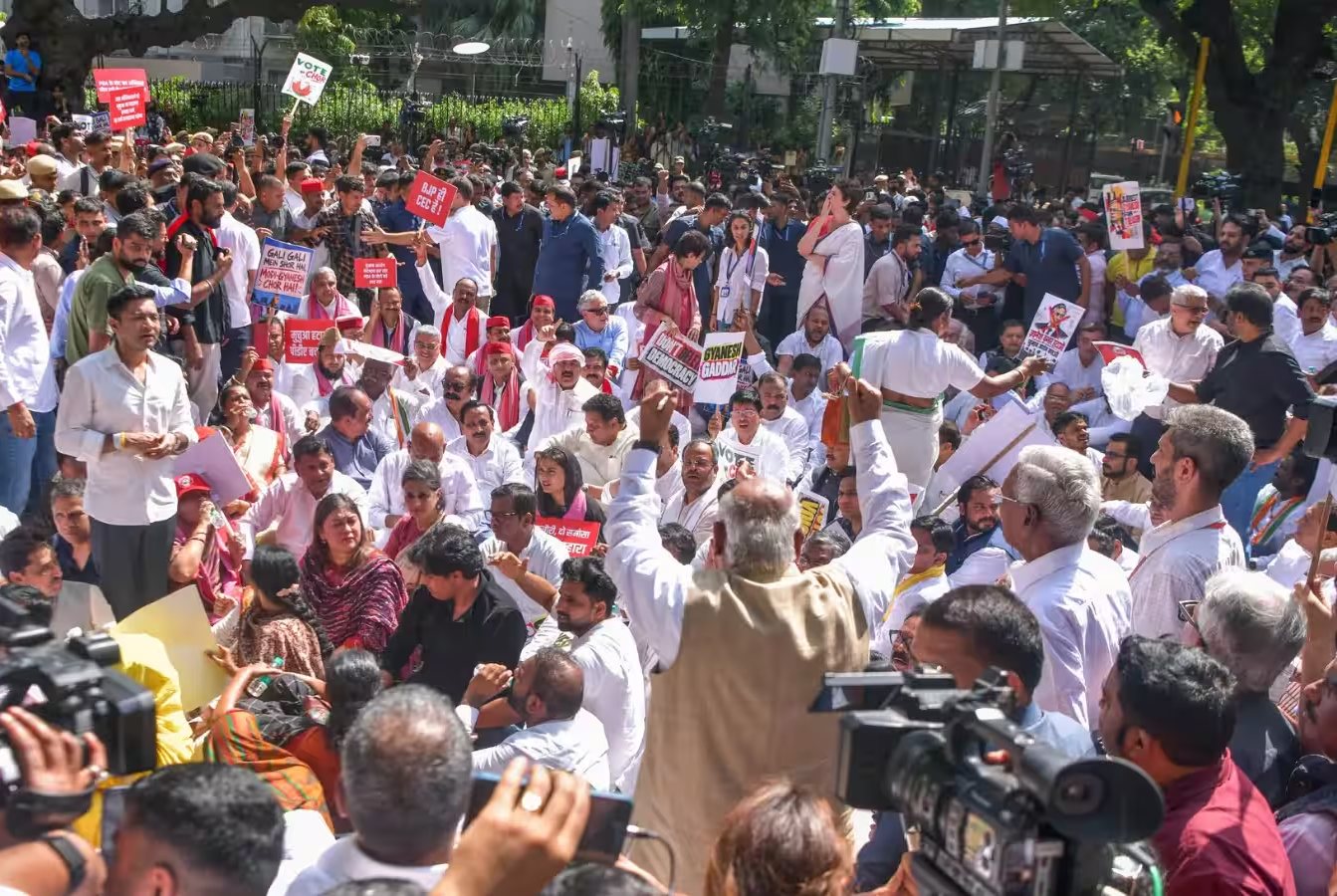
The politics of the national capital Delhi has once again heated up and the show of strength by the opposition parties has intensified from the Parliament complex to the streets. Today was the second day of protest marches and demonstrations organized against the central government on various issues. In this march taken out under the leadership of Rahul Gandhi, leaders of many other major opposition parties along with Congress were seen walking shoulder to shoulder, but this time the absence of Samajwadi Party (SP) leaders and MPs has brought a new earthquake in the political corridors. Keeping distance of the Samajwadi Party, which has a strong hold in the politics of Uttar Pradesh, from this big protest has become the biggest topic of discussion among political analysts, due to which various kinds of speculations are being made once again regarding mutual solidarity and coordination within the opposition alliance ‘India’.
An aggressive stance is being adopted outside the Parliament on various national and public interest issues being raised by the opposition parties. On the second day of the protest, opposition MPs led by Congress MP Rahul Gandhi took out a march from Vijay Chowk to Parliament House, raising slogans against the government over inflation, unemployment and other central policies. Many senior leaders of the opposition camp participated in this demonstration and seriously accused the government of adopting a dictatorial attitude. However, new political equations and distances are being seen every day on this common front. Whenever a big opposition protest is organised, all eyes across the country are on which party is joining it with full force and which party is maintaining its strategic distance.
The absence of any big leader or MP of the Samajwadi Party during this important protest is an indication that the regional parties have their own political priorities and strategies now working apart from the national alliance. Being the main opposition party in Uttar Pradesh, SP is giving more priority to its state-centric issues and election preparations, and at times its absence from national level events gives rise to internal differences or strategic disagreements. Political experts believe that the tussle seen from time to time within the opposition alliance regarding seat distribution, ideological coordination or local equations could be a part of the same chain. Although this step of SP may have given BJP an opportunity to target the opposition, but at the regional level, parties are taking decisions on such steps only after weighing their political gains and losses.
This situation is no less than a challenge for the ‘India’ alliance formed with the claim of creating a strong and united alternative against the Bharatiya Janata Party and NDA at the national level. Whenever opposition parties have to surround the government in one voice during or outside the Parliament session, then if major parties like Samajwadi Party keep distance from such marches, then the possibility of sending a wrong message to the public increases. It has become necessary for Congress and other constituent parties to improve mutual coordination and take all regional allies along on every major issue. In the coming days, it will be very interesting to see whether the Samajwadi Party gives any explanation on this absence or whether the cracks in this picture of opposition unity become wider in the coming elections.