 look news india

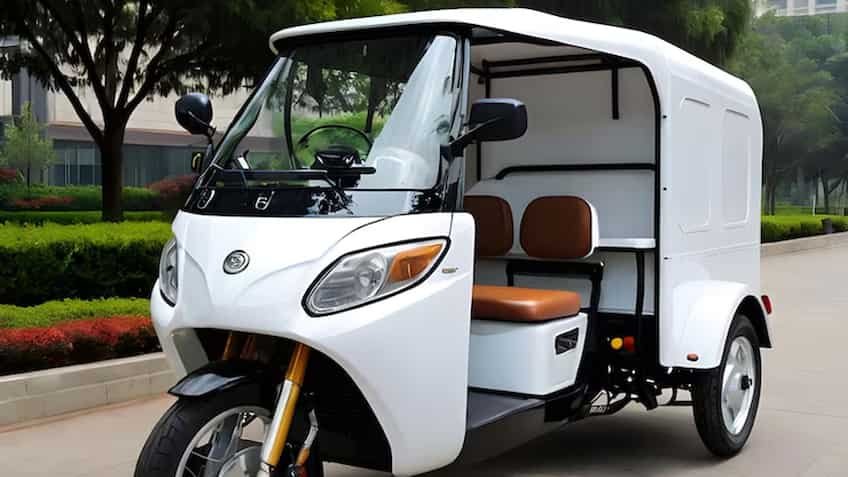
New registration will be done only for EV 3-wheelers in NCR! Big change from January 1, 2027, there will be a brake on PM 2.5
The Commission for Air Quality Management (CAQM) has taken a historic and tough decision to deal with the suffocating pollution, toxic smog and hazardous levels of winter air in Delhi-NCR. There is now going to be a complete stop on the sale of new autos and three-wheelers running on conventional fuel in the National Capital Region. According to the new order of the Commission, from January 1, 2027, new registration of only electric three-wheelers (EV 3-Wheelers) will be done in Delhi. Registration of any new L5 category three-wheeler (both passenger and cargo) running on CNG, petrol or diesel will be completely stopped from 2027. After this, this system will also be made mandatory in the entire NCR – Gurugram, Faridabad, Noida, Ghaziabad and Sonipat in a phased manner. It is being considered as the biggest green transport reform in the country in the direction of reducing the level of fine particles i.e. PM 2.5 and Nitrogen Oxide (NOx), the main factors of air pollution.
As per the official instructions issued by the Commission for Air Quality Management (CAQM), the timeline for implementing this mega campaign has been decided in three planned phases:
-
First phase (January 1, 2027): From January 1, 2027, in the National Capital Territory of Delhi (NCT of Delhi), it will be mandatory for all new three-wheelers (both passenger autos and delivery loaders) of L-5 category to be 100 percent electric only.
-
Second phase (January 1, 2028): This rule will be applicable in high vehicle density NCR districts adjacent to Delhi—Gurugram, Faridabad, Sonipat in Haryana and Gautam Buddha Nagar (Noida-Greater Noida) and Ghaziabad in Uttar Pradesh, where new registration of non-EV three-wheelers will be closed.
-
Third phase (January 1, 2029): In all the remaining districts under NCR (Meerut, Hapur, Bulandshahr, Baghpat, Panipat, Rohtak, Alwar etc.), registration of only electric three-wheelers will be accepted.
During winter, particulate matter (PM 2.5 and PM 10) levels in industrial and residential areas in and around Delhi reach eight to ten times higher than safe standards. Research by SAFAR and environmental experts show that vehicle smoke contributes 30 to 40 percent to local air pollution. Thousands of old and commercial three-wheelers run on the roads day and night, due to which the carbon monoxide and nitrogen oxide emitted prove fatal for lung and respiratory patients. When the entire fleet is converted to battery-powered vehicles with zero tailpipe emissions, the accumulation of toxic gases at ground level on the roads will stop and millions of daily commuters will get clean air.
This order will see a huge economic improvement in the operating model of three-wheeler drivers and delivery companies. At present, due to rising prices of CNG, auto drivers in Delhi-NCR have to bear gas expenses ranging from ₹ 350 to ₹ 500 per day. Whereas the cost of charging an electric three-wheeler is ₹ 100 to ₹ 150 per day. This will increase the daily savings of drivers by about 40 to 50 percent. Under the PM E-DRIVE scheme of the Central Government and the revised EV policy of the Delhi Government, direct subsidy on purchase of new electric autos, easy bank loans at low interest rates and scrappage incentives are also being made available so that there is no lump sum financial pressure on the drivers.
CAQM has directed the transport departments and discom companies of Delhi, Uttar Pradesh and Haryana to comprehensively expand public charging and battery swapping infrastructure before the 2027 deadline. The Delhi government is already working on plans to install high-speed EV charging stations at more than 380 major public places, metro stations, bus terminals and DTC depots. Along with this, smart swapping stations will be made at major auto stands of Noida, Ghaziabad and Gurugram, where the drivers will be able to leave the vehicle immediately by replacing the fully charged battery with a discharged battery in just two minutes, which will not have any negative impact on their daily earnings and trips.