 look news india

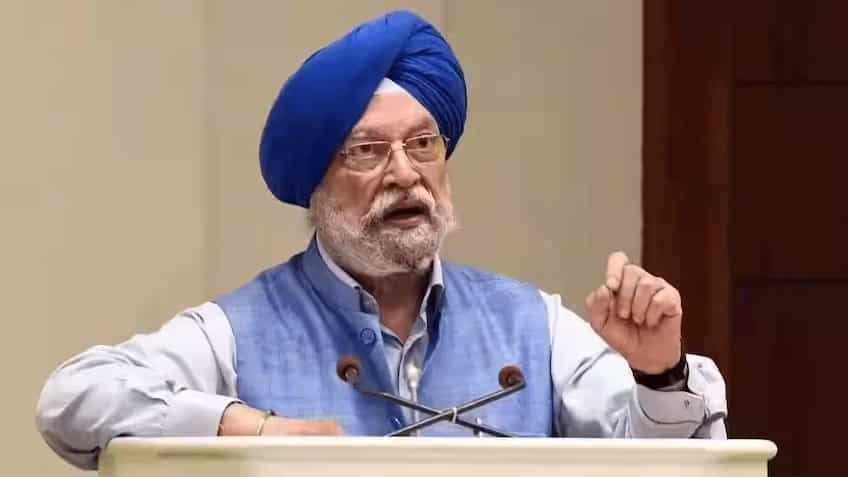
Amid global geopolitical turmoil, rising tensions in West Asia and uncertainty in international crude oil markets, India has launched one of the biggest campaigns ever to make its energy security impenetrable. Union Petroleum and Natural Gas Minister Hardeep Singh Puri has unveiled a multi-tier mega action plan to secure the country’s energy needs and decisively reduce dependence on foreign oil imports. The two most important pillars of this strategic preparation of the government are – aggressive drilling of 150 new wells to boost domestic oil and gas production and expansion of more than 30,000 km long gas and LPG pipeline network to deliver clean fuel to the remotest corners of the country.
India, which is on track to become the world’s third largest economy, is projected to grow its energy demand faster than any other country in the world over the next two decades. In such a situation, to protect the Indian economy and the common consumers from the shocks in the global supply chains, the Central Government has launched a plan to revamp the entire system from ‘Exploration to Distribution’. The Union Minister has clarified that India will not remain a mere silent spectator of its energy needs, but will create a solid foundation of self-reliance by taking an unprecedented leap in domestic production.
The main focus of this ambitious plan of the Petroleum Ministry is intensive exploration of oil and natural gas in conventional and non-conventional hydrocarbon basins of the country. According to Union Minister Hardeep Singh Puri, the work of drilling 150 new exploratory and development wells across the country is being carried out at a fast pace in a phased manner with the cooperation of major public sector oil companies—Oil and Natural Gas Corporation (ONGC) and Oil India Limited (OIL). In this campaign, drilling is being done on a wide scale from deep sea areas (Deepwater and Ultra-Deepwater Drilling) to coastal and terrestrial basins.
In recent months, historic natural gas successes in the Sri Vijayapuram block of the Andaman Sea and in the deep waters of the Mahanadi Basin in the Bay of Bengal have emboldened Indian scientists and energy strategists. Additionally, state-of-the-art 3D seismographic mapping and state-of-the-art rigs are being deployed in Krishna-Godavari (KG) Basin, Assam-Arakan Fold Belt, Barmer Basin of Rajasthan and Cambay Basin. Through modern artificial intelligence and sub-sea technology, layers that were previously considered technically inaccessible are being reached. This drilling of 150 wells will not only increase India’s domestic crude oil production, but will also register a historic jump in natural gas production, thereby enabling huge saving of foreign exchange reserves.
As important as it is to extract oil and gas domestically, its quick, safe and economical transportation is equally important. In this series, the Government of India has come very close to completing the construction of more than 30,000 km long integrated national gas and LPG grid across the country. Earlier the development of energy infrastructure was concentrated only in a few western and southern states, but currently under the ‘One Nation, One Gas Grid’ mission, eastern and north-eastern India has also been mainstreamed.
Pradhan Mantri Urja Mega projects like Ganga Pipeline and Northeast Gas Grid are becoming the lifeline of clean energy from Uttar Pradesh, Bihar, Jharkhand, West Bengal, Odisha to Assam and Tripura. The biggest feature of this 30,000 km pipeline network is that it will reduce the dependence on road transportation of cylinders and the logistics cost by almost half. Movement of LPG and fuels through trucks will drastically reduce carbon emissions and risk of accidents. The supply of PNG (Piped Natural Gas) through pipelines to LPG bottling plants and directly to homes will become so seamless that the supply will never stop despite obstacles like weather or strikes.
This aggressive energy expansion of the government is going to directly benefit the 140 crore citizens of the country and the domestic industry. After the successful bids of 11th and 12th round of City Gas Distribution (CGD) network, more than 98 percent of the country’s geographical area and almost the entire population is now being brought under the ambit of CNG and PNG networks.
When LPG and natural gas will be transported through 30 thousand kilometer long pipelines, there will be a huge reduction in the operating expenses of bottling and distribution companies. Its direct benefits will be available to common consumers in the form of cheap gas cylinders, kitchen PNG that runs 24 hours without interruption and CNG which is very economical compared to petrol and diesel. Additionally, lakhs of new jobs will be created at the local level—be it civil work in laying pipelines, operating compressor stations or providing last mile servicing of the city gas distribution network. Women living in rural and semi-urban India will not face any delay in the availability of smoke-free kitchens and gas under Ujjwala 2.0.
If we look at the global energy scenario, the timing of this mega-project is extremely important and strategic. Due to rising tensions between Iran, Israel and the Gulf countries in West Asia (Middle East), the dark clouds of war are constantly looming over the most sensitive sea corridors of global oil trade—the Strait of Hormuz and Bab el-Mandeb. India imports more than 85 percent of its total crude oil needs, a large part of which comes through the sea route.
Pointing to this geopolitical crisis, Hardeep Singh Puri has underlined that when war breaks out anywhere in the world, supply chains break and crude oil prices start skyrocketing. India has so far kept domestic fuel prices in check by purchasing crude oil from Russia at concessional rates and maintaining 60 days of strategic petroleum reserves (SPR). But the long-term solution lies only in increasing the domestic capacity manifold. Oil extraction from 150 new wells and internal pipeline connectivity of 30 thousand km will create a security blanket within the country which will keep India completely safe from any oil crisis or sanctions pressure from the outside world. This step of India will prove to be a decisive milestone towards becoming a global superpower in the energy sector.