 look news india

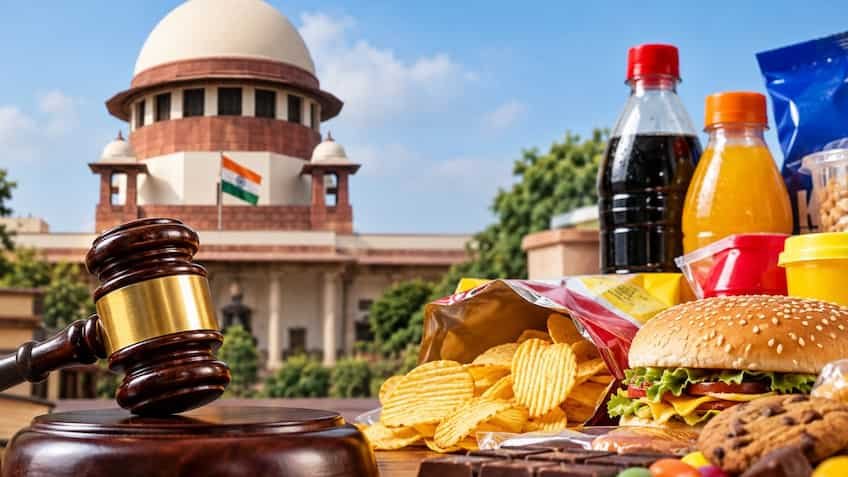
The country’s biggest court has prepared to clarify its stand on the demand to make ‘Front-of-Pack Warning Label’ (FOPL) mandatory right on the front of the packet to directly warn the citizens of the country about the serious health hazards of excess salt, sugar and saturated fat hidden in the packaged food items sold in the market. The main bench of the Supreme Court has reserved its final decision after hearing detailed arguments from all the parties on this sensitive and public interest issue related to the health of 140 crore citizens. In this public interest litigation (PIL) filed in the apex court, it has been demanded that the common consumers are not able to understand the complex nutritional details written in very small print on the back of the packet, hence clear, large and colorful warning labels should be made mandatory on the very front of the packet.
During this important hearing, the petitioners, the Central Government and the Food Safety and Standards Authority of India (FSSAI) presented their respective views strongly. The court took serious cognizance of the fact that as the market for ultra-processed foods and packaged snacks has grown rapidly in the country, there has been an alarming rise in the cases of non-communicable diseases (NCDs) such as obesity, type-2 diabetes, high blood pressure and serious cardiovascular diseases among children, youth and adults. After the Supreme Court has reserved the decision, now the entire FMCG industry, food manufacturing companies and consumer rights organizations are holding their breath because this decision of the court has the power to change the entire scenario of Indian food packaging forever.
Currently, most of the chips, biscuits, noodles, carbonated drinks, packaged juices and frozen snacks sold in India have the nutritional value (nutrition table) printed in very fine print on the back side. The biggest weakness of this system is that an ordinary consumer, a rural citizen or a less educated person cannot easily understand how much the sodium, total sugar and saturated fat present in that product exceeds his Daily Recommended Allowance. The petitioners’ lawyers underlined in the court that food manufacturing companies take commercial advantage of this complexity and sell even products rich in harmful substances by labeling them as ‘healthy’ or ‘energy-rich’ through attractive advertisements.
Citing global health standards and World Health Organization (WHO) studies, the petition demands that ‘black hexagonal warning labels’ should be mandatory in India on the lines of Latin American countries like Chile, Mexico and Peru. These symbols clearly state “High in Sugar”, “High in Salt” or “High in Saturated Fat” right on the front of the packet. When a consumer picks up a package from the supermarket shelf, it should be clear at first glance what they are about to put into their bodies and those of their children.
During the hearing in the Supreme Court, the lawyers appearing for the Food Safety and Standards Authority of India (FSSAI) and the Central Government presented their progress report. FSSI informed the court that it is working on the process of implementing front-of-pack labeling rules for packaged foods and has held several rounds of discussions with various stakeholders, industry representatives and health experts. The regulator had proposed an ‘Indian Nutrition Rating’ (INR) system, which would provide a framework for giving star ratings (1 to 5 stars) to products, similar to how stars are given for energy efficiency on electronic devices.
However, health experts, pediatricians and petitioners have strongly opposed this star-rating system of FSSI. They argue that star ratings can be misleading because companies will be able to give even unhealthy junk food a 3 or 4 star rating by adding some additional nutrients (such as artificial vitamins or fiber), thereby confusing consumers. It has been strongly advocated in the PIL that in a huge and multilingual country like India, clear and direct negative warning signs instead of star rating is the most effective solution, so that even an illiterate person can immediately sense the danger by seeing the colors and signs, even without understanding the language.
Medical science and public health organizations have called strict labeling of packaged foods the greatest national emergency of our time. India has come to be known as the ‘Diabetes Capital’ of the world and according to recent studies, more than 10 crore people in the country are suffering from diabetes, while crores of people are in pre-diabetic condition. Even more worrying is the situation of Indian children, where the problems of childhood obesity, fatty liver and high blood pressure are spreading rapidly due to excessive consumption of packaged junk food and sweet drinks.
Unless front-of-pack labeling is mandatory on packaged foods, consumers will continue to unknowingly consume slow poisons. Most of the tempting foods sold in school-college canteens, grocery stores and online quick-commerce platforms are loaded with highly refined carbs and preservatives. In the arguments presented in the Supreme Court, it was made clear that the ‘Right to Life’ given to the citizens under Article 21 of the Constitution is not limited only to survival, but it also fully includes the ‘Right to Know’ about a healthy life and one’s food. Citizens have every right to know what effect the product they are purchasing will have on their body parts.
On the other hand, packaged food manufacturing companies and the industry lobby have argued in court that imposing overly stringent warning labels could cause huge financial losses to India’s fast-growing food processing sector and impact demand for agricultural products linked to the rural economy. The industry says the reforms should be implemented gradually and companies should be given enough time to make changes to their packaging and recipes. After hearing these very complex, sharp and technical arguments from both the sides, the Supreme Court has reserved the decision.
Now everyone’s eyes are on the upcoming historic decision of the Supreme Court. If the court rules in favor of the petitioners and orders the Central Government and FSSI to immediately implement strict front-of-pack warning labels, it will mark a watershed in the history of consumer protection and public health in India. This decision will directly force companies to reduce the amount of sugar, salt and harmful fats in their products, which will ultimately make the plates and health of common citizens of India safer.