 look news india

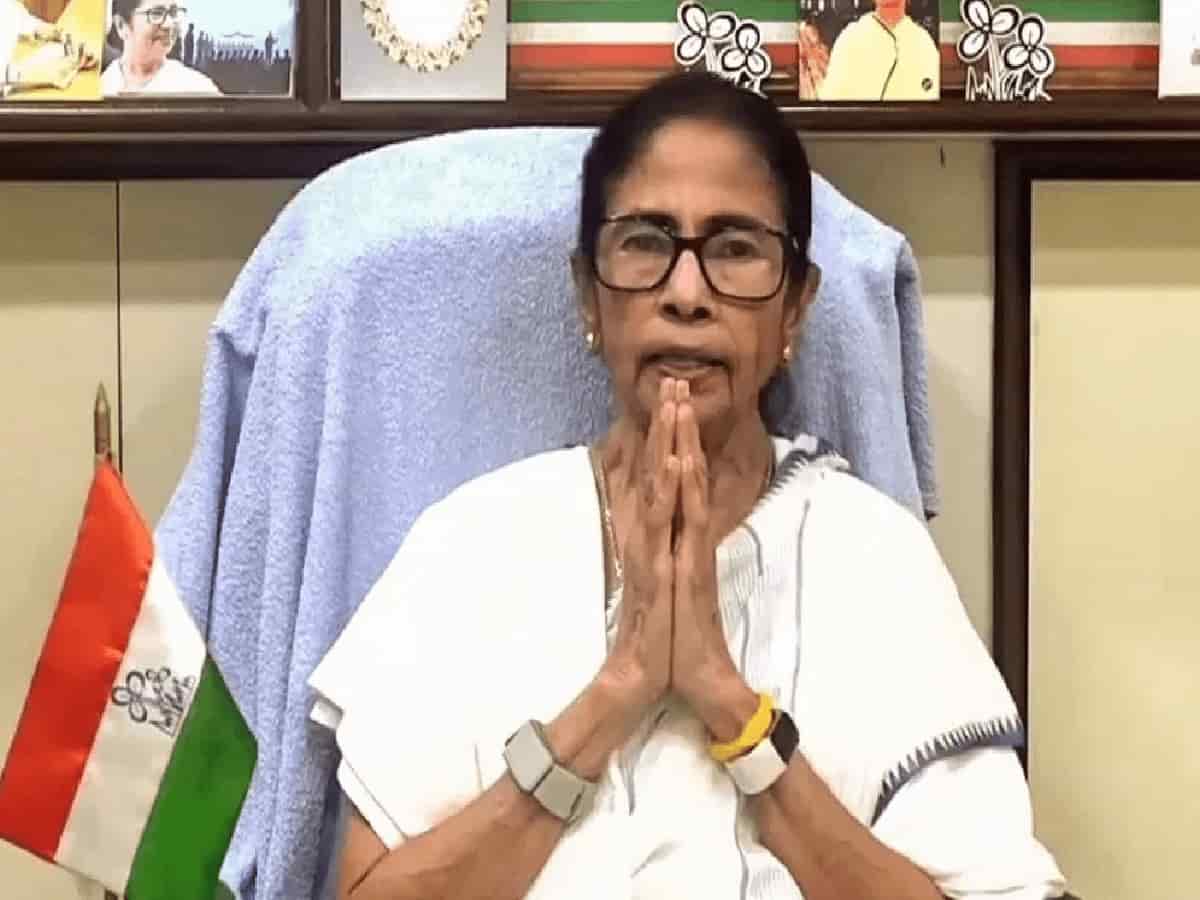
The country’s top court has taken a very tough and decisive stand on the internal division of Trinamool Congress (TMC) and the election symbol dispute that has shaken the politics of West Bengal. The Supreme Court has given a clear direction to the Election Commission of India (ECI) to give its final verdict within three months of receiving the arguments from all parties on the ongoing dispute between the two rival factions over the party’s original name ‘All India Trinamool Congress’ and its traditional ‘flower and grass’ (Joda Phool) symbol. A three-judge special bench headed by Chief Justice of India (CJI) Justice Surya Kant, hearing the much debated case on Monday, outright rejected the Election Commission’s plea seeking a longer extension of six months.
The apex court has set a deadline of next four weeks for both the rival factions—Mamata Banerjee camp and Arup Roy camp—to produce all their legal documents, affidavits and counter-affidavits on record. The court made it clear that in a democratic system, the identity, name and election symbol of a recognized political party cannot be left in a whirlpool of uncertainty for a long time. As soon as all the legal formalities and arguments are completed in four weeks, the countdown of the Election Commission will start and the Commission will have to give its final and binding decision within the stipulated time limit of 90 days.
During the hearing before a three-member special bench of Supreme Court Chief Justice Surya Kant, Justice Joymalya Bagchi and Justice V. Mohana, a heated debate was witnessed between the Election Commission and the court. Senior advocate Dama Sheshadri Naidu, appearing for the Election Commission of India, argued before the bench that the Commission has issued formal notices to both the parties and their official replies are awaited. He requested the court that this dispute is very complex, technical and involves extensive legal investigation, hence the Election Commission should be given at least six months time to complete the hearing of the case and give the final decision.
Advocate Naidu also argued that it would be extremely difficult and challenging for the Commission to resolve such a big political dispute within just three months. On this, Justice Joymalya Bagchi, who was on the bench, bluntly interrupted the senior lawyer and said that three months’ time is completely sufficient for any constitutional body to take a decision. Justice Bagchi said that when the arguments and documents of both the parties will be completed within four weeks, then the Commission will have full three months time available. CJI Surya Kant also clarified that both the petitioner and the respondent will have to complete their arguments within four weeks, immediately after which the Commission will have to come into action and settle the dispute within the time limit.
This direction of the Supreme Court has come during the hearing of the special petition filed by former West Bengal Chief Minister Mamata Banerjee. In fact, an open war had broken out within the Trinamool Congress between Mamata Banerjee and the opposition faction led by senior leader Arup Roy for actual control over the party. Both the groups had staked their legal claims on the party’s official name and ‘Joda Phool’ election symbol in front of the Election Commission, claiming themselves to be the real Trinamool Congress. Considering the seriousness of the dispute and the proximity of the by-elections, the Election Commission had passed an interim order immediately banning the use of the party’s original name and reserved election symbol (freezing order).
Under this interim decision of the Election Commission, both the groups were temporarily allotted different names and new election symbols. The Commission had given the interim symbol of ‘football player’ to Mamata Banerjee’s faction by naming it ‘Mamata All India Trinamool Congress’, while Arup Roy’s faction was given the name ‘Democratic Trinamool Congress’ and ‘Envelope’ election symbol. Mamata Banerjee had approached the Supreme Court, terming the Election Commission’s decision to stop the election and the action of freezing the symbol as unconstitutional and arbitrary. Now the apex court has brought a new legal twist to the case by setting a binding deadline for the Commission to take a final decision.
In its earlier interim order, the Election Commission, after hearing senior leaders and advocates from both sides, had made it clear that the final resolution of this matter is possible only under the strict legal provisions of the ‘Election Symbols (Reservation and Allotment) Order, 1968’. Paragraph 15 of the Symbol Order 1968 gives the Election Commission the exclusive judicial power that when two or more rival factions arise in a recognized political party, the Commission should decide which is the real party on the basis of the test of majority at both the organizational and legislative levels.
Now in the next four weeks, both the camps will have to prove before the Election Commission as to whose side has the real support of the party’s elected MPs, MLAs, District Councils, National Executive and organizational officials. After this strict stance of the Supreme Court, the Election Commission will have to conduct hearings on daily or weekly basis without any additional delay. As soon as this period of three months is over, it will become clear forever whether the historical symbol of ‘Joda Ghas Phool’, which decides the direction of Bengal politics, will remain with Mamata Banerjee or the rebel faction will be successful in capturing this legacy of Trinamool.