 look news india

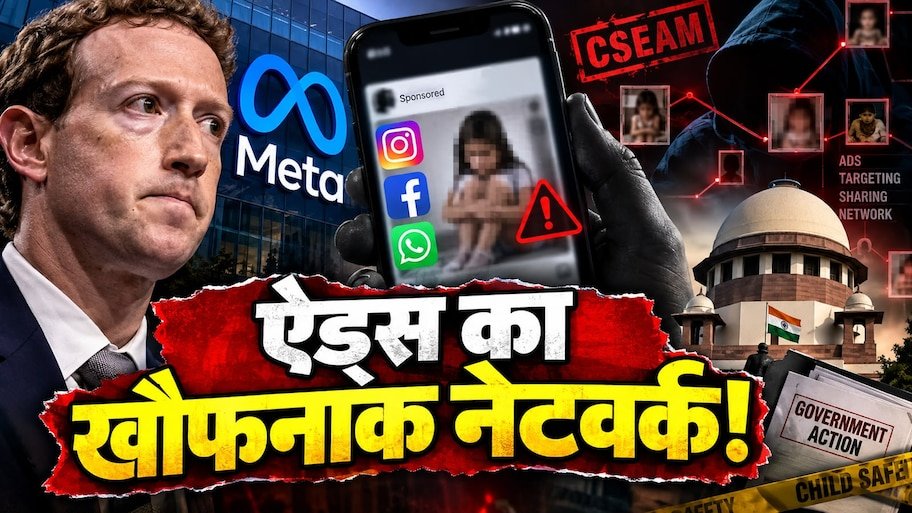
The giant tech company Meta, which claims to connect more than 3 billion people around the world, and its founder Mark Zuckerberg are currently embroiled in the most serious ethical and legal crisis in their history. There has been a global outcry over the open dissemination of child sexual exploitation and abuse material (CSEAM – Child Sexual Exploitation and Abuse Material) and the presence of pedophile networks on social media platforms Instagram, Facebook, Messenger and Threads. Joint investigative reports by Stanford Internet Observatory (SIO), ‘The Wall Street Journal’ (WSJ) and ‘Tech Transparency Project’ (TTP) sensationally revealed that Meta’s platforms were not only hosting this despicable content, but the company’s secret algorithm was actively connecting such criminals to each other. On the backend of the social media which common users considered a means to watch reels and connect with friends, a network was flourishing without the knowledge of millions of parents, keeping the safety of children at stake. After American courts, European Union and Indian government took strict cognizance of this, there is a stir from Silicon Valley to New Delhi.
The most shocking fact revealed in the investigation by Stanford Internet Observatory and Wall Street Journal was that this illegal business was not going on in some secret corner of the dark web of the Internet, but through the open search bar and hashtags of Instagram. Pedophile networks were selling a ‘content menu’ of indecent images and videos of minors, using very thin codewords and symbolic hashtags—such as ‘MAP’ (Minor Attracted Persons) and offensive codes.
The most disgusting aspect was that Instagram’s automatic recommendation engine (Recommendation Algorithm) was fueling this network instead of breaking it. If a suspected user saw or followed one such questionable account, Instagram’s algorithm would immediately suggest dozens of other similar pedophile accounts and content sellers to follow. The researchers found that Meta’s search system provided a pop-up screen warning that “This search may contain child exploitation material”, but allowed users to navigate to illegal content by providing a “See results anyway” button immediately below. When whistleblowers and activists complained about these profiles, Meta’s automated moderation team dismissed the complaints, saying “it does not violate our Community Guidelines”.
The matter took the most explosive turn when Raul Torrez, Attorney General of the US state of New Mexico, filed a historic legal suit against Meta and Mark Zuckerberg. The state Justice Department conducted a covert sting operation, codenamed ‘Operation MetaPhile’ Was kept. Under this operation, police officers created fake profiles (decoy accounts) of 13-14 year old children on social media. The investigation found that Instagram’s platform features themselves led child predators to the profiles of these children and three such suspects were arrested red-handed who had come to meet them at the hotel thinking they were minors.
Meta’s confidential internal documents presented in court stunned the world. Meta’s own internal studies estimated that approximately 1,00,000 (one lakh) children are exposed to some form of online sexual harassment and unwanted messages every day on Facebook and Instagram. The court found that Meta placed its profits, user engagement and screen time above the safety of children. The jury found Meta guilty of violating state consumer protection laws and endangering the lives of children and ordered it to pay a hefty civil penalty of $375 million (about Rs 3,100 crore).
The crisis did not stop here. The latest investigation report released by the Tech Transparency Project (TTP) revealed that this game of child exploitation has now reached Artificial Intelligence (AI) and paid advertisements. According to the report, Meta approved and allowed more than 300 ads to run live through its ‘Ad Library’, which included obscene AI-generated images of minor children and links to nudifier apps (AI tools for removing clothes).
These ads were not only shown to millions of users in the US and Europe, but they also misused images of real children. The investigative agencies found that Meta’s ad review system flagged these clearly illegal ads in the race to make profits. After this revelation, during the heated hearing in the US Senate, under heavy pressure from the MPs, Mark Zuckerberg had to stand in the Parliament and publicly apologize to the families and parents of the victims whose children were victims of online grooming, blackmailing (sextortion) and depression on social media.
Even in India, which has the world’s largest user base for Meta (over 500 million WhatsApp, Instagram and Facebook users), the government has become very aggressive and strict on this matter. The Union Ministry of Electronics and Information Technology (MeitY) and the Cyber Crime Branch (I4C) of the Home Ministry have made it clear that there will be no compromise in the case of Child Sexual Abuse Material (CSAM).
Legal provisions and government instructions applicable in India:
-
Mandatory to remove content within 24 hours: Under the Information Technology (Intermediary Guidelines and Digital Media Ethics Code) Rules, 2021, if child sexual abuse content is identified on a social media platform or the government/law enforcement agencies send a notice, the platform is mandated to block that content globally within 24 hours.
-
Warning of snatching the protection of Section 79: If Meta or any other tech company is reluctant to remove the CSAM content or share the IP data of criminals with the police, the ‘Safe Harbor Protection’ granted under Section 79 of the IT Act will be immediately terminated. This would simply mean that the India-based officials of the company would be directly prosecuted for criminal conspiracy.
-
POCSO Act and CBI attack: The Protection of Children from Sexual Offenses Act (POCSO Act) and the Special Online Child Exploitation Prevention Unit (OCAEU) of the Central Bureau of Investigation (CBI) are continuously conducting direct raids in such cases in coordination with the American organization ‘NCMEC’ (NCMEC) and Interpol. The Government of India has given strict instructions to Meta to submit a comprehensive audit report of its Instagram ads and Reels algorithms.
This entire international controversy has raised alarm bells for every parent in the country whose teenage children aged 13 to 18 years use Instagram or Facebook for hours on their smartphones. Until technology companies make their systems completely secure, parents will have to adopt proactive defense mechanisms themselves:
-
Turn on Instagram Parental Supervision: Link your child’s account to your account through ‘Family Center’ in Instagram’s settings. With this, you will be able to see which accounts your child is following, who is following him and how much time he is spending on the app.
-
Always keep your account ‘Private’: Make sure that your child’s profile is not ‘public’. Due to having a private account, no unknown person can see the child’s photos, reels or stories nor can send direct messages (DM).
-
Ban on anonymous direct messages (DMs): Go to Instagram’s privacy settings and tighten ‘Message Controls’ so that no one the child follows can send them requests or messages.
-
Do not include location tagging and school uniform photos: Explain to children that they should never share their school name, home address, coaching center or live GPS location in their posts. This information helps child predators track children.
-
Communicate and remember the helpline: If the child is afraid of any unwanted message, blackmailing or objectionable picture on social media, then instead of getting angry at him, talk to him openly. Complaint of any online child exploitation or cyber crime National Cyber Helpline 1930 Or cybercrime.gov.in Register on the portal immediately without any hesitation.
This dispute between Meta and Mark Zuckerberg proves that behind the colorful world of social media, there is a dark side of technology which can put the lives of innocent people at stake for profit. Strict government rules, legal penalties and parental awareness are the only strong shield that can keep the new generation of digital India safe from this dirty maze.