 look news india

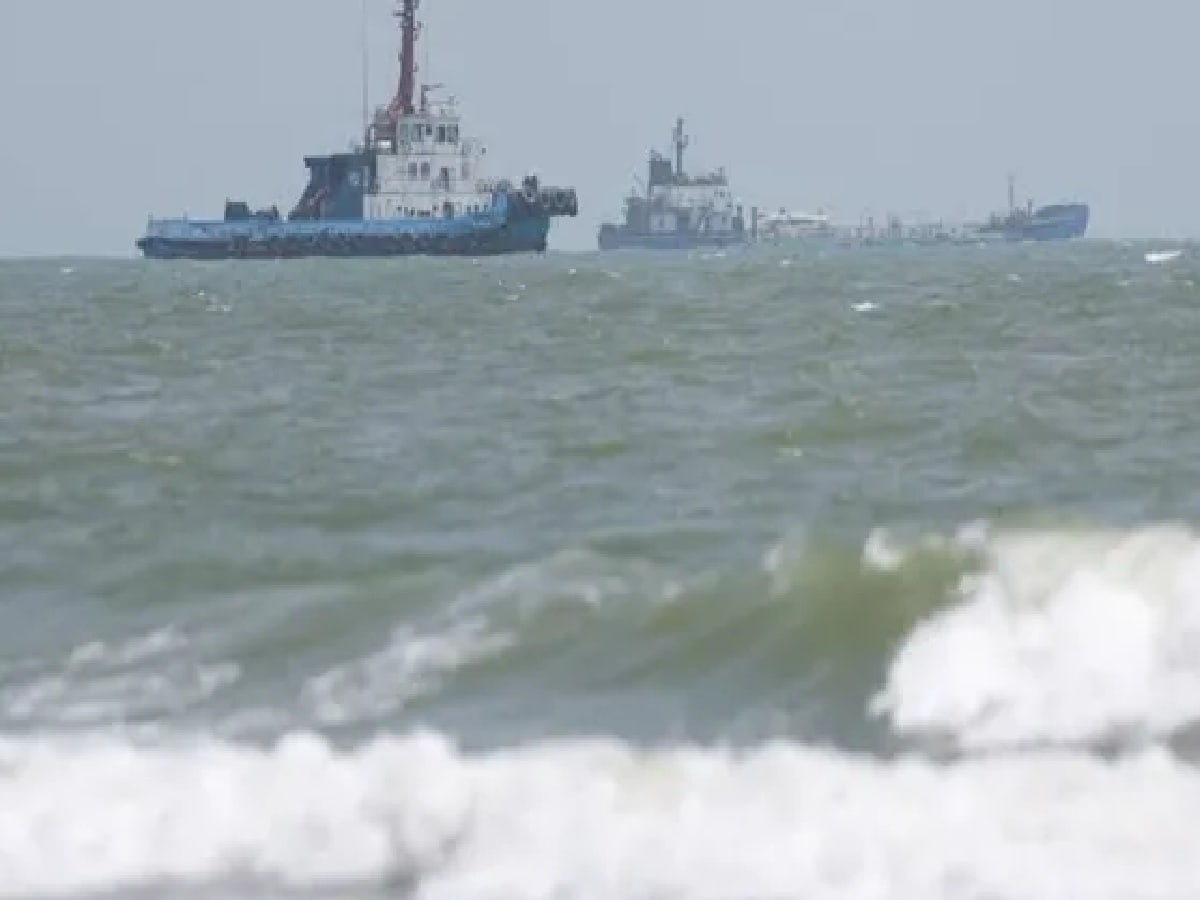
A very big and relief diplomatic news has come out from Western Asia regarding the ‘Strait of Hormuz’, which is considered the biggest lifeline of the global economy, international maritime trade and crude oil. Iran’s high-level diplomatic delegation, which arrived in New York City, USA to participate in the 81st high-level session of the United Nations General Assembly (UNGA), has sent a clear and concrete peace proposal to the US administration. A very senior and top diplomatic official of Iran has revealed in a statement to the global news agency Reuters that if the United States immediately reduces its military pressure against Iran and gives written assurance to lift the US naval blockade on Iranian commercial ports, then the Tehran administration will completely reopen the entire Strait of Hormuz for the unhindered movement of international merchant ships and oil tankers within just 7 days. This unexpected and positive stance of Tehran has indicated softening of crude oil prices in the global energy markets, with the eyes of the whole world now fixed on the formal response of the White House and US President Donald Trump.
Iran’s bet in the UN General Assembly: Got full right to restart stalled talks
According to sources in the Iranian delegation present in New York, the diplomats led by President Masoud Pezeshkian have been given full executive powers by the Supreme Leader and Tehran’s Supreme National Security Council to restart stalled diplomatic talks with Washington. Iranian diplomats have made clear that they are fully prepared to sit down at the table for a practical agreement, leaving behind decades of hostility. The Iranian side clearly says that their intention was never to put the world into an energy crisis, but they were forced to take this drastic step only in response to the economic siege of their country and blockade of ports by the Western naval fleet. If the US reduces its aggressive military presence and allows Iran’s legitimate oil export and merchant ships to sail through international waters without any restrictions, then Iran will also open this most important sea gate of the Persian Gulf to the world in goodwill.
Global economy and crude oil lifeline: Why is the Strait of Hormuz so sensitive?
The Strait of Hormuz is considered to be the world’s narrowest but most important sea corridor in terms of geography and geopolitics. This waterway connects the Persian Gulf to the Gulf of Oman and the Arabian Sea. On normal days, about 20 percent to 25 percent of the total crude oil exported by sea around the world and one-third of the global liquefied natural gas (LNG) trade passes through this very narrow route. The entire economy of big oil exporting countries like Saudi Arabia, United Arab Emirates (UAE), Kuwait, Qatar and Iraq depends on this waterway. Due to the closure of this sea route, the energy supply chain across the world has completely collapsed, due to which the prices of petrol, diesel and gas are on fire in Europe, Asia and developing countries. In such a situation, Iran’s proposal to open it within 7 days is being seen as a life-saving medicine in terms of global inflation and energy security.
The sea route is closed from March 2, 2026: The great crisis of war was created after the attacks on ships.
If we look at the historical events of the closure of the Strait of Hormuz, this strategic waterway has been completely closed mainly for commercial and commercial ships since March 2, 2026. The tension between Iran and the US reached its peak after the nuclear program, missile tests and attacks on military bases in the Middle East, after which the Navy of Iran’s Islamic Revolutionary Guard Corps (IRGC) announced a complete ban on the passage of any oil tanker through this route. However, an attempt was made to open it for a very limited time through the efforts of some neutral international mediators during the months of June and July, but during that time, due to unknown missile and drone attacks, many foreign merchant ships were heavily damaged and this sea corridor once again came to a complete standstill. Since then, major shipping consortia around the world have been forced to make the long, risky and extremely expensive round trip to Africa’s Cape of Good Hope.
Will Donald Trump accept Iran’s condition: The issue of reducing military pressure and lifting the blockade is stuck.
After Iran’s offer of 7-day deadline, the biggest question now is whether US President Donald Trump and his Defense Department Pentagon will accept this condition of Iran. Donald Trump has been publicly adopting an aggressive stance against Iran and has a clear resolve to continue the policy of maximum pressure on Iran so that it completely destroys its nuclear program. However, on the other hand, Trump is under heavy pressure from the international community and American industrialists due to the upcoming elections within the US and to control the rising fuel prices domestically. Trump had also recently expressed his desire for direct talks with the Iranian leadership, but American defense experts are warning that if the US lifts its naval blockade, it could be seen as Trump’s retreat in domestic politics. The coming few days are going to be very decisive for global diplomacy, because if both the countries agree on a minimum agreement then the world will be saved from the danger of a major global war and economic depression.