 look news india

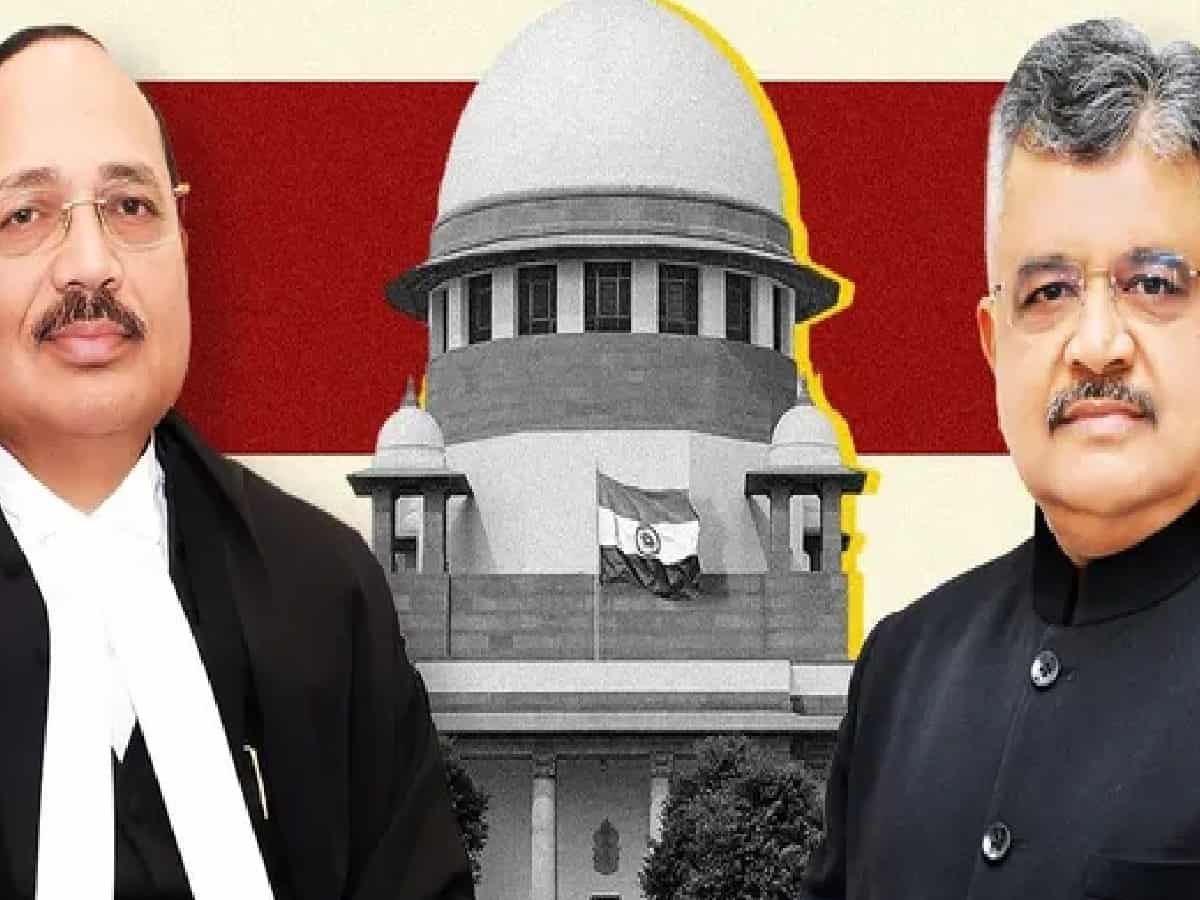
During the hearing of a petition in the Supreme Court of the country on Tuesday, 22 September 2026, demanding mandatory legal protection and status for the national song ‘Vande Mataram’, the atmosphere in the courtroom became very heated when a heated argument broke out between the Solicitor General and senior lawyers. A debate broke out during the hearing when senior advocate S. Muralidhar took strong objection to a comment made by Solicitor General Tushar Mehta and demanded immediate withdrawal of his words. This high-profile case witnessed heated arguments between the country’s top law officers and lawyers, after which a three-member bench of the Supreme Court itself had to intervene.
Heated debate on PILs and legal process: Questions raised on ‘law making process’
This sensitive petition was being heard before a special bench of Supreme Court Chief Justice Surya Kant, Justice Joymalya Bagchi and Justice V. Mohana. Senior lawyer S., appearing on behalf of Karnataka’s famous musician T.M. Krishna, Presenting his arguments, Muralidhar said that no stringent legal framework or protection provisions on subjects like national anthem should be made without a wide and nationwide public discussion. He argued that the process of law making in a democracy should never be based on a ‘top-down approach’ (a system imposed from above), rather the law should always evolve gradually with public opinion and social consensus. In response to this argument, the country’s Solicitor General Tushar Mehta expressed his strong objection.
Ruckus in court over Solicitor General Tushar Mehta’s ‘Naxalite’ statement
Solicitor General Tushar Mehta S. Strongly opposing Muralidhar’s arguments, he said that the law in India is made as per the Constitution of the country and the legislative process of the Parliament, and the form of any law cannot be decided according to the ideology of any extremist or Naxalites. On the use of the word ‘Naxalite’ by the Solicitor General, senior lawyer S. Muralidhar got furious. Citing the live streaming of the court, he said that the Solicitor General should immediately withdraw his words, because it is not appropriate for a top law officer to use such terminology. However, Solicitor General Tushar Mehta stood by his stand and clarified that he has not made any comment on any individual, rather he has said this in the context of a specific and destructive ideology, and he has no regrets on his statement.
Supreme Court’s intervention: ‘Even if someone is a Naxalite, his constitutional rights are not lost’
The Supreme Court bench immediately intervened to calm the growing heated debate and tension between the lawyers. On behalf of the bench, Justice Joymalya Bagchi, while making a very balanced and important comment, said that the court is restricting itself to constitutional and legal issues only during this entire hearing. Justice Bagchi said in clear words, “Even if you call someone a Naxalite, on this basis the fundamental rights and legal protection provided by the Constitution of that person do not go away. A person accused of terrorism or any other serious crime also has the full constitutional right to a fair trial in the court of the country.” Meanwhile, another senior lawyer present in the hearing, Sanjay Hegde, also intervened and said that a citizen does not become a Naxalite just by having a different thinking or expressing disagreement with the government on any administrative or policy issue.
Supreme Court sought answer from the Central Government: cited the historic decision of 1986
The court decided to proceed with the legal aspects of the case after hearing arguments from both sides. The Supreme Court has issued a notice to the Central Government and directed it to file its detailed reply in this matter. Along with this, the bench specifically referred to the historic and landmark decision of 1986, in which the court had ruled that school children who did not sing the national anthem would be exempted from any kind of punitive legal action. The Supreme Court has directed both the parties to keep all their constitutional and legal arguments in order till the next hearing and has made it clear that the court will decide the case purely on the basis of interpretation of the Constitution.