 look news india

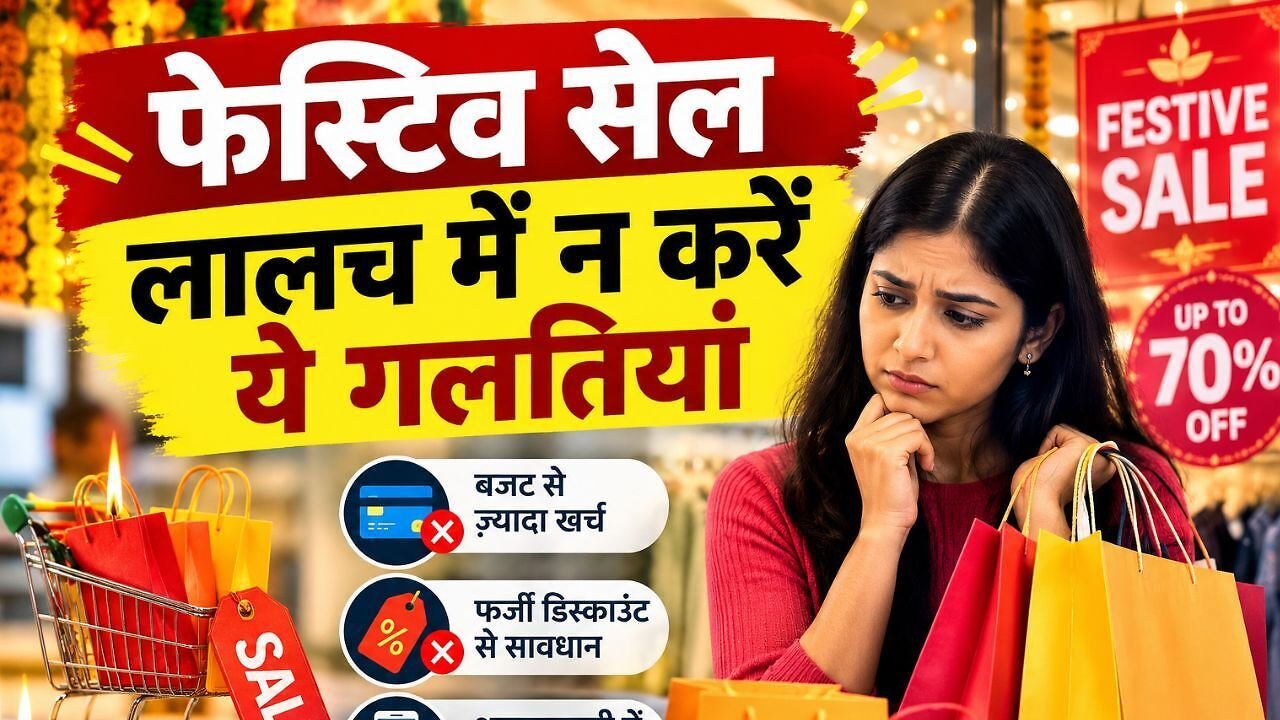
As Dussehra passes, markets across the country are decorated with the glitter of big festivals like Dhanteras, Diwali and Bhaidooj. While banners of Maha Sale have been put up on e-commerce platforms, local markets and big malls are flooded with attractive advertisements like ‘Flat 50% Off’, ‘Buy One Get One Free’ and ‘Bumper Cashback’. This time is considered the most auspicious and favorable for purchasing new clothes, gold and silver coins, home electronics, vehicles and gifts. However, in the excitement and glitz of festivals, consumers often get carried away and make serious financial mistakes that leave them with huge credit card bills and empty bank accounts for months to come. There is a rush of buyers in the retail markets from major shopping destinations like Hazratganj, Aminabad, Chowk and Phoenix Palacio of Lucknow, the capital of Uttar Pradesh, to Delhi, Mumbai and Bengaluru. In such a situation, before going to the market or filling the online cart on mobile, it is very important to understand the basic rules related to financial discipline and smart shopping.
The most common and old trick during the festive season is artificial discount. It is often seen that a few days before the start of the sale, the maximum retail price (MRP) of a product is deliberately increased and then it is sold at a huge discount of 60% or 70%. The customer feels that he is saving thousands of rupees, whereas in reality the item is being sold at its normal market price or sometimes even at a higher price. Before buying any major electronics item, smartphone or home appliance, be sure to check its lowest price (price history) for the last 3 to 6 months on price-tracker tools or different platforms. Don’t just go for the larger discount percentage, but match the final bill amount (Final Out-of-Pocket Cost).
While purchasing expensive mobile, TV or fridge, the option of ‘No-Cost EMI’ attracts the customers the most. On the surface it appears that the payment has been spread over 6 or 9 months without any additional interest. But the Reserve Bank of India (RBI) has clear guidelines that there is no such thing as zero interest. Banks already adjust the interest charged on that EMI in the form of a discount, but two hidden expenses are imposed on the consumer. First, most banks deduct a ‘loan processing fee’ of ₹199 to ₹299 on each no-cost EMI transaction. Second, an additional 18 percent GST is levied on the interest installment deducted every month. If you buy 4-5 items consecutively on no-cost EMI, these indirect charges and GST together put an extra burden on your pocket.
During the festive season, banks and credit card companies temporarily increase the spending limit by luring them with instant discounts (Instant 10% Bank Discount) and reward points. Due to this facility, many people swipe goods that are twice their income and budget. The real trouble starts when the credit card statement comes next month. The biggest mistake people make is to pay ‘Minimum Due’ when they are unable to pay the full amount of the bill. Heavy annual interest and finance charges ranging from 36 to 42 percent are charged on the remaining balance on the credit card. Due to the glitter of one night of festival, a person remains trapped in the vicious cycle of debt for the whole year. The rule of thumb is to spend only as much on your credit card as you have the bank balance to repay in lump sum in the next bill cycle.
Buying jewelery and gold coins on Dhanteras and Diwali is an integral part of Indian tradition. Jewelers often put up attractive boards of ‘50% discount on making charges’, but the actual make and purity of the jewelery does not go unnoticed by the customer. Buying gold just by looking at the discount without any investigation can lead to huge losses. While buying jewellery, always buy BIS Hallmark jewelery with six digit ‘HUID’ (Hallmark Unique Identification) code. Get the percentage of making charge clarified in advance, because many times jewelers keep the original making charge as high as 18-20% even after giving discount. While buying gold coins or bars, never forget to get 999 or 995 purity certificate and confirmed GST bill, so that you do not have to face any deduction while reselling it in future.
‘Buy 2 Get 1 Free’ or ‘Buy 3 at 50% Off’ boards in supermarkets and garment stores activate psychological triggers of shoppers. A person who goes out to buy a normal T-shirt or shirt buys three-four clothes just because of the lure of freebies. In practical economics this is called ‘False Saving’. If you only needed an item worth Rs 1,000, but spent Rs 2,500 on the freebie, you have not saved Rs 500 but have lost an additional Rs 1,500 unnecessarily. Before leaving for shopping, prepare a strict ‘shopping list’ at home and stick to it. If an item is not on your list, even if it is 80% off, it is still an expense for you, not a savings.
During festive discounts, many platforms secretly impose the condition of ‘No Return / No Refund’ (Non-Returnable) in some selected categories. If any defect or size defect is found in the product after delivery, the customer has no option to exchange it. So please read the return window and replacement policy carefully before checkout. Additionally, while taking delivery, under Open Box Delivery, open the seals in front of the delivery agent and confirm the genuineness of the goods inside the packaging. During the festive season, do not click on suspicious phishing links on WhatsApp and SMS in the name of ‘Diwali Lucky Draw’, ‘Free Gift Voucher’ or ‘Amazon/Flipkart Mega Reward’, as one fake click can drain your bank account.