 look news india

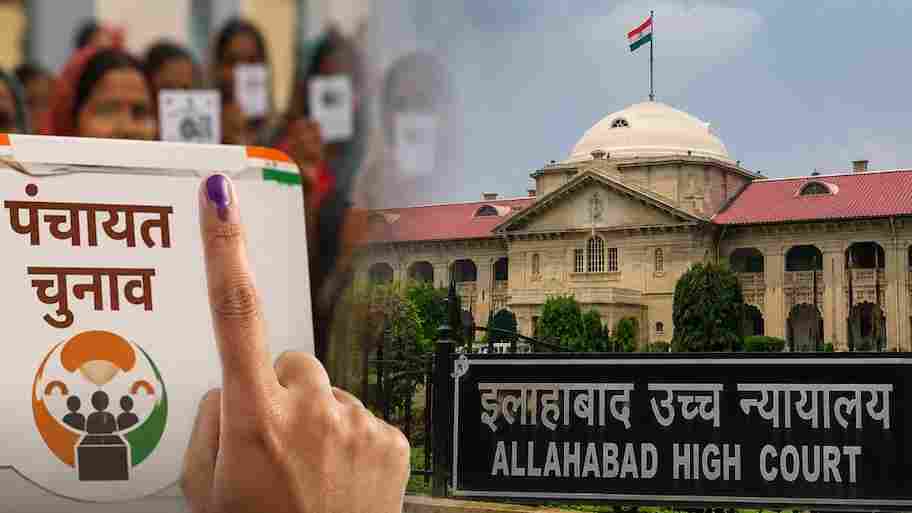
Political and legal activities have intensified regarding the three-tier Panchayat elections in Uttar Pradesh. After the Lucknow bench of the Allahabad High Court put an interim stay on the state government’s decision to extend the tenure of the outgoing village heads and appoint them as ‘Administrators’, the government has now decided to approach the higher court against it.
In its strict order dated June 25, 2026, a single bench of Justice Siddharth Nandan of the High Court has declared this step of the government as prima facie unconstitutional. The court clearly says that after the end of their tenure, village heads cannot be kept in the role of administrators in any way. Now the state government is preparing to file an appeal against this order in the double bench or full bench of the High Court next week.
What is the whole matter and why did the government make the heads administrators?
More than 57,000 gram panchayats of Uttar Pradesh have a legal tenure of five years. 26 May 2026 has completely ended. As a rule, the elections should have been completed before the end of the term, but due to non-completion of the process of Other Backward Class (OBC) reservation in the three-tier Panchayat elections in the state, the elections were delayed.
In order to ensure that development work and government schemes do not stop in the villages, the Yogi government had issued a notification on May 25 appointing the outgoing village heads as ‘administrators’ for the next 6 months or till the elections. This decision of the government was challenged by Arvind Rathore and other petitioners in the High Court, while hearing which the court has given a big blow to the government.
High Court’s stance: Tenure cannot be extended beyond 5 years, sought election outline by July 13
-
Constitutional scope: The High Court in its order of the Constitution of India Article 243 (E) and 243 (K) Citing it, it was clarified that under any circumstances the tenure of elected Panchayats cannot be extended by more than 5 years. Postponing elections indefinitely is against the democratic system.
-
Mandatory order: The court has given strict instructions to the State Government and the State Election Commission for the upcoming 13 July 2026 It has been asked to present before the court the complete detailed timetable and outline for holding Panchayat elections in Uttar Pradesh by (date of next hearing).
Government’s legal argument: Reliance on Section 12(3-A) of Uttar Pradesh Panchayati Raj Act 1947
Highly placed legal sources and experts in the regime say that the government has a strong legal basis to justify this decision:
-
Rule of Alternative Arrangement: Sub-section (3-A) of Section 12 of the ‘Uttar Pradesh Panchayati Raj Act, 1947’ primarily deals with postponement of elections in extraordinary and unavoidable circumstances. This section gives the statutory power to the state government that if timely elections are not possible in public interest, then it can make alternative administrative arrangements (such as appointment of an administrator).
-
Grounds of appeal: Since this sub-section (3-A), which was added through a historical amendment in April 1994, has not been legally removed till date, the government will make this Act its shield. The government argues that it is not mandatory anywhere in the law that the administrator can only be a government officer (like BDO or ADO), in public interest, outgoing heads can also be given this responsibility.
The order to make the Dedicated Backward Classes Commission a party will also be challenged
The High Court has also allowed ‘Uttar Pradesh State Local Rural Bodies Dedicated Backward Classes Commission’ constituted by the state government to be made a party in the case. The government is going to challenge this order also.
Chairman of the Commission and retired judge of Allahabad High Court Justice Ram Autar Singh It is clearly stated that under Section 9 of the ‘Commission of Inquiry Act’, no investigation or survey commission can be made a direct party in any civil or constitutional case. Therefore, the government will also appeal against the decision to make the Commission a party.
Are elections not possible before November 2026? The commission will take time to prepare the report
Under the guidelines of the Supreme Court’s ‘Triple Test’, the Uttar Pradesh government has constituted this Dedicated Backward Classes Commission on 18 May 2026. The main function of the Commission is to collect data and physically verify the accurate socio-economic and political representation of the OBC population by visiting the block and gram panchayat level in all 75 districts of the state.
According to Justice Ram Autar Singh, Chairman of the Commission:
“We have obtained preliminary data of backward class population from the District Magistrates (DM) of all 75 districts of the state. The Commission’s team has also started the verification work by making ground visits to districts like Meerut, Hapur and Baghpat. Since to decide the correct reservation of seats, we will have to make an intensive visit to all the 75 districts of the state, it will take at least 6 months to complete this entire scientific and empirical investigation. Final and authentic report November 2026 Will be able to hand over the government to the government only.