 look news india

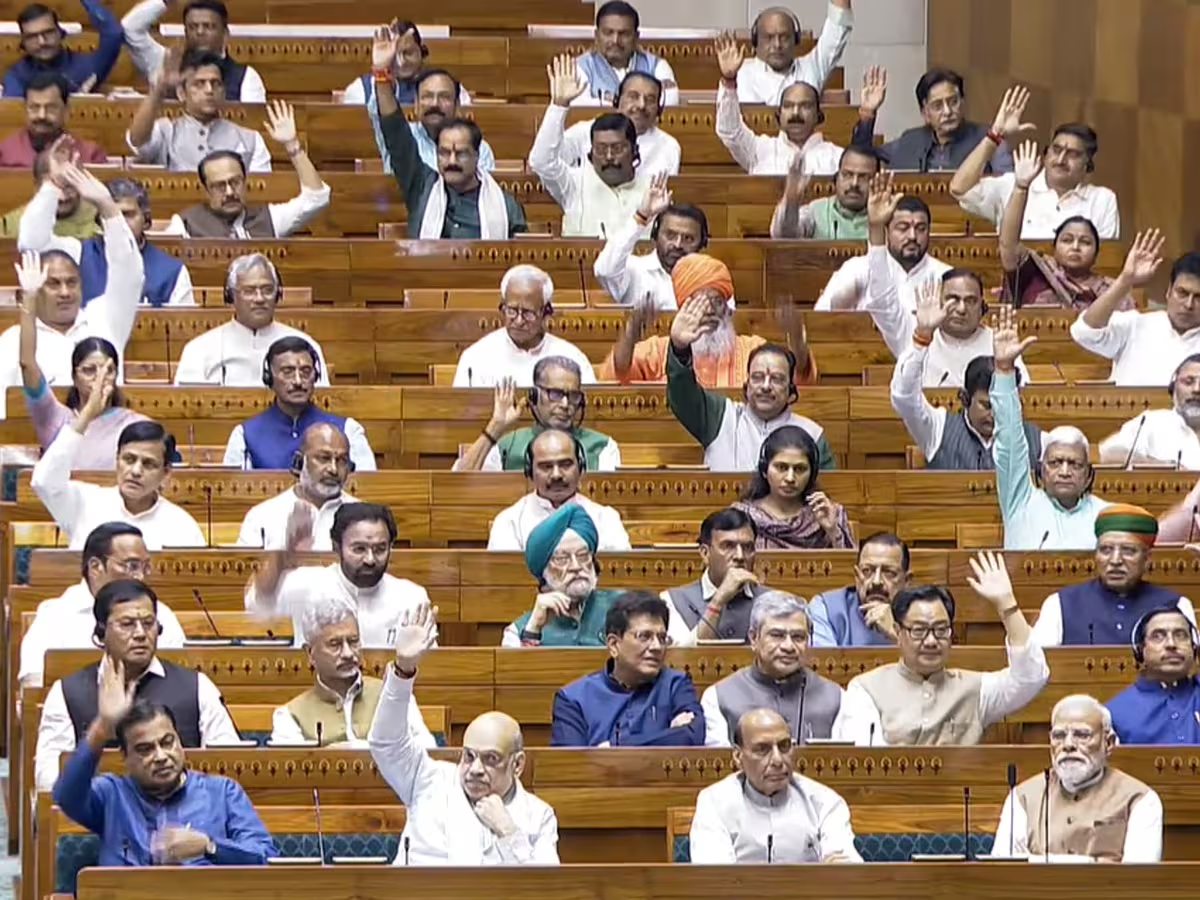
News India Live, Digital Desk: The Modi government at the Center has prepared a ‘master plan’ to give 33 percent share in Parliament and Legislative Assemblies to half the country’s population. Till now there was doubt regarding ‘Nari Shakti Vandan Act’ that it will be implemented only after delimitation, but the latest diplomatic movement shows that the government is preparing to make it effective from the 2029 Lok Sabha elections. For this, the government is going to bring a major constitutional amendment, in which the condition of delimitation can be removed and only the 2011 census data can be made the basis.
‘Women power’ will be visible in 2029: Law will be changed
According to the original law, women’s reservation was linked to the new census and subsequent delimitation, which was likely to be delayed till after 2030. Amidst the tough stance of the opposition and the demand for early implementation, the government is now considering ‘delinking’ this provision. If sources are to be believed, a new amendment bill can be introduced in the upcoming session, which will directly pave the way for reserving seats for women in the 2029 general elections without any new delimitation.
New formula: There will be 816 Lok Sabha seats, but only women on 273!
Under this new formula, the total number of Lok Sabha seats is also expected to increase significantly. If the seats are reorganized based on the 2011 census, the total number of Lok Sabha members may increase from 543 to 816. According to this new mathematics, if 33 percent reservation is implemented, 273 women MPs will be elected to the Parliament. This will be the largest and most historic participation of women in the history of Indian democracy.
There will be panic in the state assemblies also
This law will not be limited only to the Lok Sabha, but will also apply equally to all the legislative assemblies of the country. In big states like Uttar Pradesh, Bihar and Maharashtra, an increase of up to three times can be seen in the number of women MLAs. Now the murmur about this change has increased even within the political parties, because many veteran leaders may have to lose their traditional seats and it will be mandatory to field women candidates there.
Opinion polling begins with opposition and allies
The government is busy building a consensus to pass this important amendment. Union ministers have started informal discussions with opposition parties and NDA allies. Since the opposition has already demanded to separate reservation from the census, the government is hopeful that this historic step will get overwhelming support in the House. Experts believe that if this bet is successful, the 2029 elections will be fought entirely on ‘women-centric’ issues.