 look news india

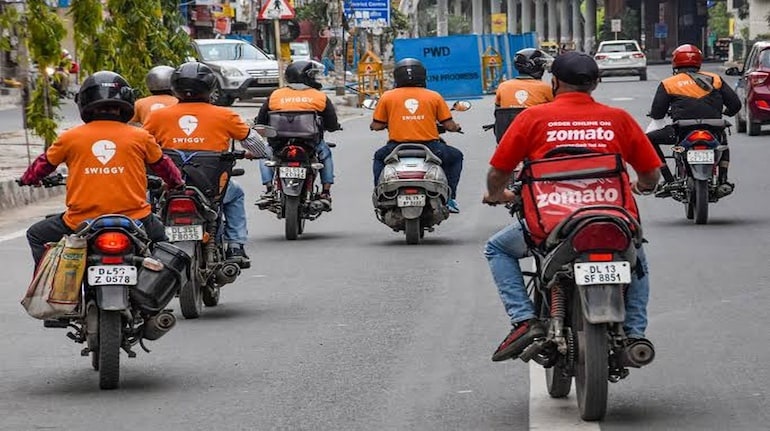
If you order food from Swiggy or Zomato daily or are used to ordering groceries from Zepto and Blinkit within 10 minutes, then this news is going to directly affect both your pocket and the delivery system. The app-based food delivery and quick-commerce sectors in the country were till now seen only as e-commerce platforms, but now the state transport departments are all set to bring them under the ambit of the rules of traditional ‘bike-taxi’ and transport aggregators.
Maharashtra’s transport department has prepared a new proposal to amend the ‘Maharashtra Bike-Taxi Rules’, under which companies like Swiggy, Zomato, Zepto, Blinkit, Amazon and Flipkart will be classified as a ‘delivery service provider’. If this proposal becomes legal, it will be the first such case in the country where two-wheelers delivering parcels and food will have to follow the same strict transport rules as bike-taxis carrying passengers.
What changes are proposed under the new rules?
According to the draft rules of the transport department, delivery and e-commerce companies will have to follow the same rules as ride-hailing companies like Ola, Uber and Rapido. These major changes include the following points:
-
Essentials of 100% Electric Vehicle (EV): For all deliveries of less than 15 kilometers, companies will be allowed to use only electric two-wheelers. There is a plan to ban private bikes running on petrol.
-
2% Driver Welfare Fund Cess: A fee of 2 percent will be deducted on every ride or delivery transaction, which will be deposited in the ‘Driver Welfare Fund’ created by the state government.
-
GPS and Real-Time Tracking: It will be mandatory to link real-time GPS tracking of every delivery vehicle and rider to the central digital portal of the Transport Commissioner.
-
Unique License ID and Commercial Formalities: It may be made mandatory for aggregators and delivery riders to obtain police verification, Public Service Vehicle (PSV) badge, fitness check and a special license number.
-
RHA (RTA) Fare Control: The scope of rates and fare capping decided by the Regional Transport Authority may also apply to these.
What will be the benefits and disadvantages for delivery partners (gig workers)?
The biggest impact of this new rule will be on lakhs of delivery partners.
Advantages: The 2 percent welfare cess that has been proposed will create a strong social security framework for gig workers. From this fund, delivery boys will get benefits like pension, accidental accident insurance of Rs 5 to 10 lakh, loan at easy interest to buy e-bike and scholarship for the education of their children.
Concerns and Challenges: Most delivery riders work part-time using their personal petrol bikes. If suddenly private petrol vehicles are banned and only registered commercial electric vehicles are made mandatory, then lakhs of youth will face livelihood crisis. It will not be easy for an ordinary delivery executive to bear the huge expense of buying a new electric bike. Apart from this, mandatory domicile and commercial license conditions can also become a hindrance for migrant workers.
What will be the impact on companies like Swiggy, Zomato and Zepto?
The entire USP of the quick-commerce and food delivery model rests on ‘low cost and fast delivery’. Coming under the ambit of bike-taxi rules will have a major impact on the operating model of companies:
-
Huge increase in cost: Converting their entire fleet from petrol to EVs and equipping the vehicles with GPS will bring additional capital expenditure (Capex) worth crores of rupees for the companies.
-
Screw of fare structure: Bike-taxis have a fixed passenger fare per kilometer, but food delivery has different formulas for base pay, incentives, distance and peak hours. In such a situation, there is technical confusion regarding whether 2% welfare cess will be levied on the order value, on the distance or on the rider’s pay-out.
-
Strict legal and regulatory compliance: Companies will have to go through the process of approval and licensing from the RTO offices of each district, which may impact their ease of doing business.
How will it affect the pockets of the common consumer?
The burden of the companies’ operational costs and 2% welfare levy is likely to ultimately be shifted to the customers.
Currently, where customers pay Rs 5 to 10 handling or platform fees, companies may add an additional ‘welfare cess’ or ‘regulatory compliance charge’. Additionally, if availability of delivery riders is low due to fleet shortage, the 10-minute quick-commerce delivery time may increase to 20 to 30 minutes and surge pricing may be higher during rains or festivals.
Center vs State: Will this rule stand in court?
Legal complications are also emerging regarding this proposed rule. Currently food and e-commerce platforms work under the Consumer Protection Act (Consumer Protection Act, 2019) and Social Security Code (Code on Social Security, 2020) of the Central Government.
Similarly, in Karnataka too, when an attempt was made to impose 1% gig worker cess, the aggregators had approached the High Court. Legal experts believe that states have direct authority to regulate passenger transport under the Motor Vehicles Act, but low-speed electric two-wheelers with power less than 250 watts used for goods or parcel delivery remain outside the general definition of the Motor Vehicles Act. In such a situation, this proposal of the state government will have to go through the Law and Justice Department and possible court challenges before being implemented.
Overall, if bike-taxi rules are implemented on delivery platforms, it would be a big step towards better social security for gig workers and environmentally green mobility. However, striking a balance between the increasing expenses of companies and increased delivery bills of consumers will prove to be the biggest challenge for both the government and the industry.