 look news india

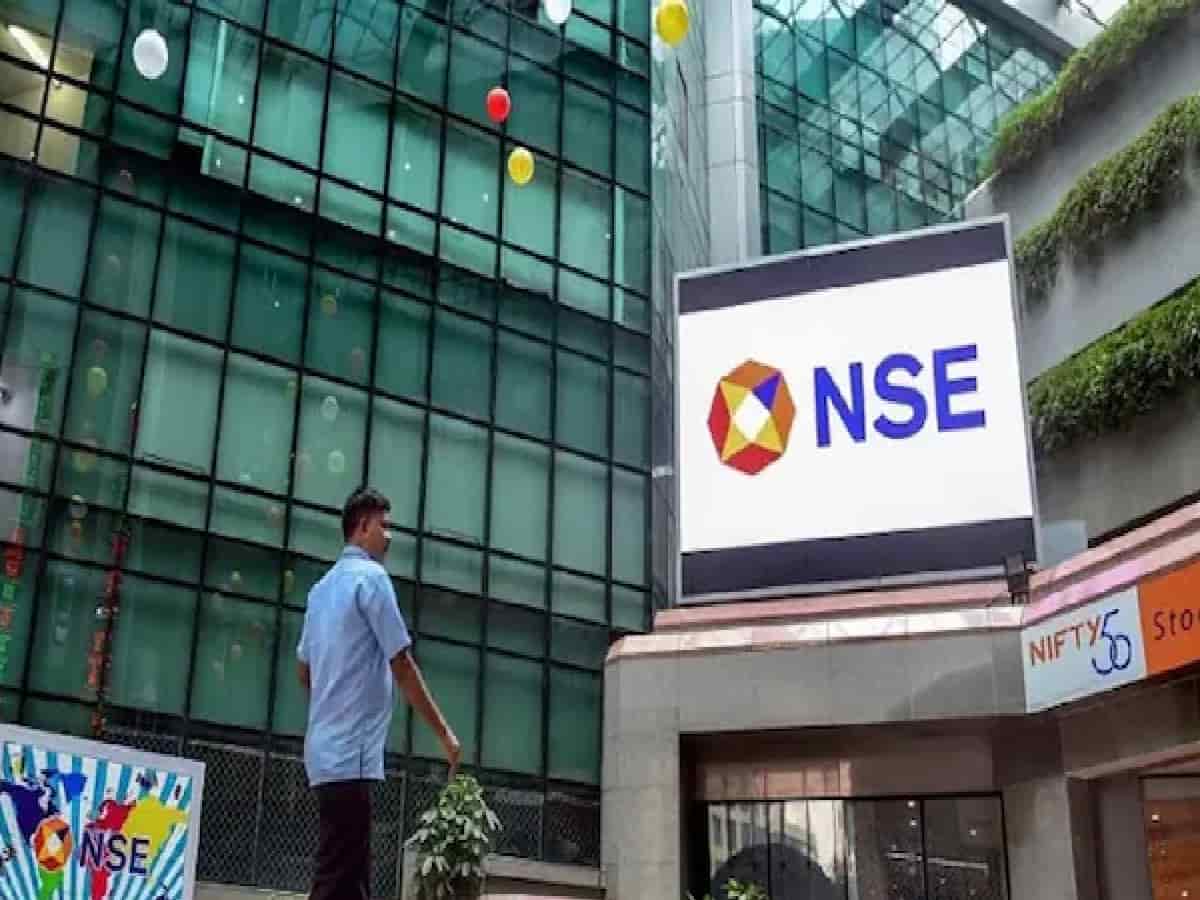
The stance of leading brokerage houses of Dalal Street remains very positive and aggressive regarding the National Stock Exchange (NSE) IPO, which is one of the largest and most awaited public issues in the history of the Indian capital market. Tremendous enthusiasm is being seen among domestic and institutional investors regarding the public issue of NSE. Leading research firms including SAMCO Securities and SBI Securities have given a clear recommendation to subscribe to this mega IPO for long-term wealth creation. Market analysts clearly argue that NSE is not just a trading platform, but it is the essential core backbone of India’s rapidly expanding financial system, equity culture and unprecedented capital market growth. Due to the combination of institutional depth, unmatched liquidity, state-of-the-art server architecture and strong financial balance sheet, this issue has the potential to provide excellent protection and returns to investors’ portfolios over the long term.
The biggest strength of any exchange business is its trading volume and network effect, and on this front the National Stock Exchange appears to be miles ahead of its competitors. According to the official financial data for the financial year 2026, the market share of NSE in the cash equity segment has been recorded at a huge level of 92.99 percent. At the same time, the exchange’s dominance in the equity futures segment is almost like a complete monopoly, where its market share has been 99.79 percent. Apart from this, NSE also maintained a strong hold of 74.71 per cent in the equity options segment with heavy trading volumes. SBI Securities in its detailed research report has termed NSE as the most impenetrable and powerful franchise in the Indian financial landscape. NSE is directly benefiting from its huge scale, extensive liquidity, integrated clearing system (NSE Clearing), and unwavering trust of crores of retail and foreign institutional investors (FIIs) in the form of continued operational efficiency.
At the upper price band of the IPO of Rs 1,785 per share, the valuation of NSE works out to be approximately 42.9 times (P/E Ratio 42.9x) based on FY2026 total earnings. According to financial analysts, this valuation presents a very attractive and fair opportunity for investors, as the current valuation of its only rival already listed in the stock exchange, Bombay Stock Exchange (BSE), is trading at around 49.3 times. When the undisputed market leader of an industry is priced at a lower multiple than its smaller competitor, it provides a safety margin both in terms of listing gains and long-term investment. Talking about financial strength, in FY 2026, NSE earned an impressive revenue of Rs 16,601 crore from its core operations, on which it recorded a net profit after tax (PAT) of Rs 10,302 crore. During this period, the company’s operating EBITDA margin stood at an extraordinary level of 66.9 percent, while its Return on Equity (ROE) was recorded at 33 percent, which is counted among the top standards of global financial exchanges.
The results of the first quarter (Q1 FY27) of the current business year 2027 confirm that the growth pace of NSE has not stopped, but is continuously touching new heights. During the first quarter, the company’s revenue recorded a solid growth of 13.1 percent year-on-year, while operating Ebitda saw a jump of 14.84 percent. The most encouraging aspect was that during this period the Average Daily Trading Volume (ADTV) of the cash market registered a strong increase of 25.25 percent. Looking at the historical analysis, during the three years between FY 2024 and FY 2026, NSE’s top earnings grew at an average compound annual rate (CAGR) of 6 percent, while its net profit grew at an annual rate of 11 percent on the back of better margins and cost control. This stable financial performance reflects the financial maturity of the exchange.
The most positive aspect of NSE’s revenue structure is its diversification. The exchange’s income does not depend solely on STT and transaction charges on retail or institutional deals. Non-trading verticals such as technology solutions, index licensing (NSE Indices) and market data services have contributed significantly to the total revenue of about 12 per cent in FY26. Additionally, the expansion of global derivatives and dollar-denominated contracts taking place at Gujarat-based International Financial Services Centers Authority (GIFT City) through the NSE International Exchange has strong potential to open up new revenue sources in the future. According to a technical report by Ventura Securities, NSE’s IT infrastructure is the most modern globally, successfully handling 21.9 billion peak order messages in a single trading session and creating a historical record of processing 20.1 crore trades in a single day on March 24, 2026.
Along with the positives, brokerage firms also cautioned investors against some structural risks. The biggest risk to NSE’s revenue model is its over-dependence on derivatives, especially equity options trading. Nearly 60 per cent of the exchange’s total operating revenue in FY26 was derived from options trading alone. Additionally, due to BSE’s aggressive entry into the equity options segment, NSE’s market share has slipped from 96.86 per cent in FY2024 to 68.48 per cent in Q1FY2027. Experts believe that if the Securities and Exchange Board of India (SEBI) further tightens futures and options (F&O) rules to protect retail investors, changes lot sizes or increases transaction tax (STT) rates, any decline in derivatives volumes could have a direct impact on NSE’s topline earnings. Despite these risks, most analysts consider NSE to be a compelling long-term core investment given the formal financialization of the Indian economy and equity penetration.