 look news india

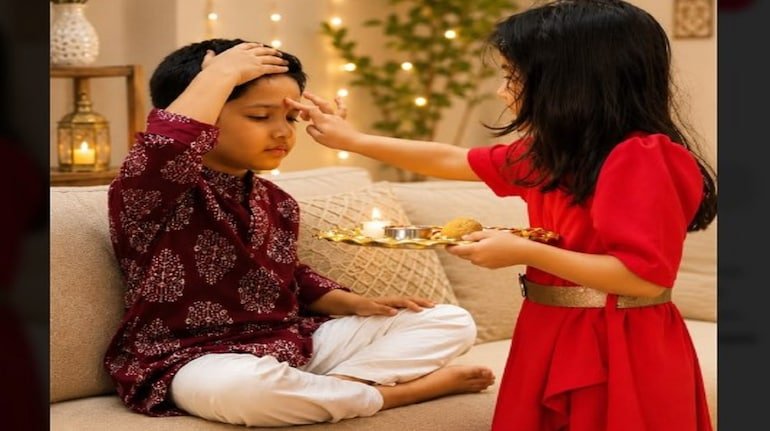
Rakshabandhan, the great festival of unbreakable love and trust between brother and sister, is considered very important in the Sanatan tradition. On this day, sisters tie Rakshasutra i.e. Rakhi on the wrist of their brothers, wishing for their long life, happiness, prosperity and safety, while brothers take a pledge to protect their sisters. According to the scriptures and astrology, tying Rakshasutra is not just a formal ritual but it is an extremely sacred and Vedic ritual. Therefore, while tying Rakhi, it is necessary to pay special attention to the rules related to the right direction, the way to sit, the contents of the puja plate and the auspicious time so that its full auspicious results can be achieved.
According to astrology and Vastu Shastra, choosing the right direction while tying Rakhi is considered most important for the flow of positive energy.
-
Brother’s face: While tying Rakhi, brother’s face is always East Or North Should be towards the direction. The east direction is considered the direction of God and the center of energy, which brings longevity and health, while the north direction is considered the direction of wealth, prosperity and progress.
-
Sister’s face: Sister’s face because of sitting in front of brother West Or South It is natural to be towards the direction, but try to keep the main center of worship and rituals in the east or north direction.
-
Direction related prohibitions: Brother should never sit facing south, because south is considered the direction of Yama and doing any auspicious work while facing this direction is prohibited.
A clear and dignified procedure for tying Rakshasutra has been described in the scriptures, following which is considered beneficial:
-
Head covering mandatory: While getting Rakhi tied, brother should never sit with his head uncovered. The brother must keep a handkerchief, turban or cap on his head. Similarly, sisters should also perform the ritual of puja and tying Rakhi by covering their head with dupatta or pallu.
-
Avoid sitting directly on the ground: Both brother and sister should not sit directly on the floor or ground during puja. This ritual should be completed only by sitting on a wooden stool, pata or a pure seat made of wool/kush.
-
Tie Rakhi on the right wrist only: According to religious beliefs, positive and divine energy resides in the right hand of men and unmarried girls. That’s why Raksha Sutra is always brother’s right hand wrist Should be tied only on.
-
Correct order of Tilak and Akshat: First of all, apply Roli or sandalwood tilak on the brother’s forehead with the ring finger. After this, apply unbroken whole rice (Akshat) on the tilak. Akshat is considered a symbol of perfection and unbroken good fortune.
-
Importance of tying three knots: While tying Raksha Sutra on the wrist, three knots must be tied in it. According to the scriptures, these three knots are considered a symbol of the Trinity – Brahma, Vishnu and Mahesh as well as the prevention of Tridosha and freedom from Tritap.
To make the puja thali of Rakshabandhan complete and pure, the following sacred ingredients must be included:
-
Roli or kumkum and pure sandalwood
-
Akshat (whole, unbroken rice)
-
Rakshasutra (sacred thread or pure Rakhi)
-
Pure ghee lamp and aarti bell
-
fresh flowers and durva grass
-
Fresh sweets (sweets)
-
pot filled with pure water
According to mythological beliefs, Raksha Sutra should never be tied during Bhadra period. Bhadra is considered to be the sister of Shani Dev and has a very fierce nature. It is mentioned in the scriptures that Ravana’s sister Shurpanakha had tied Rakshasutra to Ravana during the Bhadra period itself, which led to the destruction of his entire clan. Therefore, on the day of Rakshabandhan, take special care of the shadow of Bhadra and the time of Rahukaal and tie Rakhi only in the auspicious Choghadiya or Abhijeet Muhurta.
Chanting this famous Vedic mantra while tying Rakhi is considered extremely auspicious:
“Yen Baddho Bali Raja Danavendro Mahabalah.
Ten twampi badhnami rakshe ma chal ma chal.”
The meaning of this mantra is that I bind you with the same sacred thread with which the great donor Danavendra King Bali was tied. Oh Raksha! You remain steadfast and never deviate from your religion and resolve. After tying Rakhi, the sister performs Aarti for the brother, serves sweets and the brother gives a gift to his sister and promises to protect her throughout her life.