 look news india

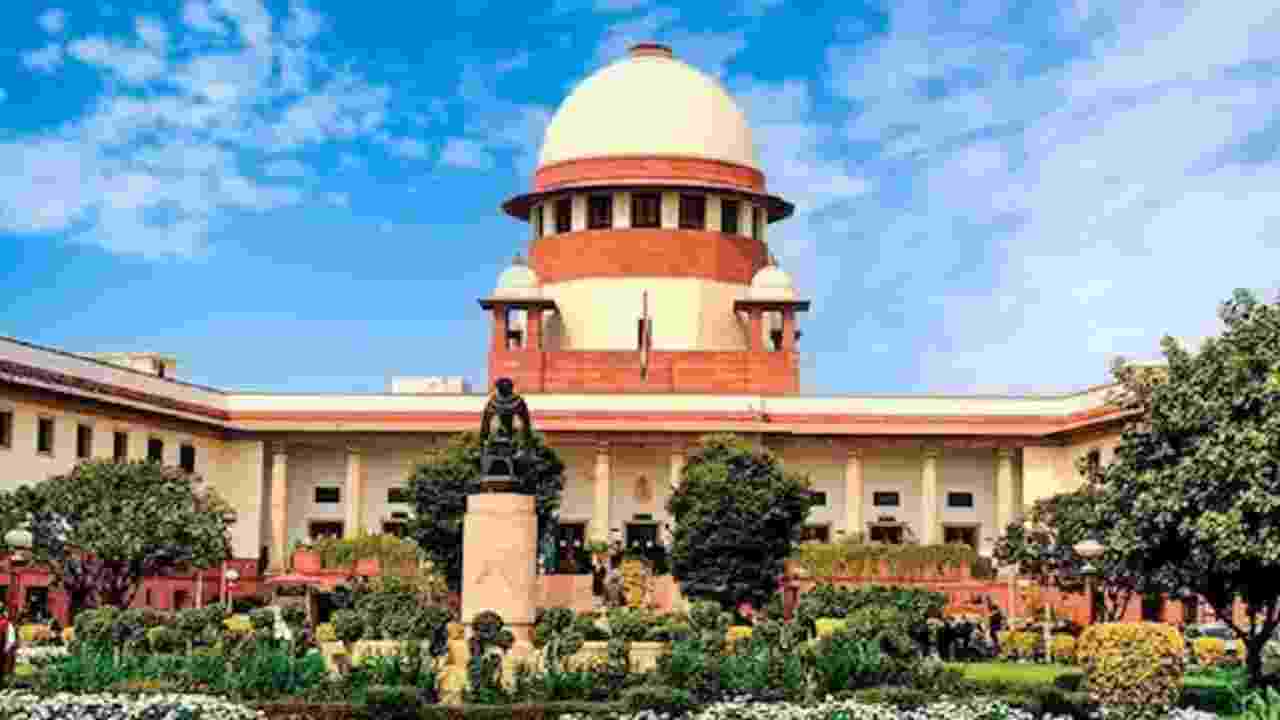
The Supreme Court of India has given a major verdict on two very important matters related to the democratic and electoral processes of the country. On one hand, the court has completely stopped the proceedings on a total of 13 petitions, including that of Dravida Munnetra Kazhagam (DMK) challenging the Special Intensive Revision (SIR) of the voter list in Tamil Nadu, while on the other hand, it has flatly refused to consider the Public Interest Litigation (PIL) seeking to set up a special bench for the time-bound disposal of petitions related to the 2026 Tamil Nadu Assembly elections.
A three-member special bench comprising Chief Justice (CJI) Surya Kant, Justice Joymalya Bagchi and Justice V. Mohana has made important legal observations while hearing these cases. Let us know what is the whole matter and the final stand of the top court:
1. 13 petitions related to Voter List Revision (SIR) closed
DMK had approached the Supreme Court on November 3 last year against the Election Commission’s decision to conduct Special Intensive Revision (SIR) of the voter list in Tamil Nadu. In the petition, this step of the Commission was termed as unconstitutional, arbitrary and a threat to democratic rights.
-
Lawyer’s argument: During the hearing, advocate Vivek Singh, appearing on behalf of DMK’s Organization Secretary RS Bharti, argued before the bench that now there is no need for further hearing or any new decision on these petitions.
-
Citing Bihar decision: The lawyer clarified that recently on May 27, the Supreme Court has given its detailed verdict on the petitions challenging the SIR process in Bihar. In that decision, the apex court had completely validated and upheld this special authority of the Election Commission.
-
Court order: Recognizing the precedent set in the Bihar case, the CJI-led bench closed the proceedings by officially disposing of all the 13 petitions related to the issue.
2. Refusal to hear PIL for early disposal of election petitions
Another PIL was also presented before the Supreme Court, requesting that the Madras High Court be directed to ensure expeditious and timely disposal of 54 pending election petitions related to the 2026 Tamil Nadu Assembly elections.
-
What was the matter: Petitioner K. Senior advocate D.S., appearing for Venkatachalapathi. Naidu and advocate Sameer Malik argued that under Section 86(7) of the Representation of the People Act, 1951 (RPA), election-related disputes should be resolved within six months.
-
Election Result: According to the petition, the Tamil Nadu Assembly elections to be held on April 23, 2026 this year will be contested under the leadership of actor-turned-politician Joseph Vijay. Tamilaga Vetri Kazhagam (TVK) Had achieved a big victory. Subsequently, 54 election petitions were filed from various areas between June 3 and June 18, challenging the validity of the results declared on May 4, which have been long pending.
“Wrong precedent will be set” – CJI Surya Kant:
When the petitioner asked the Supreme Court to direct the Madras High Court to constitute a special bench, Chief Justice (CJI) Surya Kant expressed strong objection to it. The CJI said in clear words that, “If the Supreme Court starts giving such administrative instructions to every High Court, it will set a wrong precedent in the judicial system.”
Got permission to go to Madras High Court
Even though the Supreme Court refused to consider this PIL directly, the bench has protected the legal rights of the petitioner. The court has provided complete liberty to the petitioner to directly apply for his demand and necessary relief. Madras High Court Can approach the Chief Justice of India.
Thus, the Supreme Court has made it clear that the Election Commission has full constitutional authority to correct the voter lists and the apex court does not want to start any wrong precedent by directly interfering in the internal administrative matters of the High Courts.