 look news india

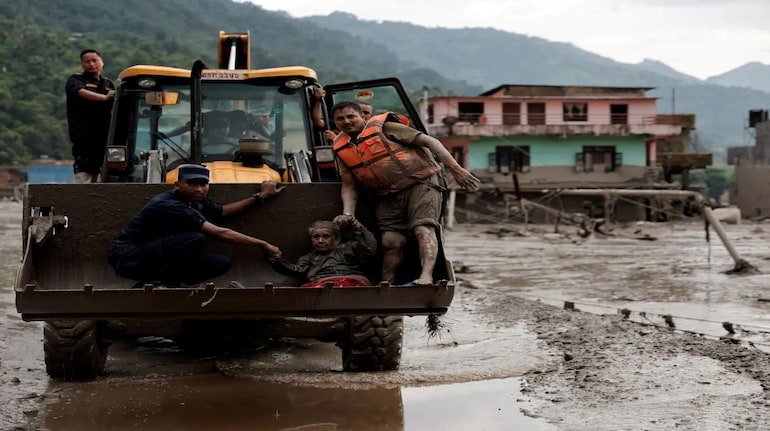
After the catastrophic disaster of 26 August 2026 in Rasuwa, the northern mountainous district of Nepal, once again a big threat of flood and landslides is looming. Nepal’s National Disaster Risk Reduction and Management Authority (NDRRMA) has issued an emergency alert saying that the flow and roar of flood in Bhote Koshi River located in Rasuwa has suddenly increased again. The administration has given strict instructions to the relief and rescue teams operating in the coastal areas of the river and to the local citizens to immediately move to higher and safer places. The administration has asked for ‘red alert’ like vigilance in the low-lying areas of Rasuwa, Nuwakot, Dhading, Gorkha and Chitwan districts, which are suffering from the devastation of the recent floods.
Glacier break and massive landslides near the Langtang Lirung and Sangbu Ri mountain peaks on the Nepal-Tibet border caused severe flash floods with a speed of 75 km/hour in the Lhende Khola and Bhote Koshi rivers on August 26. This unexpected deluge completely destroyed Timure Bazaar, Syafrubaisi and border posts bordering Rasuwa.
-
Death toll: According to the latest data from police and disaster management, more than 675 bodies have been recovered so far.
-
Search for missing people: More than 2,400 people are still missing, including local citizens as well as foreign tourists and laborers working at various hydropower projects.
-
Damage to infrastructure: Dozens of concrete bridges, roads, hotels, houses and many big hydropower projects in the Trishuli corridor have been reduced to debris.
The main reason for the water level rising again in the Bhote Koshi river is a huge artificial lake (Barrier Lake) formed by the accumulation of debris near the Tibet border. According to the Chinese Ministry of Water Resources and satellite images, heavy landslides and snow debris at the confluence of the Chochen Khola and Purepu Tsangpo rivers have blocked the natural drainage of water, causing accumulation of about 25 to 30 lakh cubic meters of water there. Chinese and Nepali scientists have warned that this temporary natural dam can burst at any time. If this barrier lake breaks, the flood of millions of gallons of water and mud can once again cause severe devastation in Bhote Koshi and further in Trishuli river system.
Nepal’s Department of Hydrology and Meteorology (DHM) has issued a new forecast of moderate to heavy rain with thundershowers in the hilly areas of Bagmati, Gandaki, Kosi and Karnali provinces in the coming days. According to meteorologist Hari Prasad Dahal, intermittent rains in the Bhotekoshi catchment area of Rasuwa have left the soil extremely moist and weak, increasing the risk of new landslides. Due to bad weather and dense clouds, air rescue operations being conducted by the Nepali Army, Armed Police Forces and private helicopters are also facing huge problems.
Nepal government has kept the entire machinery on high alert. Following the instructions of Prime Minister Balen Shah, more than 18,000 security personnel and a fleet of 16 helicopters are engaged in ground and air rescue. So far, more than 7,500 people have been evacuated safely from flood-affected remote areas. Technical teams and disaster relief experts from India and China are also helping the Nepalese administration in satellite mapping and ground rescue.
Since the water flow of Bhote Kosi river further enters the Gandak river system in Bihar, India via Trishuli and Narayani rivers, in view of this latest surge in Nepal, the Water Resources Department and NDRF teams have been alerted in West Champaran (Valmiki Nagar), Gopalganj and East Champaran of Bihar. The administration is closely monitoring water discharge and siltation at the barrages to protect the border villages from any sudden inflow.