 look news india

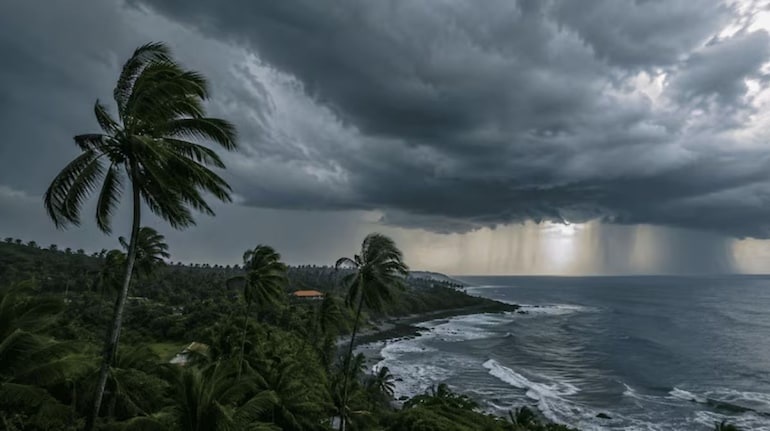
There is a big and slightly disappointing news for the people facing the scorching heat in North-West India including Delhi-NCR. The south-west monsoon, which is progressing at a slow pace across the country, will now not be able to hit Delhi at its scheduled time. According to the latest estimates of the Indian Meteorological Department (IMD), the entry of monsoon in the national capital is expected next week. Generally, the date of arrival of monsoon in Delhi is considered to be around June 27, but this time the wind direction and weather systems are not supporting it.
Meteorologists say that although the monsoon had reached Kerala at the right time, but if we look at the trend of the last few years, it is taking longer than before to reach the states of North-West India. The IMD has also made some changes in the normal dates of arrival of monsoon after analyzing the data between 1961 and 2019, which confirms that the pattern of monsoon is changing.
Wait increased in these states also, Badra rains 41 percent less than normal
The effect of slow movement of monsoon is clearly visible not only on Delhi but also on many other states of the country. Generally, monsoon should cover Chandigarh by 26th June, Delhi by 27th June, Jammu by 28th June, Jaipur by 1st July and the entire country by 8th July. But this year the ground reality is quite different. It is lagging far behind its normal timing in many parts of Peninsular and Central India.
According to recent reports, the northern limit of monsoon has yet reached Surat, Indore, Daltonganj and Motihari. It has still not entered a big state like Uttar Pradesh, due to which the farmers who are preparing for sowing of Kharif crops are very worried. Due to this indifference of monsoon, about 41 percent less rainfall than normal has been recorded across the country in the month of June. The Meteorological Department has warned that even by July 2, the situation is not expected to improve significantly and rainfall will remain below normal.
New update from Meteorological Department: Weather may change here in the next 3-4 days
It is a matter of relief that the Meteorological Department has expressed hope that the monsoon will become active again in the next few days. According to the new bulletin from IMD, conditions are becoming favorable for the advance of monsoon into remaining parts of Uttar Pradesh, Uttarakhand, Gujarat, Madhya Pradesh, Chhattisgarh, Jharkhand and Bihar within the next 3 to 4 days. After this, i.e. from July 2, the monsoon will gradually move towards the remaining parts of Madhya Pradesh and Uttar Pradesh as well as some more areas of Uttarakhand, Himachal Pradesh, Jammu and Kashmir, Ladakh, Punjab, Haryana, Chandigarh, Delhi and Rajasthan.
This delay in the arrival of monsoon has taken the heat and humidity to its peak in North-West India. Severe heat wave is currently going on in many districts of Uttar Pradesh and Bihar. The mercury has reached 43 degrees Celsius in Prayagraj, which is 4 to 5 degrees more than normal. Talking about Delhi, people here are suffering from the humid heat both during the day and night. The maximum temperature of the day is being recorded between 37 to 40 degrees and the minimum temperature of the night is being recorded between 27 to 29 degrees Celsius. However, intermittent strong dusty winds and light storms cause a slight drop in the temperature, but that is proving to be only a temporary relief. Delhi is expected to remain partly cloudy and have strong winds in the coming days also.
El Nino spoils the game, big impact can be seen from June to September
Meteorologists are considering the increasing influence of ‘El Nino’ as the main reason behind the slowness of monsoon this year. Experts have confirmed that El Nino conditions have become fully active in the equatorial region of the Pacific Ocean. Due to increase in sea surface temperature (SST), there has been a major change in global wind patterns, which is having a direct impact on India’s south-west monsoon.
According to the Meteorological Department, this effect of El Nino may become stronger during this monsoon season running from June to September. IMD had also expressed apprehension in its initial long range forecast that this year some parts of the country may see less than normal rainfall. In such a situation, the fear of weak monsoon season in many states seems to be proving true, which can become a big challenge in terms of agriculture and water crisis.