 look news india

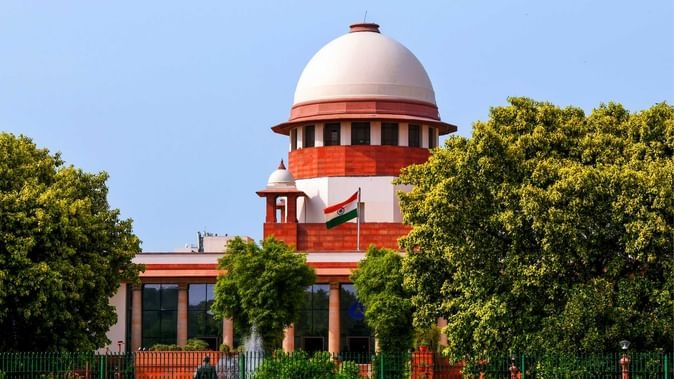
There was a stir in the Supreme Court on Thursday on two big cases. On one hand, there was opposition from the parties regarding the voter list of the Election Commission, and on the other hand, there was a tussle between the central and state governments regarding mining money. Come, let us know in simple language what happened in the court today.
1. Voter list controversy: Now waiting for December 2
Many parties are angry about the revision of voter list (Special Summary Revision – SIR) being done by the Election Commission. Marumalarchi Dravida Munnetra Kazhagam (MDMK) chief Vaiko, DMK and South actor Vijay’s party (TVK), which recently entered politics, have approached the Supreme Court. They say that the method of the commission is not correct and have raised questions on its constitutionality.
The Supreme Court has postponed hearing these petitions today. Now this case will be heard 2 December Will happen. Till then the Election Commission will also have to keep its answer ready.
2. Mining royalty: Central government makes ‘last legal gamble’
The real drama was seen today in the case of ‘Mining Royalty’ i.e. mineral tax.
You will remember that in July 2024, a bench of 9 judges of the Supreme Court had given a historic decision. In this the court had said with a majority of 8:1 that- “The right to impose tax on minerals extracted from underground lies with the state governments, not the Centre.” It was like playing a lottery for the states, because they got the freedom to recover the dues from 2005 till now.
What went wrong today?
Today, when a lawyer asked the court, “When will the remaining applications of the states be heard?”, Solicitor General Tushar Mehta stood up on behalf of the Central Government.
He clearly said that the Central Government has appealed to the Supreme Court against the July decision. ‘Curative Petition’ Have filed. This is considered the ‘last hope’ in the world of law, when the review petition is also rejected.
Tushar Mehta argued, “Whether we win or lose this case, there is no point in hearing the individual cases of the states until our main petition is decided.”
What did the Supreme Court say?
On this, CJI Surya Kant said that he will first check the records and then decide when to list the petitions of the states.
What is the matter? (at a glance)
In fact, last year the court had ruled that mineral rich states (like Jharkhand, Odisha etc.) can also recover old taxes from companies and the Centre. This amount is to be given in installments from April 1, 2026. The Central Government feels that this will impose a huge economic burden and the states should not get so much freedom. Therefore, now the entire onus has come on that ‘curative petition’.
Now all eyes are on the Supreme Court whether it will change its old decision or maintain the rights of the states.