 look news india

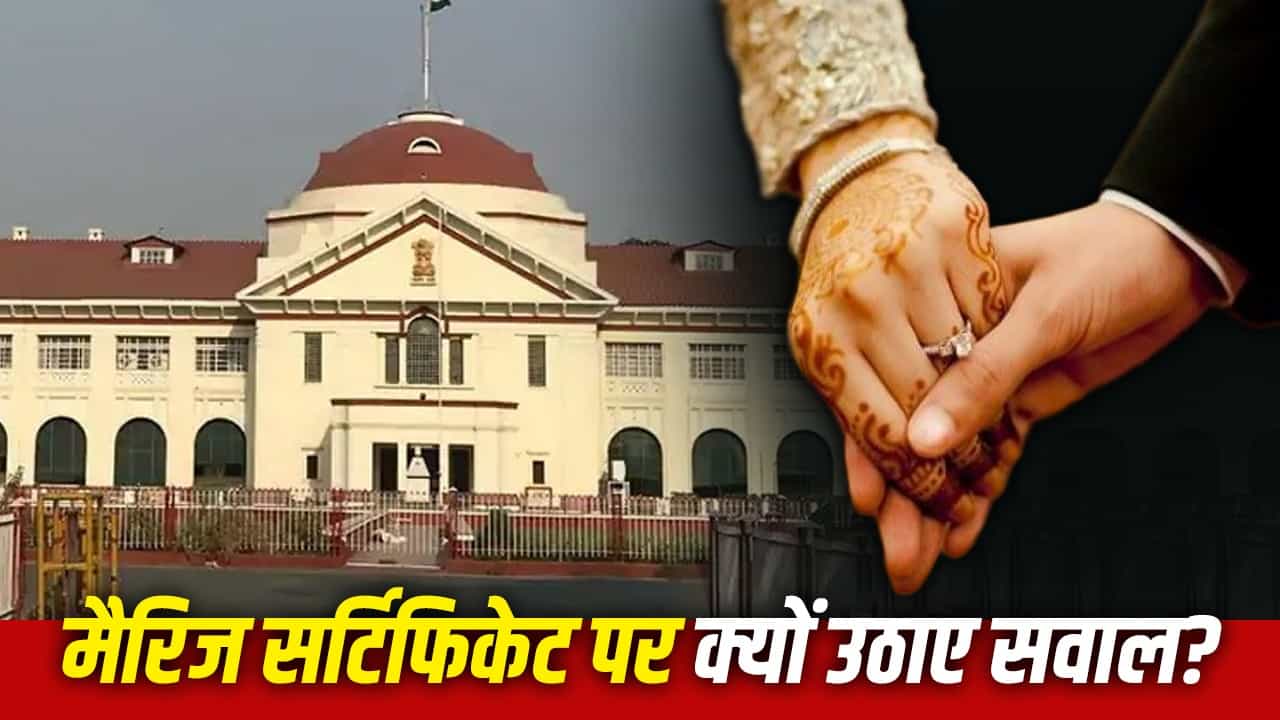
Often people assume that if they have a marriage certificate issued by the government, their husband’s name is registered in the Aadhar card or Voter ID card, then no one can legally challenge their marriage. But in matters of matrimonial disputes and legal maneuvers, the judiciary has many times given such shocking decisions, which have completely changed the perception of the general public. In a very famous and important case, the High Court declared a marriage invalid in the eyes of law, in which both the parties had proper marriage certificate from the registrar office and their names were registered as husband and wife in the voter list. After this decision, this question is arising in everyone’s mind that despite having so many official and solid documents, why did the court consider the marriage illegal?
What was the whole matter and why was the validity of the marriage challenged in the court?
The legal dispute reached the court when a petition was filed by a couple or related family parties regarding matrimonial rights, property dispute or security. The petitioner claimed that both were adults and they had married of their own free will. To prove their marital relationship, the official marriage registration certificate, Aadhaar card and the Voter List of the Election Commission were presented before the court, in which the name of the person concerned was registered as husband next to the woman’s name.
At first glance, these documents may appear to any common man as irrefutable proof of marriage. However, when the other party challenged the legal validity of this marriage and argued that the essential religious and traditional customs of the marriage were not followed, then the court started investigating the entire matter in legal depth. After analyzing the statements of witnesses and evidence, the court found that the marriage being claimed does not meet the basic test of law.
Section 7 of the Hindu Marriage Act: Mandatory ‘Saptapadi’ (seven rounds)
The main legal axis of this tough decision of the court is the ‘Hindu Marriage Act, 1955’. Section 7 Is. According to Indian law, marriage in Hinduism is not just an ordinary civil contract between two persons, but it is a sacred religious sacrament.
Section 7 of the Hindu Marriage Act clearly provides that:
-
Any Hindu marriage will be considered legally valid only if it is solemnized as per the traditional customs and religious rites of either of the parties.
-
If these rituals include ‘Saptapadi’ i.e. the rule of the bride and groom taking seven rounds and repeating seven vows in front of the sacred fire, then the marriage is considered complete and binding only after the completion of the seventh round.
The High Court in its judgment underlined that if mandatory rituals like recitation of Vedic mantras, Kanyadaan or Saptapadi are not performed during the marriage, then a legal marriage does not come into existence merely by garlanding a room or signing the papers.
Marriage Certificate: Is it the final and definitive proof of marriage?
There is a huge misconception among the general public that ‘Marriage Certificate’ is an infallible proof of the validity of the marriage. However, according to the Indian Evidence Act and matrimonial laws, the role of the marriage certificate is only that of a corroborative evidence and not the primary source of substantive validity of the marriage.
The purpose of marriage registration is simply to record that a marriage was registered on a particular date. But if the basic process of marriage (Rites and Ceremonies) itself is found to be non-existent or fake, then the registration certificate built on that foundation also becomes meaningless in the eyes of law. The Supreme Court and the High Courts have reiterated in many of their landmark judgments that:
-
“Registration cannot legalize a void or illegal marriage.”
-
If the mandatory religious rituals of marriage are not proven, the certificate issued by the Registrar can be rejected by the court.
Voter List and Aadhaar Card: Is Administrative Identity Proof of Marriage?
The court also completely rejected the argument that the husband’s name was registered in the voter list, ration card and Aadhar card. The court is of the clear opinion that the voter ID card or voter list is made only to authenticate the identity, age and right to vote of a citizen.
While getting the identity card made at the administrative level, the concerned employees only enter the name of the husband or father on the basis of the self-declaration form of the applicant or the local address. In this process there is no judicial scrutiny of the legal aspects of the marriage, the terms of personal laws or religious rituals. Therefore, having husband’s name written in any government identity card cannot be considered as legal proof of marital status.
Courts take tough stance on marriage certificates of Arya Samaj and illegal trusts
Often, to avoid legal complications and family pressure, couples doing love marriage get certificates made in a hurry from Arya Samaj temples, private trusts or unrecognized institutions. In recent years, many high courts of the country including the Supreme Court and Allahabad High Court have expressed deep displeasure over institutions running like such shops.
Courts have found that many institutions issue marriage certificates for just a few rupees without the presence of parents, without adequate verification of age and without actual Havan-Pooja and Saptapadi. The court has clarified that unless the purohit (pandit) who performed the marriage, witnesses and photographs or videos of the actual rituals are proved as evidence, the marriage cannot be recognized on the basis of such certificates.
Historic decisions of higher judiciary become precedents
There are several landmark judgments of the Supreme Court and various High Courts on this subject:
-
Historical stance of the Supreme Court: The top court has clarified that the performance of the rites required under Section 7 is a mandatory condition for a valid Hindu marriage. If marriage is claimed without these rituals, then it cannot be termed as ‘marriage’.
-
Important comment of Allahabad High Court: While hearing a protection petition, the court had said that “Mere production of marriage registration certificate is not concrete proof of marriage; if the original marriage is not proved then the registration automatically becomes meaningless.”
How to make marriage legally safe? Important lessons for citizens
This judicial decision gives a clear message to the society and the citizens going to get married that documents prepared through shortcuts cannot stand in the court. To keep your marriage legally safe and undisputed, it is essential to keep these things in mind:
-
Always perform marriage with full rituals as per your religious and traditional customs (like Saptapadi, Kanyadaan etc.).
-
Preserve the original photographs, video recordings and invitation cards taken during the wedding ceremony.
-
Be sure to keep the details of the priest/Pandit who solemnized the marriage and the signatures of the reliable witnesses present at the marriage.
-
Only after the completion of the religious rituals, go to the competent government marriage registrar and get it legally registered.
This historic judgment proves that the law does not work merely on formalities on paper, but on the actual integrity of legal procedures and religious customs.