 look news india

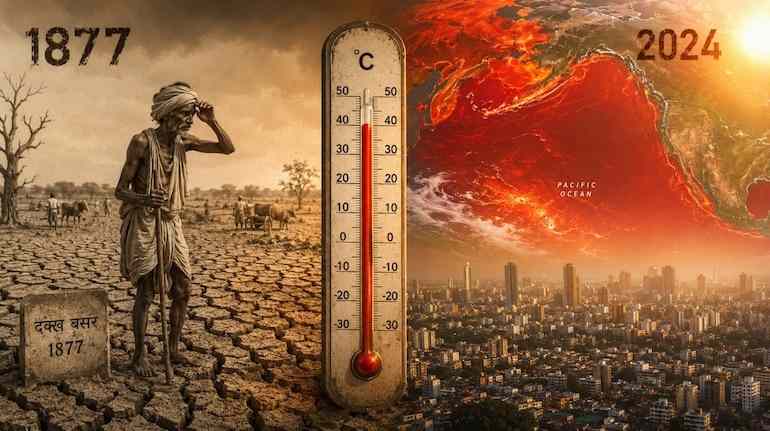
While on one hand the south-west monsoon is advancing rapidly in India and farmers are busy sowing Kharif crops, on the other hand the Food and Agriculture Organization (FAO), an organization of the United Nations (UN), has issued a very worrying and scary report. In its official warning issued on Monday, FAO has made it clear that a new and very aggressive phase of El Nino has started at the global level.
This seasonal change can spoil the entire mathematics of India’s summer monsoon (South-West Monsoon), posing a deep threat to the production of main Kharif crops like paddy and maize in the country. This report has come at a time when the World Meteorological Organization (WMO) had predicted stronger than normal monsoon rains in India, but this new knock of El Nino has deepened the concerns of agricultural scientists, government and farmers.
The biggest threat to paddy and maize crops; Monsoon winds will weaken
According to news agency PTI, in the report released on its official website, FAO has clarified on the basis of satellite data that the effect of El Nino can slow down and weaken the speed of monsoon winds in a large part of India. Due to this, crops that are completely dependent on rain and irrigation, especially paddy and maize, will face severe water crisis during their most important growing season. This risk of drought in this belt of Asia will not be limited only to the farmers’ fields, but its direct and negative impact will also be seen on the global commodity markets (global grain market).
‘High risk’ of drought in these 9 countries of South-East Asia including India
After a thorough analysis of historical satellite data and images over the past 41 years, FAO has identified the world’s most vulnerable areas where a strong El Niño causes the most severe agricultural drought. On the basis of this scientific analysis the following countries of South and South-East Asia ‘High Risk’ Placed in category:
-
India and Pakistan (South Asia)
-
Myanmar, Thailand, Cambodia and Vietnam
-
Philippines, Indonesia and Timor-Leste
Fear of history: El Nino of 2015-16 caused devastation
The report has warned citing the devastating economic and agricultural data of previous El Nino events. In 2015-16, when India faced a very strong El Nino cycle, there was a huge decline of 4 percent in the country’s maize production and 1 percent in paddy production.
About 15 million tonnes (15 million tons) of rice were lost across Southeast Asia during that catastrophic period. Due to crop failure, the prices of rice in the international markets had skyrocketed and the food security and economy of many poor countries of the world dependent on grain imports had completely collapsed.
This cycle will be more dangerous than last time: Jorge Alvarri-Beltran, FAO’s natural resources officer, warned of the dangers of this cycle, saying, “Whenever there is a reduction in monsoon and rainfall, the first and direct hit is to the agricultural system. A farmer first loses his standing crop, then his cattle die due to lack of fodder and in no time his entire livelihood comes to an end. Our assessment is that this El Nino cycle of the year 2026 may prove to be more damaging and aggressive than in the past history.”
Double blow to farmers: drought on one side, expensive fuel and fertilizer on the other side
Amidst this global fear of agricultural drought, Indian farmers are also facing a big blow on the input cost front. FAO notes in its report that the manufacturing costs of crude oil, diesel and fertilizers are continuously increasing globally due to the ongoing geopolitical tensions in the Strait of Hormuz and obstruction to the movement of ships. The rising cost of fuel and fertilizers at this most crucial time of sowing of Kharif crops is putting a huge financial burden on the pockets of Indian farmers.
Loss worth billions can be avoided by early action
This organization of the United Nations believes that if governments take scientific and decisive steps in time, the damage caused can be reduced to a great extent. For example, early in the season just ahead of the 2023–24 El Niño in southern Africa 31 million dollars (about 31 million USD) An emergency fund of Rs. This rapid response provided timely access to improved drought-fighting seeds, livestock fodder assistance and an ‘Early Warning System’ to more than 2 million affected people in 7 countries, which greatly reduced the impact of the disaster.