 look news india

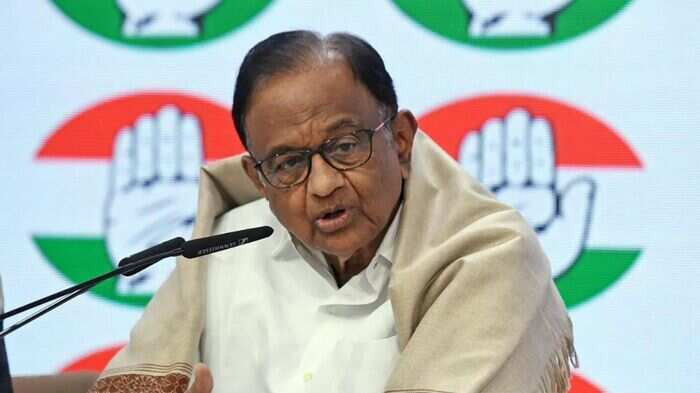
These days, the political temperature in the country’s politics has reached sky high on the issue of ‘One Nation, One Election’. Amidst the efforts of the Central Government to implement this ambitious and much discussed proposal, sharp reactions are coming from the opposition parties. In this context, senior Congress leader and former Finance Minister of the country P Chidambaram has strongly attacked this idea and termed it completely unconstitutional. Chidambaram has bluntly said that his conscience and conscience do not allow him to support such a proposal at all. He believes that this step is not only against the basic spirit of the federal structure of our country, but it will also deeply hurt the diversity and democratic values of Indian democracy.
What is ‘One Nation, One Election’ proposal and why is politics heated up?
The main objective of ‘One Country, One Election’ is to conduct elections of Lok Sabha and Legislative Assemblies of all the states across the country simultaneously, i.e. at the same time. The government’s argument is that due to frequent elections, a huge amount of money is wasted in the country, development work is hampered due to the imposition of code of conduct and there is constant pressure on the administrative machinery and security forces. However, on the other hand, the opposition parties clearly say that even though this idea may seem attractive in theory, implementing it practically and constitutionally can prove to be extremely complex and dangerous. Senior legal experts and politicians like P Chidambaram believe that holding simultaneous elections will stifle regional issues and local aspirations, increasing the chances of national parties getting unfair political advantages and jeopardizing the autonomy of the states.
P Chidambaram raised serious questions and gave constitutional arguments
Former Union Minister P Chidambaram, in his sharp reaction, laid special emphasis on the basic structure of the Constitution. He said that this proposal is a direct attack on the freedom that the Indian Constitution has given to the states to govern the tenure of their assemblies and run local governance. If the elected government in a state loses its majority or falls before the completion of its term, will President’s rule continue for the full 5 years? Or will the people of that state be forcibly deprived of elections? Chidambaram argues that in a vast, multi-cultural and diverse country like India, every state has its own political equations and local issues, which will be completely buried in the rush of national elections.
Far-reaching impact on regional parties and federal structure
Political analysts believe that the country’s regional parties may suffer the biggest loss due to the implementation of ‘One Nation, One Election’. When Lok Sabha and Assembly elections are fought simultaneously on the same issue and on the same wave, voters often exercise their franchise influenced by national faces or national issues, leaving behind issues related to regional identity, language, culture and local development. The beauty of India’s federal structure is that both the Center and the states are independently accountable to the public within their own limits. Changing this system will weaken the political power of the states, which can ultimately become a major crisis for the democratic strength of the country.
The future of this great debate raging in the political corridors of the country
From Parliament to streets and on all legal forums, the debate regarding ‘one country, one election’ has reached its peak. On one hand, the ruling party is adamant that this revolutionary reform is necessary to save the country’s economic resources and make the governance system more efficient, while the opposition and many eminent lawmakers of the country are considering it as a big challenge to the basic spirit of democracy. This sharp statement of P Chidambaram has brought a new twist in this heated debate. In the coming days, this issue is going to become the biggest focal point in the country’s judiciary, parliament and electoral arena, on which the keen eye of every countryman is fixed.