 look news india

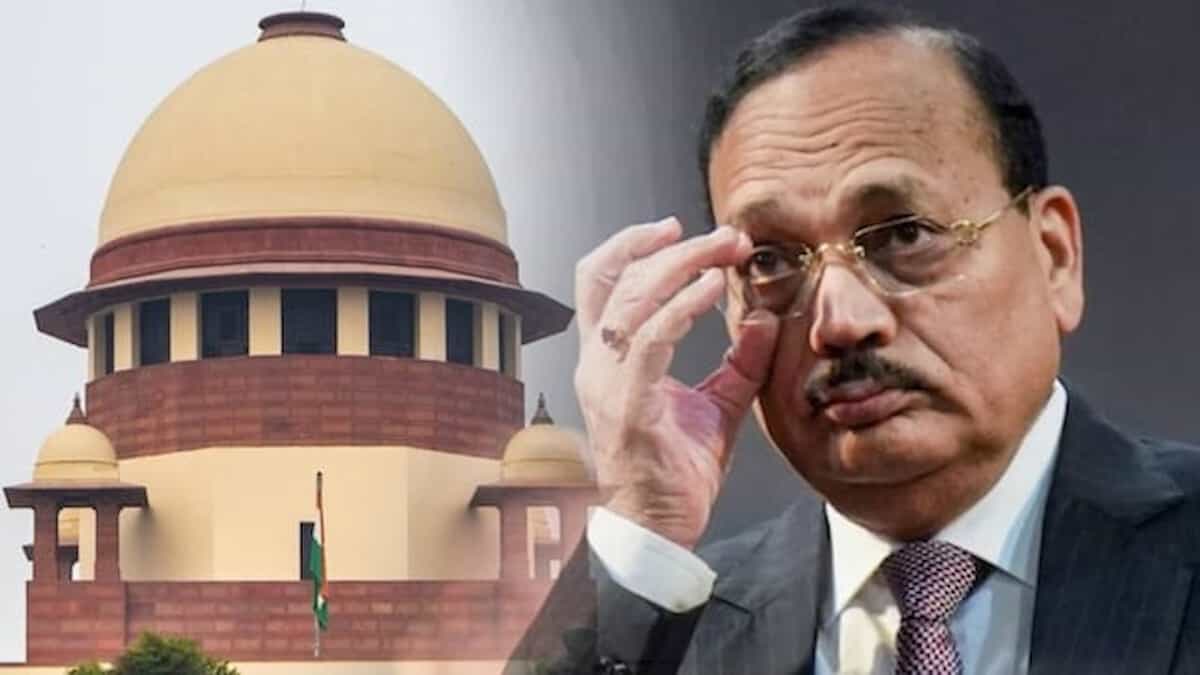
The recent controversy related to the country’s prestigious National Academy of Legal Studies and Research (NALSAR) University has gained momentum, on which the Supreme Court has taken a very strict stance. Chief Justice of India (CJI) Justice Surya Kant has raised sharp questions on the role of Bar Council of India (BCI) and strongly reprimanded it. The court has clearly said that this entire matter is a matter of communication between the Chief Justice and the students of the university, hence any third body or BCI has no right to interfere in it. After this strict comment of the Supreme Court, there has been an uproar in the legal circles and there is discussion everywhere as to how this entire educational and administrative dispute came to a head.
What is the whole NALSAR controversy and students’ protest?
This whole incident started when some students of Hyderabad-based NALSAR University had protested against inviting CJI Surya Kant as the chief guest in the upcoming convocation. The students had written a letter to the university administration demanding reconsideration of this invitation. A section of students were registering their disagreement regarding the comments made during some recent hearings in the Supreme Court and the developments related to the demonstrations. After this protest came to light, the Bar Council of India took prompt and strict action and issued instructions to ban the enrollment of the pass out students of the 2026 batch of NALSAR as lawyers in the State Bar Councils, after which this matter became the main issue of debate across the country.
BCI’s action and subsequent U-turn
There was strong reaction from all sides after the decision of the Bar Council of India to ban the enrollment of students. Many senior lawyers and academicians had termed it as a violation of students’ rights and an excessive step. However, in view of the growing protests and legal criticisms, BCI took a U-turn within a few hours by amending its decision and clarified that most of the students are innocent, so their careers and future will not be played with. Despite this, the matter reached the Supreme Court, where the bench led by CJI Surya Kant, taking suo motu cognizance, expressed deep displeasure over such unnecessary interference of BCI and issued a notice to the Council and sought its reply within two weeks.
CJI’s big statement on students’ right to protest
During the hearing in the Supreme Court, Chief Justice Justice Surya Kant, while emphasizing on democratic values and freedom of expression, said that students have full fundamental right to express their views and protest peacefully. While sharing the memoirs of his student life, he said that he himself has been actively involved in student movements and activities in his early days. CJI bluntly said that if students give any statement or register their protest at a young age, it does not mean that their right to be vocal or protest should be completely abolished. The court also directed that no punitive action should be taken against any student or faculty member of NALSAR, thereby sending a positive message to the entire academic world.