 look news india

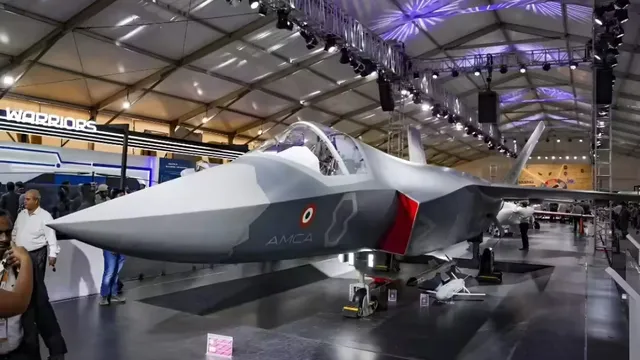
India’s dream of building a fifth generation stealth combat aircraft (AMCA) is close to reality, but a technical hurdle has arisen in this flight. Recently, American company General Electric (GE) has increased the prices of F414 engines by three times, raising concerns in defense circles. India has prepared the aircraft’s structure, radar and weapons with indigenous technology, but the ‘heart’ of the aircraft i.e. the engine is still dependent on imports. Due to this sudden increase, the initial budget of Rs 15,000 crore seems to be wavering.
Why is engine replacement a difficult task? Defense experts believe that it is not easy for India to change the engine at this stage. The Aeronautical Development Agency (ADA) designed the entire AMCA aircraft based on the capacity and measurements of the F414 engine. If the engine is changed, not only will the entire design of the aircraft have to be reworked, but the project’s IAF induction deadline of 2034-35 could also be further pushed back. This problem is not limited to AMCA only, but Tejas Mk2 also depends on this engine.
Why is the world lagging behind in engine technology? Surprisingly, not only India, but also powerful countries like South Korea (KF-21), Turkey (KAAN) and Sweden (Gripen E) are using American engines for their indigenous fighter jets. Building fighter jet engines is one of the world’s toughest engineering challenges. This requires ‘single-crystal blades’ and state-of-the-art metals that can withstand extremely high temperatures. At present, only America, Russia, France, Britain and China in the world have completely independent technology available to make fighter jet engines.
India’s ‘Kaveri’ and the path to the future India had tried to develop ‘Kaveri engine’ years ago, which could not succeed in giving the required power to the fighter jet as expected. However, that technology is now set to be used in India’s ‘lethal’ drones (UCAVs). In the current situation, this tussle over engine prices is forcing India to move faster towards ‘engine self-reliance’. The times to come will decide how India breaks this global dependence and further strengthens its defense power.