 look news india

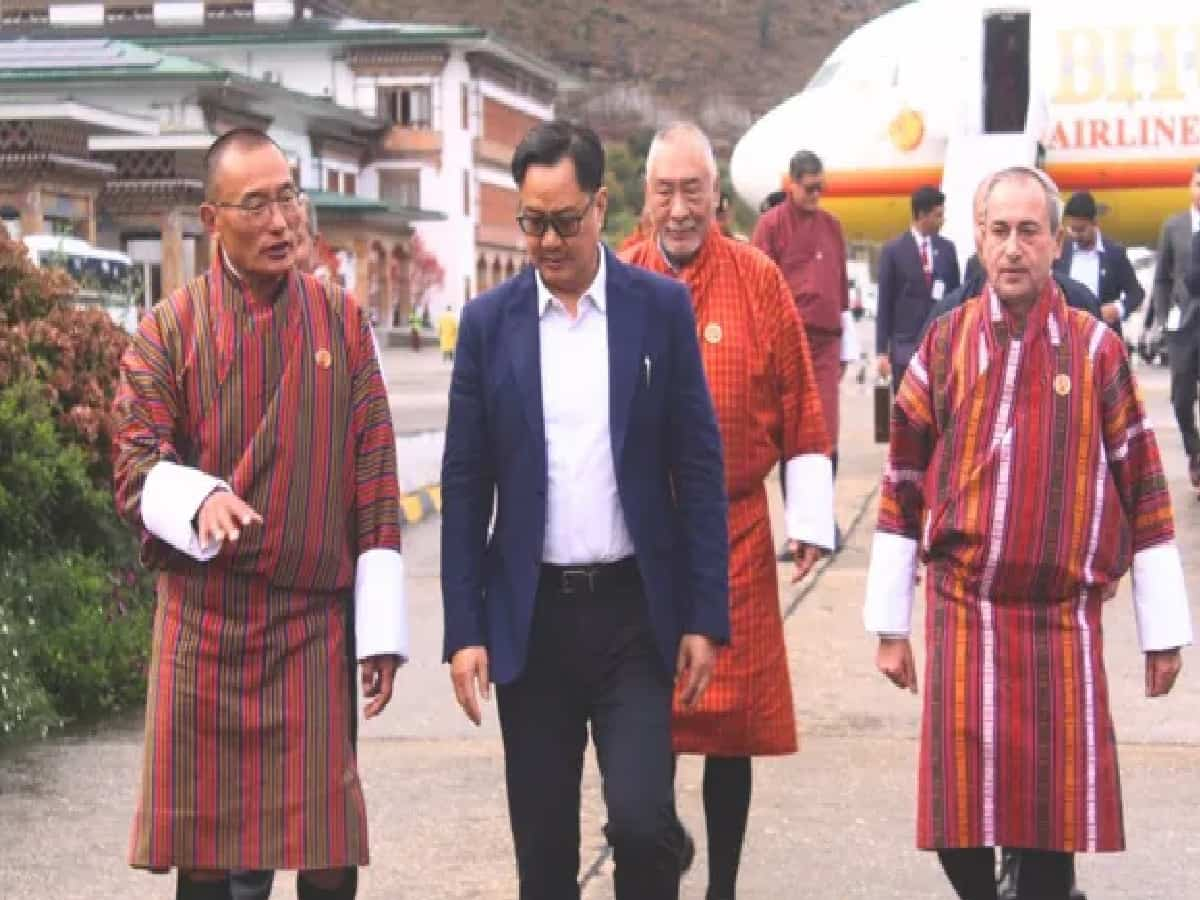
A very sacred, grand and historic moment is unfolding in the history of Asian diplomacy, spiritual engagement and Buddhist culture. A very wonderful and ambitious event related to Buddhist tradition has started in India’s neighboring and friendly country Bhutan. Together in Glephu Mindfulness City, an emerging and strategically important city of Bhutan 108 Jangchub Chorten (Sacred Stupas) The historic work of construction has officially started from Sunday. Union Minister of Parliamentary Affairs and Minority Affairs to officially represent the Government of India in this extremely sacred and spiritual observance Kiren Rijiju Specially reached Bhutan. The event, which began with the sound of traditional trumpets, chanting of Buddhist mantras and cultural dignity, not only reflects the close ties between the two countries, but is also providing a new energy to the spiritual consciousness of Buddhism at the global level. Let us know in detail what is the specialty of this great event of Bhutan and what role has Kiren Rijiju played in it.
Inaugurated with the sound of traditional trumpets and the Mahamantra of ‘Om Mani Padme Hum’
This historic ceremony being organized in Bhutan has been started in a very unique and traditional way. The grand ritual held at Gelephu began with the melodious and resonant sound of 58 traditional trumpets, which are played to invoke deities and positive energy in the Tibetan Buddhist tradition. With the echo of these sacred instruments, all the lamas, saints and dignitaries present there collectively chanted the most famous and powerful mantras of Buddhism. ‘Om Mani Padme Hum’ Chanted.
The resonance of this mantra fills the entire atmosphere with completely spiritual and peaceful energy. Union Minister Kiren Rijiju, who is leading the Indian side in this ceremony, has described this moment as a very proud and historic moment of his life. After landing at Paro International Airport, Bhutan’s Prime Minister His Excellency Dasho Tshering Tobgay and Foreign Minister Lyonpo D.N. Dhungel welcomed Kiren Rijiju very warmly. Even when Rijiju was leaving for Gelephu, the venue of the ceremony, the Bhutanese Prime Minister himself drove by, setting a unique and heartfelt example, for which the Indian Minister expressed his deep respect.
Establishment of 108 stupas at one place can become a Guinness World Record
In one of the largest and most spiritual events in Bhutan, for the first time in the world, 108 sacred stupas (Jangchub Chorten) are being established and fully consecrated at one place. Given the grand scale of this event, the discussion has intensified at the international level that this unique ritual is a phenomenon in itself. Guinness World Record Can also register.
Highlighting the importance of the entire process, Choten Dorji, Principal Secretary of the ‘Central Monastic Body’, the official state monastic body of Bhutan, said that this is a very sacred and esoteric ceremony of Vajrayana Buddhism. It is seen as the awakening of Lord Buddha himself and an extension of his compassion. According to Buddhist philosophy, any ordinary architectural monument has to undergo a long spiritual process to become a sacred stupa endowed with divine power. The entire process has started with the laying of the foundation stone for the establishment of the stupas on Sunday, which will further conclude with the complete construction of all these monuments and their grand religious consecration.
What is the deep significance of stupas in Buddhist architecture and history?
This ancient tradition of building stupas is considered one of the most sacred and original practices of Buddhism. If we turn the pages of history, such architectural monuments are directly considered to be the supreme symbols of Gautam Buddha’s enlightened mind, his physical body and his infinite consciousness. This tradition originated in the 5th century BC, soon after the Mahaparinirvana (death) of the great Gautam Buddha.
According to mythological and historical evidence, when Lord Buddha was cremated, his sacred remains were divided into eight separate parts and were preserved under earthen mounds in the early stages. Centuries later, the great Mauryan emperor Ashoka uncovered these original relic mounds, divided the sacred remains of the Buddha into 84,000 separate parts, and began the historic task of building massive stupas throughout his vast empire. Today the same ancient and sacred Buddhist tradition is being revived in a modern and peaceful environment in Gelephu, Bhutan.
Unbreakable cultural and spiritual relations between India and Bhutan
This visit of Union Minister Kiren Rijiju and India’s participation in this grand event proves that diplomatic relations between India and Bhutan are not limited to mere political agreements, but are based on centuries-old shared spiritual and cultural heritage. This ‘Gelephu Mindfulness City’ project, which is being conceptualized by His Majesty the King of Bhutan, is going to become a unique center for peace, mental health and living in harmony with nature for the whole world. This construction of 108 stupas will further strengthen the threads of friendship between India and Bhutan as well as emerge as a major pilgrimage site for Buddhist followers from all over the world.