 look news india

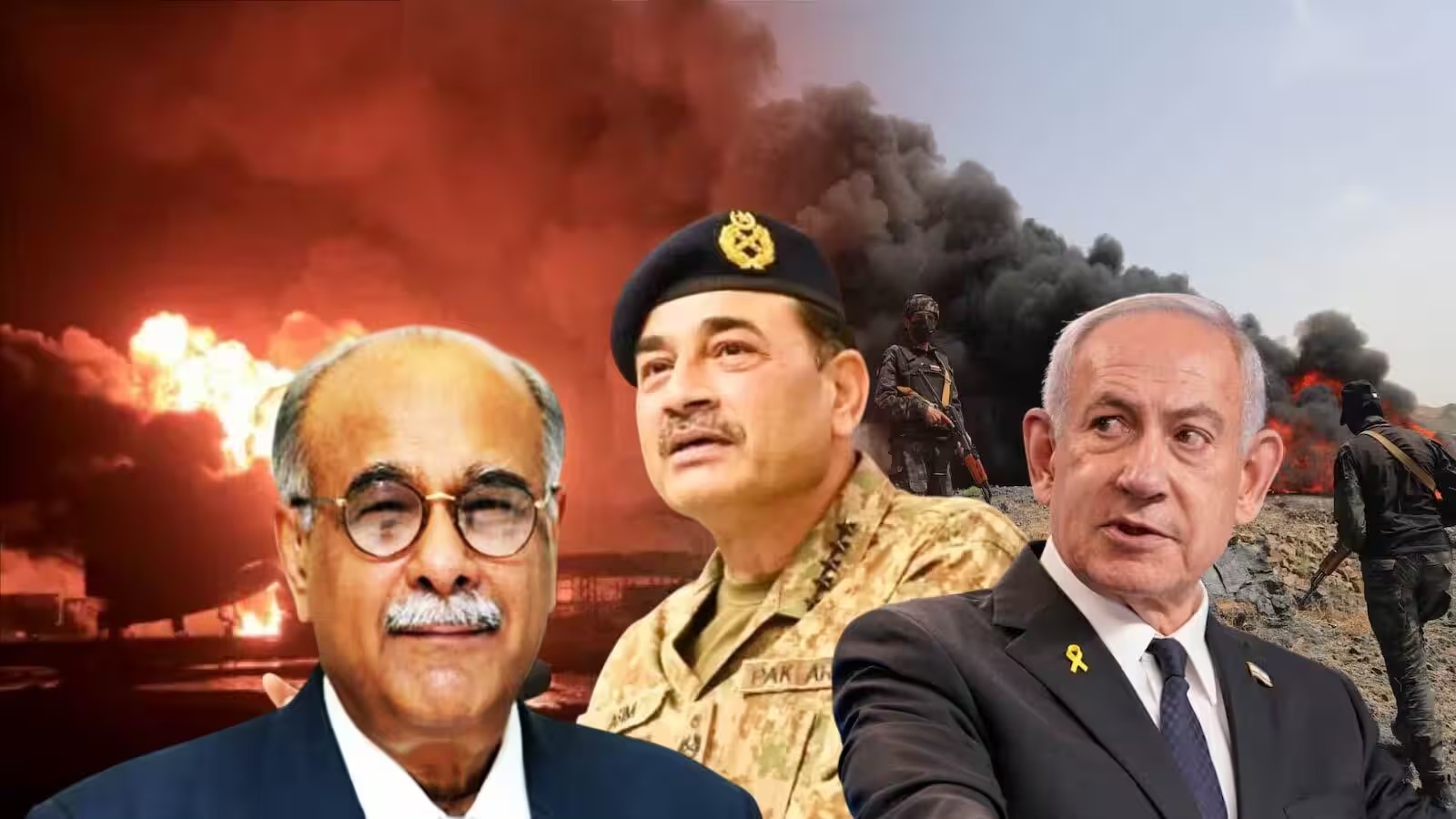
There is a sensation these days in the geopolitics of the Middle East. Recently, shocking revelations are coming out one after the other regarding the much talked about ‘Mecca Defense Pact’ between Saudi Arabia, Turkey and Pakistan. Meanwhile, a defense strategist and a close aide of Pakistan Army Chief Field Marshal Asim Munir has exposed the inner secrets of this so-called Islamic military alliance, which were kept confidential till now. After this revelation, the stir in the corridors of international diplomacy has intensified. Experts believe that even though on paper this agreement is being shown as a security shield, the reality is that Israel, on the strength of its defense policy and strategic capability, has made it impossible for countries like Pakistan and Turkey to expand their strategic foothold in the Middle East. The Israeli intelligence and military apparatus have made it clear that they will not compromise their security at any cost and any external or suspicious interference in the region will be immediately eliminated. Reality and internal weaknesses of Mecca Pact: When Saudi Crown Prince Mohammed bin Salman, Turkish President Recep Tayyip Erdogan and Pakistan Prime Minister Shehbaz Sharif signed the trilateral defense agreement in the holy city of Mecca in Saudi Arabia in the month of August this year, it was presented in the media around the world as a huge Islamic military alliance. The blueprint of this agreement was prepared in such a way that Saudi Arabia would use its economic power and funds, Turkey would use its modern drone technology and NATO-like military capability, while Pakistan would use its military and nuclear power. The articles of this pact were made in such a way that if there is an external attack on any one member country, it will be considered an attack on all three countries, which is exactly on the lines of Article 5 of NATO. But, recent inside reports by Pakistan’s rulers and analysts considered close to Munir have deflated this pact. In this revealing report, it has been admitted that this agreement is hollow from within because the geopolitical interests, priorities and boundaries of the three countries are completely different from each other. While on one hand Saudi Arabia wants economic prosperity and stability under its ‘Vision 2030’, Türkiye is busy pursuing its regional ambitions. On the contrary, Pakistan, which is going through a period of economic crisis, is trying to keep itself relevant on international forums and get funds through this alliance. Due to this contradiction, the Mecca Pact has started falling victim to internal strife even before it could be proven effective on the ground. Israel’s aggressive strategy and Tel Aviv’s blunt warning have put a major blow to Israel’s security policy, which has ruined the plans growing under the shadow of the Mecca Pact. Tel Aviv’s government and defense forces (IDF) have given a very clear message regarding their presence in West Asia. Israel believes that the combination of Turkish President Erdogan’s policies and the radical mentality of the Pakistani army can become a major threat to the peace of the Middle East. This is the reason why Israel has strengthened its hold on the security front. The Israeli defense establishment has made it clear that they will not give any scope to Pakistan and Turkey to establish a foothold near their borders or under the cover of Gulf countries. All the countries of the Middle East are well aware of Israel’s state-of-the-art missile defense system, strong intelligence agency Mossad and its offensive military capability. Israel has made it clear at the diplomatic and military level that if in the name of this so-called defense agreement, elements promoting terrorism or creating instability try to increase their interference in the Gulf region, then the Israeli army will give a befitting reply without wasting a moment. This stance of Israel has made it clear that it will not allow any new balance of power in the Middle East to penetrate its security circle, no matter how many countries are included in it. Changes in regional equations and strategic advantage for India Another important aspect of this entire development is its impact on the regional balance. Since the coming into existence of the Mecca Pact, new equations seem to be forming between the countries of Asia and the Middle East. On one hand, Pakistan and Turkey are trying to establish themselves as contractors of the Islamic world through this agreement, on the other hand, the continuous attacks by Yemen’s Houthi rebels and the changing situation with Iran have exposed this pact. The attacks on Saudi Arabia’s oil facilities shortly after the agreement proved that this paper defense pact had completely failed to protect Saudi soil. Seen from India’s strategic point of view, this situation opens up new strategic possibilities to a great extent. Diplomatic experts believe that despite such diplomatic conspiracies being hatched by anti-India forces, Saudi Arabia and other Gulf countries cannot ignore a huge and stable market like India for their economic and energy needs. India’s deep and trusting strategic relations with Israel guarantee that forces supporting terrorism and extremism will not be allowed to dominate the region. This poll, opened by Munir’s close aide, has proved that neither the Middle East can be changed nor a superpower like Israel can be challenged by hollow agreements and claims of nobility. In the coming days, it will be very interesting to see how long this Mecca Pact, limited on paper, can survive amidst the blows of regional politics.