 look news india

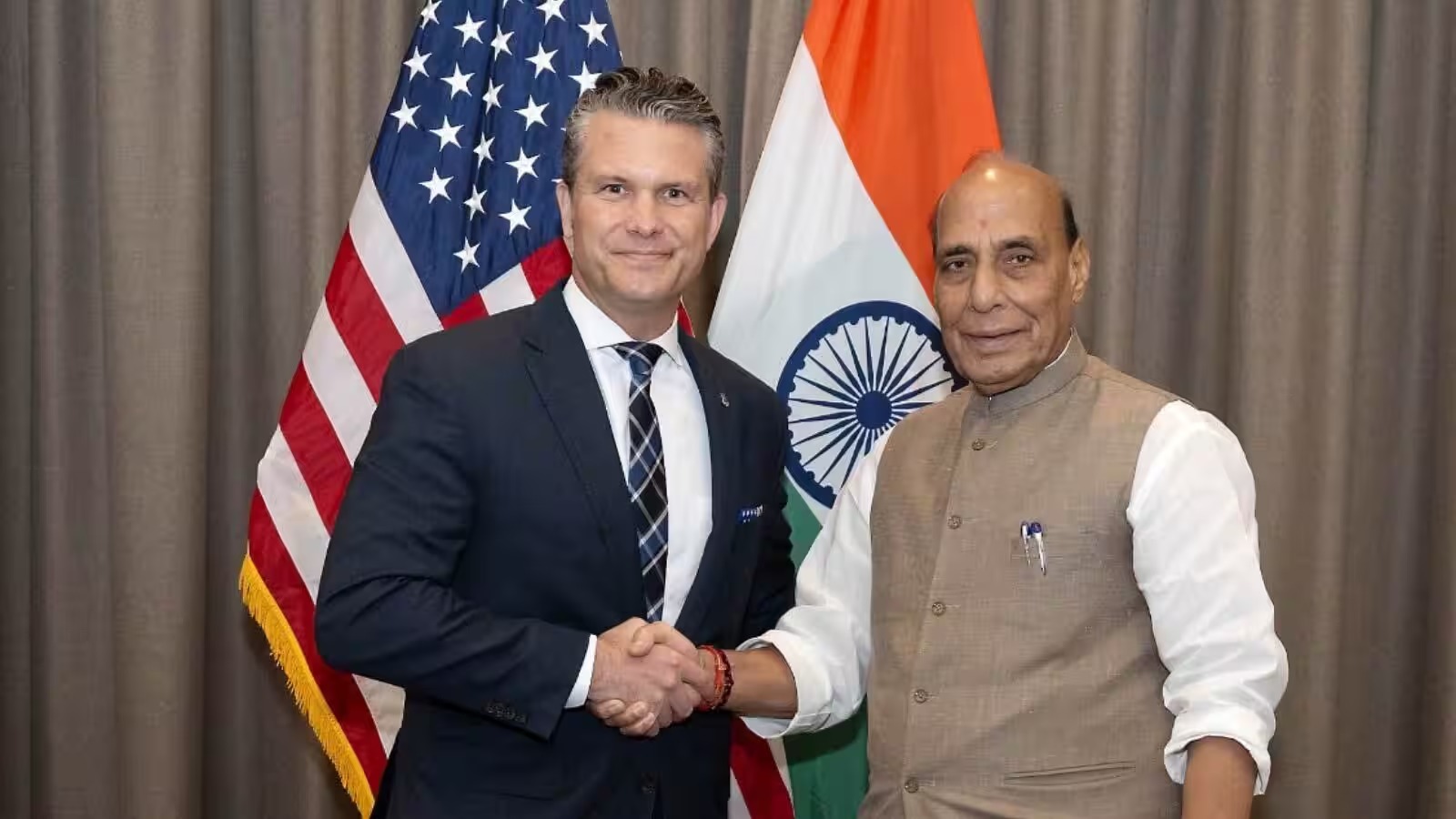
India and the United States have agreed to an ambitious 10-year defense framework agreement, taking their strategic relations to a new historic juncture. During the high-level bilateral defense talks held in New Delhi, Indian Defense Minister Rajnath Singh and the US Secretary of Defense have prepared a comprehensive roadmap to deal with future global and regional security challenges. During this historic meeting, the top leaders of both the democratic countries deliberated deeply on defense cooperation, shared transfer of military technology, joint construction and maintaining strategic stability in the Indo-Pacific region for the next decade. The talks took place at a time when geopolitical equations are changing rapidly at the global level and the need for strategic autonomy and regional security has become more important than ever. In the meeting, both the leaders resolved to carry forward the shared vision while respecting each other’s security interests.
The most prominent point of this bilateral meeting is the defense roadmap decided between India and America for the next 10 years. Under this framework, both the countries will emphasize on the policy of co-development and co-production. The US has agreed to cooperate in the manufacturing of modern fighter aircraft engines, jet technology, advanced drones, naval surveillance systems and precision guidance missile technology in India. Defense Minister Rajnath Singh stressed that India no longer wants to remain a mere arms importer, but is committed to domestically manufacturing cutting-edge technologies in collaboration with the US under the ‘Make in India’ and ‘Atmanirbhar Bharat’ campaigns. The US Defense Secretary considered India a strong and reliable partner in the global supply chain and promised to take defense industrial cooperation to new heights.
This meeting is considered very important from the global security point of view, especially in view of China’s increasing military activities and aggressive stance in the South China Sea and the Indian Ocean. The two leaders unanimously reiterated that building a free, open, inclusive and rules-based Indo-Pacific region is the key to global peace. During the talks, it was agreed to further strengthen security cooperation under the ‘QUAD’ framework. To strengthen naval cooperation, it was decided to further ease the exchange of ship repairs, logistics support and shared intelligence between the two countries. This agreement will enhance the operational capability of the Indian Navy in the Indian Ocean as well as give a new edge to interoperability with the US Navy.
Apart from military technologies, the meeting also reviewed the progress of ‘INDUS-X’, a platform connecting the defense research and startup ecosystem of the two countries. Through this, defense startups, academicians and research institutes of both the countries are working together on new innovations in the areas of artificial intelligence (AI), cyber security, quantum computing and space defense. Rajnath Singh said that this 10-year agreement is not just an agreement between two governments, but it creates an unbreakable bridge between the defense industries and technological innovations of the two countries. This strategic partnership will not only modernize the Indian Defense Forces but will also further strengthen the military credibility of both the countries at the global level.