 look news india

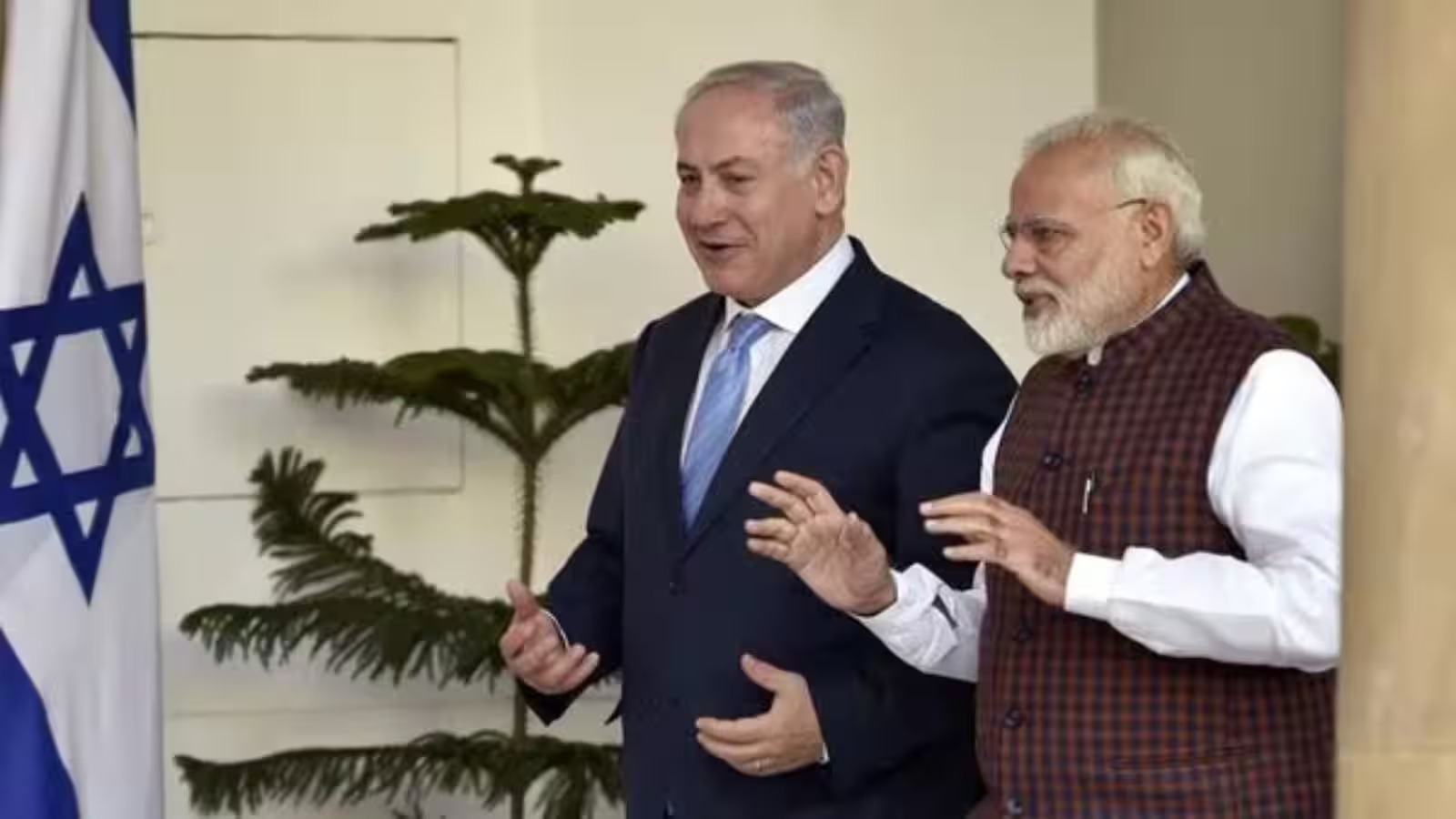
Whenever any new political or strategic development takes place in the rapidly changing geopolitical scenario of West Asia (Middle East), its direct impact is felt in the foreign policy corridors of New Delhi. The ongoing political turmoil in Israel, the upcoming elections and possible changes in leadership there are not limited to Tel Aviv or Jerusalem alone, but also directly impact India’s vast economic and strategic interests. India-Middle East-Europe Economic Corridor (IMEC), bilateral defense partnership, co-production of cutting-edge defense technologies and India’s delicate diplomatic balancing with Arab countries are the key points that may take a new shape with the changing power equations in Israel. This is the reason why the Indian government is keeping a close eye on the upcoming elections in Israel and the foreign policy of the new government formed there.
The first and foremost reason for India keeping a close eye on the Israeli elections is the success of the ‘India-Middle East-Europe Economic Corridor’ (IMEC). Announced during the G-20 summit held in New Delhi, this corridor is a very ambitious economic plan to connect India with Europe via the United Arab Emirates (UAE), Saudi Arabia, Jordan and Israel. Israel’s strategic position and its historic Haifa Port are considered the most important links in this international corridor. It is noteworthy that Indian corporate group Adani Group has taken over the operation of Israel’s Haifa Port by directly investing billions of dollars. If, after Israel’s elections, a government is formed that proves slow in reducing tensions with regional Arab countries and taking forward the ‘Abraham Accords’, then the pace of the IMEC project may slow down. For India, this corridor is the main means of reducing dependence on the Suez Canal and fast delivery of goods to Europe, hence political stability in Israel is very important for India’s infrastructure investment.
The relationship between India and Israel has been established not only as a trade but also as a time-tested defense partner. For decades, Israel has been providing India with high-tech defense equipment such as the Barak-8 missile defense system, Heron drones, Spike anti-tank guided missiles and advanced radar systems. But in recent years, this relationship has no longer been merely ‘Buyer-Seller’ but has transformed into joint manufacturing of arms and defense technologies in India under the ‘Make in India’ initiative. Many Israeli companies in India are manufacturing drones, small arms and missile components in collaboration with Indian private and government defense enterprises. Any leadership reshuffle in Israeli politics will determine whether the future Israeli government maintains the momentum of sharing sensitive military technologies and AI-based cyber security solutions with India. The Indian defense forces are dependent on continued technological supplies from Israel to maintain their operational preparedness, making this election also sensitive from India’s security point of view.
The biggest success of India’s foreign policy is considered to be its ‘Diplomatic Balancing Act’ in West Asia. On one hand, India has maintained close strategic relations with Israel, on the other hand, it has taken its strategic and energy relations to new heights with Saudi Arabia, UAE, Qatar, Egypt and Iran. India is also an active member of the modern four-tier forum ‘I2U2’ (India, Israel, US and UAE). However, the ongoing conflict between Israel and Palestine/Gaza and Israel’s growing tensions with Iran have increased the challenge for India in maintaining diplomatic balance. India wants a practical and stable government in Israel that can promote multilateral regional cooperation in the Middle East. If Israel’s future leadership keeps the path of dialogue open with Arab countries, it will make it easier for India to carry forward its ‘Look West’ policy smoothly.
The outcome of the Israeli elections is not limited to just war or peace, but they will also determine the future of India-Israel cooperation in cutting-edge technologies like AI, quantum computing, semiconductors and water management. Israel’s drip irrigation and desalination technology is being used extensively to deal with the water crisis in India. Additionally, India has a large expatriate population (about 90 lakh Indians) working throughout the Gulf region, whose security and employment are directly linked to the overall peace of the Middle East. Who will take charge of power in Israel will decide whether there will be stability in the Middle East or the scope of the conflict will expand further. India’s clear strategy is to maintain regional peace so that its commercial trade routes are safe, its citizens are safe and mega-projects like IMEC can be completed without any hindrance. For these national, economic and strategic reasons, New Delhi is keeping a close watch on Israel’s electoral chessboard and every political upheaval there.