 look news india

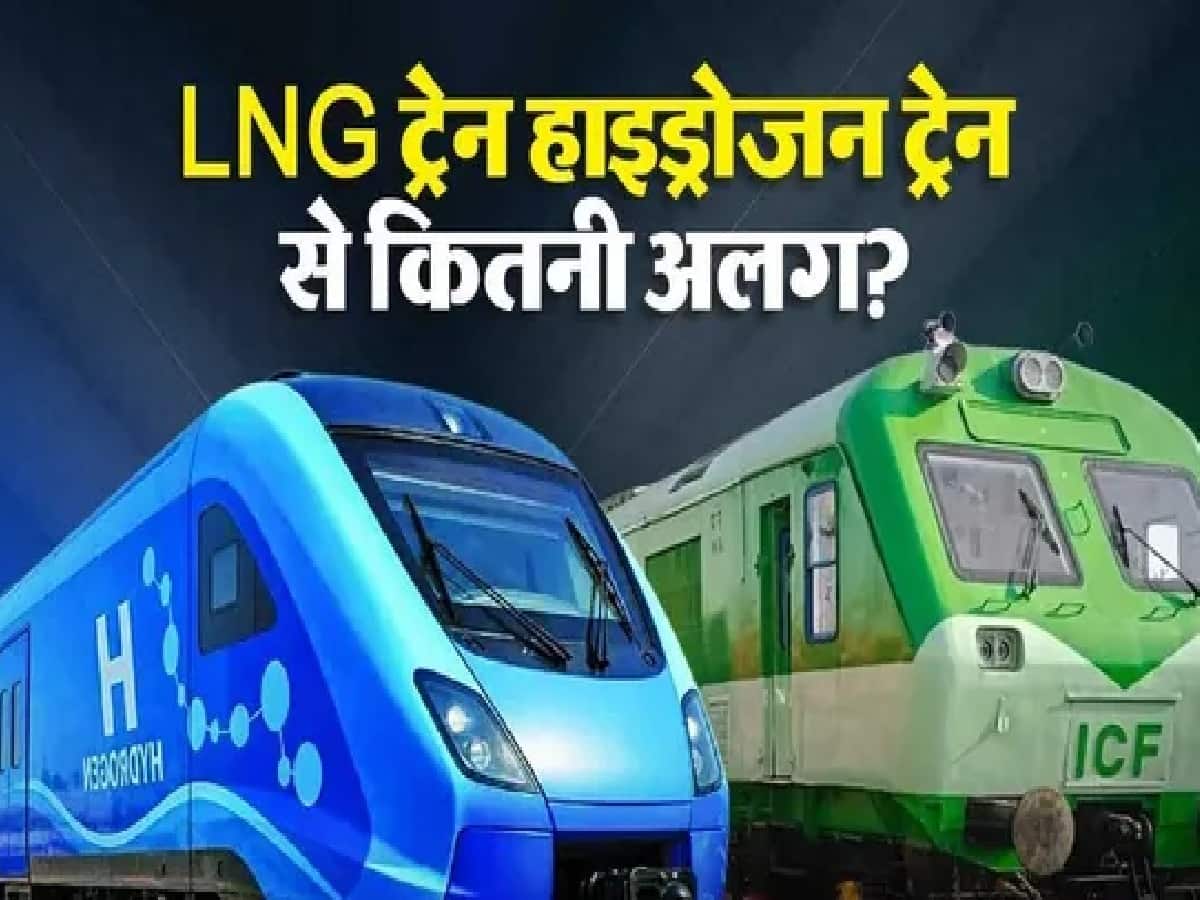
Indian Railways has crossed another historic milestone towards its ambitious goals of environmental protection, drastic reduction in carbon emissions and reducing dependence on fossil fuel i.e. diesel. Almost 10 months after the successful operation of its first hydrogen train, Indian Railways has now formally launched the country’s first train running on Liquefied Natural Gas (LNG).
Union Home Minister Amit Shah flagged off the country’s first LNG train from Sabarmati Railway Station in Gujarat. On this historic occasion, several other development projects related to Railways costing more than ₹1,500 crore were also dedicated to the nation, including Doubling, Kavach Train Safety System, Automatic Signaling and modern maintenance shed for WAG-12 electric locomotives.
This first LNG-powered train of India will play an important role in the green transition of Railways in the coming times. This state-of-the-art train is based on dual-fuel technology, which has been specifically developed for Driving Power Cars (DPCs). Two DPCs of 1,400 horse power (HP) capacity at Sabarmati Integrated Coaching Depot have been modified to be equipped with this dual-fuel technology.
These modified DPCs have been successfully field tested over 2,000 kilometers to test the actual efficiency and reliability of this new technology. According to railway data, the use of this dual-fuel system will directly reduce the consumption of conventional diesel. Huge reduction of up to 40 percent Can be brought. This technology allows the engine to automatically switch to LNG or diesel depending on fuel availability, allowing the train to travel long distances without any interruption.
Each modified DPC is fitted with a robust LNG cryogenic tank of approximately 2,200 liter capacity, which can safely hold approximately 850 to 900 kg of usable LNG. This one full tank of LNG enables the train to travel up to about 1,600 kilometres, eliminating the need for frequent refueling.
Currently, this country’s first LNG-Diesel Dual-Fuel DEMU (DEMU) train is being run as a non-AC chair car with 8 coaches between Sabarmati and Mahesana Junction in Gujarat. On the environmental front, this system results in a significant reduction in carbon dioxide (CO2), nitrogen oxide (NOx) and harmful particulate matter (PM) emissions, which will prove helpful in meeting the target of ‘Net Zero Carbon Emission’ of Indian Railways.
There is a big difference technically between these two ambitious alternative-fuel systems of the Railways. Let us understand it in simple language:
-
Hydrogen Train: This train works on an advanced fuel-cell based propulsion system. It generates electricity from the chemical reaction taking place between hydrogen and oxygen inside the train. The biggest advantage of its operation is that only water vapor is released as its by-product, and it does not produce any kind of smoke or carbon emissions. India’s first hydrogen train has been operated between Jind and Sonipat in Haryana.
-
LNG Train (Liquefied Natural Gas Train): The train uses a conventional internal-combustion engine, upgraded to a dual-fuel LNG-diesel system. This engine primarily uses a blend of LNG with diesel, which reduces diesel consumption by up to 40%, but is not a completely zero-emission system.
If analyzed from the point of view of environment and sustainability, hydrogen train is considered to be cleaner and eco-friendly than LNG train, because hydrogen technology has zero tailpipe emissions. However, given the country’s vast rail network and existing infrastructure, LNG dual-fuel technology can be implemented at a lower cost and faster on existing diesel engines. Both these modern technologies of Indian Railways are revolutionary steps towards making the Indian transport of tomorrow completely pollution free and self-reliant.