 look news india

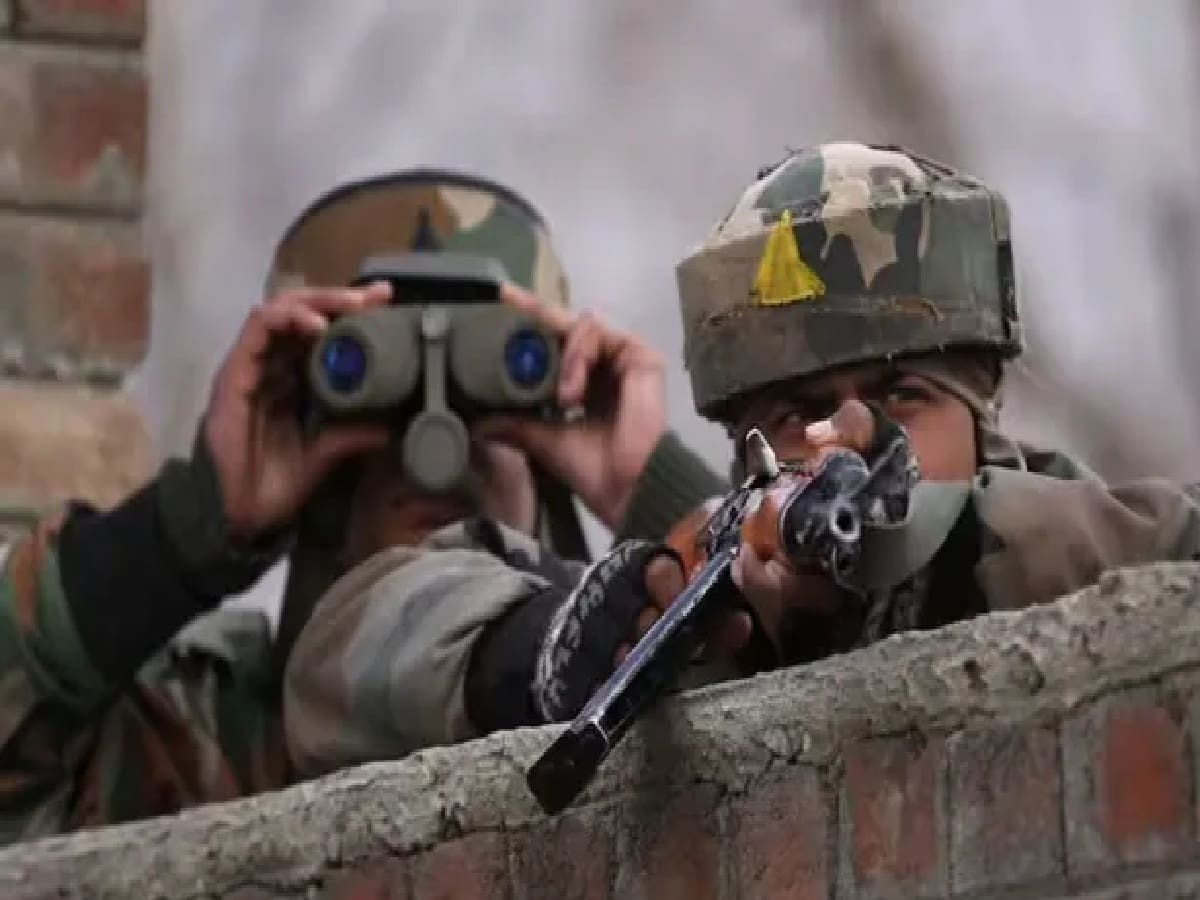
The date of 29 September is recorded in Indian military history as a golden and decisive achievement, which changed the country’s defense policy and strategic thinking forever. Today India is completing 10 years (a decade) of the historic surgical strike carried out across the Line of Control (LoC) in 2016. It was this bold military action that gave a clear message to the world that the new India will not be limited to mere diplomatic statements and protests against terrorism, but has the full capacity and political will to enter home and give a befitting reply if needed.
This historic step laid the framework for larger, decisive and aggressive operations against cross-border terrorism in the years to come. This surgical strike was a direct and swift response to the cowardly terrorist attack on the Army Brigade Headquarters in Uri sector of Jammu and Kashmir on 18 September 2016, which had shocked the entire nation.
The beginning of the month of September 2016 was very painful for the Indian security forces. On the morning of September 18, Pakistani terrorists of Jaish-e-Mohammed (JeH) suddenly carried out a suicide attack on the soldiers sleeping at the army camp in Uri. In this horrific terrorist attack, a total of 19 brave soldiers of the 10th battalion of the Dogra Regiment and the 6th battalion of the Bihar Regiment were martyred while protecting the motherland. During the attack, there was heavy damage caused to tents and barracks by fire.
Earlier, the Mohura camp attack in 2014 and the terrorist attacks on Pathankot airbase in Punjab in early 2016 had created deep resentment within the country. This incident of Uri had made it mandatory for the government and the army to give such a strong response to such audacity that it would give goosebumps to the enemy.
Within just two weeks of the Uri attack, the top leadership of the Indian Army prepared a highly secret and precise plan. On the intervening night of 28 and 29 September 2016, the commandos of ‘Para Special Forces’ (Para SF), an elite and mighty unit of the Indian Army, displayed indomitable courage, crossed the Line of Control and secretly entered the border of Pakistan Occupied Kashmir (PoK).
Indian soldiers penetrated 500 meters to 2 kilometers inside the LoC and completely destroyed 7 notorious terrorist launch pads built in Bhimber, Hotspring, Kel and Lipa sectors. This extremely risky operation, which lasted for about five hours, was successfully ended at 4:30 in the morning and all the Indian commandos returned safely to their limits without any loss. According to intelligence agencies’ estimates, 35 to 70 hardcore terrorists were killed in this swift action.
According to retired Lieutenant General Satish Dua, who was the commander of 15 Corps based in Srinagar at that time, after the continuous incidents from Pathankot during that period, the then Defense Minister late Manohar Parrikar had given political permission and full support to attack the enemy’s house. This operation not only destroyed the infrastructure of the terrorists, but also proved that the Indian Army is capable of dealing with any situation.
From a military point of view, limited local actions along the Line of Control had taken place in the past, but this surgical strike of 2016 was completely different and historic because of its huge scale and its open and public acceptance by the political leadership. The entire plan was under the direct supervision of the Prime Minister’s Office and the then Army Chief, and the army was given complete autonomy to formulate and implement its strategy. This bravery boosted the morale of 1.25 billion citizens of the country and later on this historical event, Bollywood’s superhit film ‘Uri: The Surgical Strike’ was also made.
This bold action of 2016 changed India’s traditional counter-terrorism policy from ‘Strategic Restraint’ to ‘Proactive Retaliation’. The same model of targeting terrorist hideouts directly in their homeland was repeated in the form of ‘Balakot Air Strike’ after the Pulwama attack in 2019, which was the first cross-border tactical use of air force since the 1971 war.
This strong and steadfast policy was also witnessed in the coming years, when using modern surveillance equipment, drone technology and precision strike capability, decisive strikes were struck against the terrorists hiding inside PoK and the neighboring country. There has been an unprecedented positive change in India’s land and internal security in the last decade. There has been a sharp decline in infiltration attempts from across the border, the inclination of youth towards terrorism in the valley has almost ended, and Jammu and Kashmir has experienced its most peaceful, secure and progressive phase in decades.