 look news india

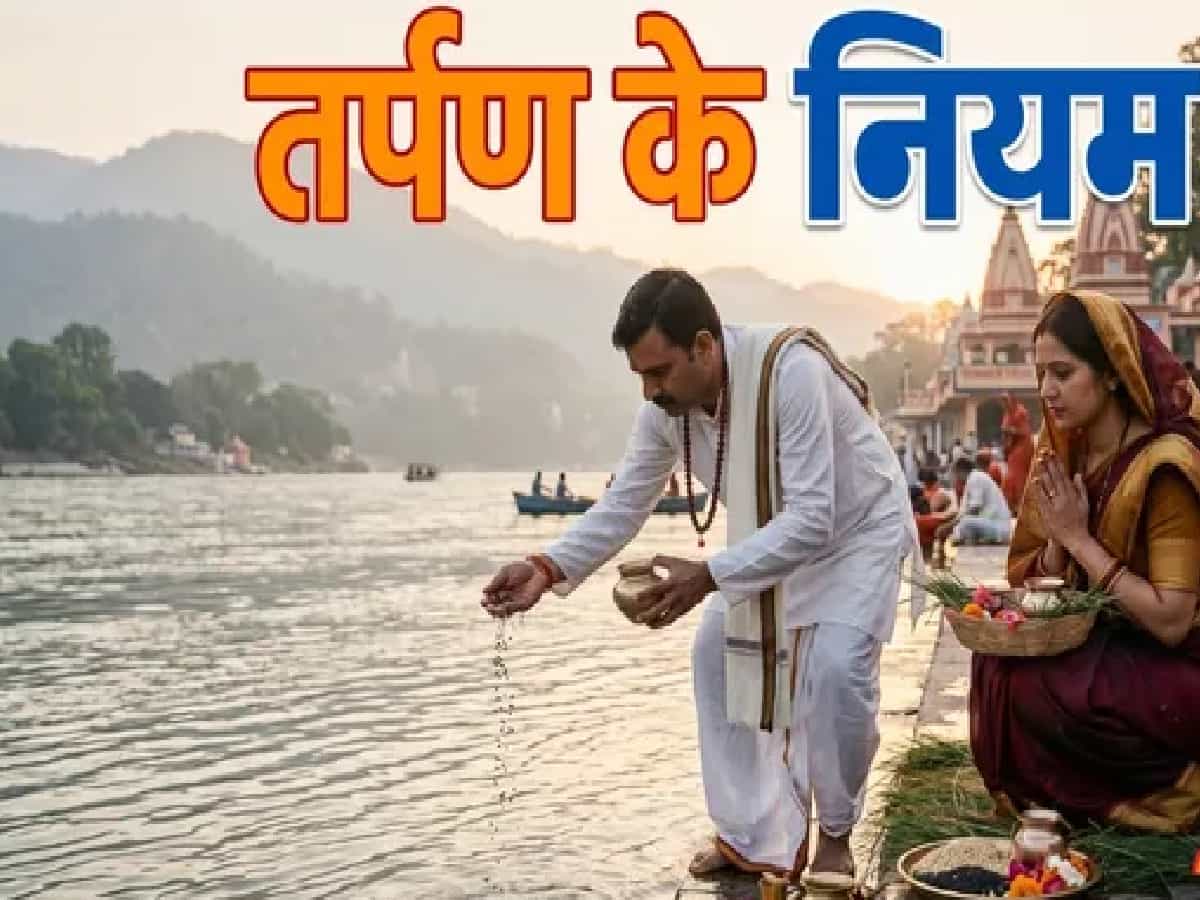
In Sanatan Dharma and Vedic tradition, the time of Pitru Paksha is considered the most sacred period to express one’s immense gratitude towards ancestors, sages and gods. During this fortnight falling in the Krishna Paksha of Ashwin month, people perform Shraddha, Pinda Daan and Tarpan for the peace of the souls of their departed ancestors and to satisfy their hunger. There is a clear mention in the scriptures that the ancestors are satisfied not only by offering food but also by offering sacred water mixed with Kush, Akshat, barley and black sesame seeds. The process of donating this sacred water is called ‘Tarpan’. Through Tarpan, a person expresses gratitude to all the positive powers of the universe for his entire existence and life.
According to religious beliefs and Smriti texts, Tarpan is not limited only to the deceased members of the family, but all the known and unknown animate elements of the universe are included in it. According to the scriptures, clear instructions have been given mainly for five types of tarpan, which are performed sequentially. Let us understand what those five categories are and what specific spiritual significance each has.
Tarpan always starts with offering to God. Under Dev Tarpan, water is offered to satisfy the five elements like Brahma, Vishnu, Mahesh, Indra, Agni, Varun etc. and all the Vedic Gods. In this, keeping the sacred thread (on the left shoulder) facing east, pure water, white sandalwood and intact mixed water stream is offered from the tip of the fingers i.e. Devtirtha. This law reminds us that our existence depends on the grace of the gods and the balance of nature.
After this comes the ritual of Rishi Tarpan, which is dedicated to the great sages who provided knowledge, philosophy and values to human civilization. While meditating on the seven sages like Maharishi Vashishtha, Vishwamitra, Bhardwaj, Kashyap, Atri, Gautam and Jamadagni, water is given while facing north. It is offered to Rishitirtha i.e. the root part of the little finger. After this, Divine Manav Tarpan is performed, in which the accomplished great men like Sanak, Sanandan, Sanatan and Sanatkumar and the messengers and divine spirits of Yamraj are paid homage to them by giving them water. This tarpan elevates man from worldly attachments and leads him to spiritual consciousness.
The fourth type is called divine ancestral offering. The divine ancestors include those ancestors who have attained a place in the higher worlds on the basis of their good deeds and yoga practice during their lifetime, such as the Agnishvat, Barhishad and Sompa ancestors. These are satisfied through black sesame seeds and Kush while facing south. With their blessings, spiritual and material prosperity remains in the seeker’s family.
The fifth and most important part is Pitru Tarpan, which is performed directly to the known and unknown ancestors of our own clan, lineage and family of three generations. In this, water is offered to the father, grandfather (grandfather), great grandfather (grandfather) and mother, grandmother (grandmother) and great grandmother (grandmother) along with maternal grandparents and other relatives. In this Tarpan, one faces the south direction and holds the sacred thread of Kush in the hand and makes water stream flow from the Pitrutirtha situated between the thumb and forefinger. This water given with the touch of black sesame and Kush provides immense satisfaction to the ancestors and relieves them from ancestral debt of many births.
There is often a curiosity regarding Shraddha and Tarpan rituals that whether women can also pay tribute to their ancestors and what is the fundamental difference in the Tarpan method of men and women. It is clearly instructed in the Hindu scriptures and the religious scriptures of Garuda Purana that in the absence of a son, the wife, daughter or daughter-in-law have the full scriptural right to perform Pitru Karma, Pind Daan and Tarpan. If there is no male member in the family or he is unable for some reason, women can offer water to their ancestors with full devotion.
The biggest difference in terms of method is the rules of Yajnopavit i.e. sacred thread. When men offer tarpan to the ancestors, they remove their sacred thread from the left shoulder and place it on the right shoulder, which is called ‘Apasavya’ position in Vedic language. Along with this, they sit with bent knees facing the south direction and pay obeisance to their ancestors. Since there is no rule for women to wear sacred thread, the rule of Apasvya does not apply to them. Women can wear pure and satvik clothes, face south, hold kush and black sesame seeds in both hands and offer water to the ancestors with a straight face. In both the situations, emotions and devotion have primacy, because the scriptures say that ancestors are hungry only for water and devotion.
It is considered mandatory to follow some very important precautions and rules while performing Tarpan Karma. Tarpan should always be performed after sunrise and before 12 noon, especially during Kutup and Rohin Muhurta. Performing tarpan in the evening or at night is completely prohibited in the scriptures. Apart from this, while offering tarpan, only copper, brass, bronze or silver vessels should be used; Iron, steel or plastic utensils should never be used.
The water must contain a mixture of Ganga water, raw cow’s milk, barley, white sandalwood, Akshat and especially black sesame seeds. Wearing a ring (sacred) of Kush in the ring finger is the most essential condition of Tarpan, because Kush is considered to be originated from the hair of Lord Vishnu and is extremely sacred. When this Panch-Tarpan is performed with full devotion, concentration and rules, the ancestors become satisfied and bestow auspicious blessings of longevity, health, happiness of children and family growth to their descendants.