 look news india

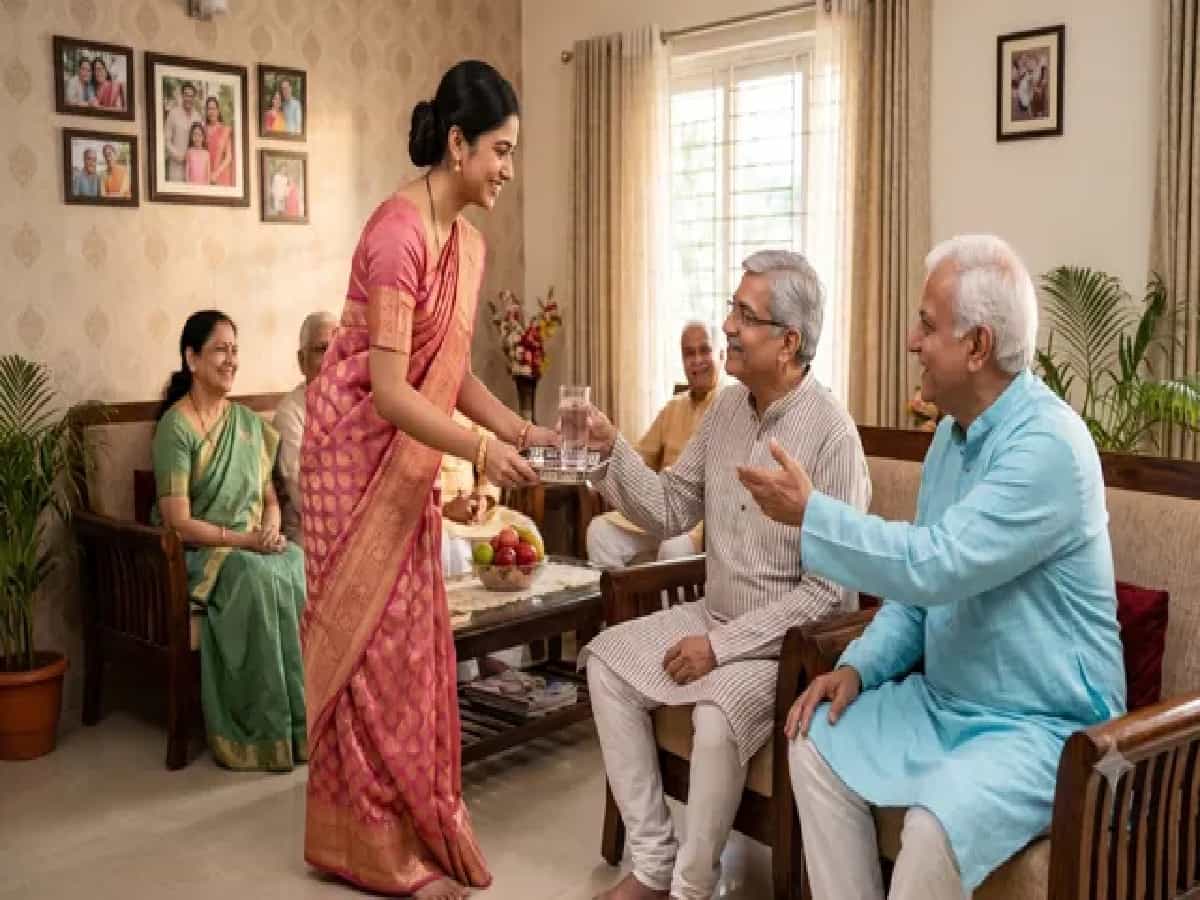
In Indian culture and Sanatan Dharma, family relationships are not only considered a social bond, but a sacred form of spiritual and religious dignity. Many such traditions and beliefs have been prevalent in our society for centuries, which people still follow with full devotion. One of these very popular and deep beliefs is that after marriage, the parents, especially the father, should not accept food or water in the house of his married daughter i.e. her in-laws. Even today, from villages to cities, when many elderly fathers go to their daughter’s in-laws’ house, they hesitate to drink even a sip of water or accept something only after offering some money or a gift in return.
Even though there has been a massive change in this thinking and rigidity in modern society with time, the roots of this tradition are very deep from the religious and cultural point of view. Astrologers and scholars of theology say that this rule should not be seen merely as a superstition or orthodoxy, but behind it is hidden the social system of the ancient Vedic period, the sacred sentiment of Kanyadaan and a strong philosophy of self-respect of the parents.
In Sanatan tradition, ‘Kanyadan’ done at the time of marriage has been counted among the biggest and sacred Mahadanas in the world. Considering the fire as a witness in the sacred marriage hall, the parents hand over the hand of their most beloved child i.e. the girl to a suitable groom. According to Vedic beliefs, when a person donates any object or resolution for the sake of God, then the desire to receive any fruit, service or material pleasure in return of that donation nullifies the virtuous effect of that donation.
Ancient theology has a clear opinion that after Kanyadaan, the daughter becomes an integral part of her new clan i.e. in-laws’ family. In such a situation, it was not considered spiritually appropriate to go to the house of the donated daughter and avail her services or to nourish one’s body from the resources of her in-laws. The main purpose of this feeling described in the scriptures was to maintain the spirit of sacrifice and selflessness in the mind of the donor so that the spiritual virtue of Kanyadaan remains completely safe.
Apart from religious reasons, a very practical and sensitive social thinking was also working behind this tradition. In ancient times, there was a joint family system and financial resources were not as accessible as they are today. Daughters were married in remote villages and the in-laws were responsible for the maintenance of the entire family. At such a time, the parents’ thought was that their daughter should live her life in her in-laws’ house with full respect and self-respect.
The parents never wanted their frequent movements or their food expenses to put any kind of financial pressure on their daughter’s in-laws. If the parents’ family visited the daughter’s in-laws regularly and accepted hospitality, then there was a fear that the daughter’s honor would be hurt or she would be taunted by the in-laws. For this reason, the father imposed a strict rule on himself that he would not even accept water from the daughter’s house, so that the daughter’s head always held high with pride in front of her in-laws and her maternal home was not considered a burden in any way.
The relationship between father and daughter is considered the most sacred and selfless in the world. A father spends his entire life’s savings and love in the upbringing of his daughter. The self-respect of an Indian father always accepts that he only knows how to give to his children throughout his life and does not wish to take anything from him in any way. When the daughter leaves and goes to someone else’s house, the father’s self-respect becomes more conscious.
The rule of not taking food or water from the daughter’s house actually protects the father’s patrimony and self-respect. The father’s wish is that the daughter should never be forced to serve her father, nor should the father be seen dependent on the daughter’s resources. To maintain this self-respect, this folk tradition also developed that if in some unavoidable circumstances the father has to take food or water from the daughter’s house, then in return he gives some cash amount or gift to the daughter as an omen, so that the feeling is maintained that the father has not taken anything from the daughter, but has given her something.
In the present 21st century, there have been revolutionary changes in family structures, education and lifestyle. Today daughters are completely financially independent and are becoming equal partners in the happiness and sorrow of their parents like sons. In today’s time, both son-in-law and daughter consider it as their moral duty to take care of their parents. This is the reason why in metro cities and modern families, this rule is no longer seen in that old strict form, rather it is weighed on the scales of mutual love, respect and spontaneity of relationships.
Religious experts also believe that the basic objective of any religious tradition is to maintain dignity, respect and harmony in relationships, not to forcibly impose restrictions on anyone. Today, if a father goes to his daughter’s house and has a meal with love, there is no sin or fault in it because today’s relationship is based more on affinity and emotional support than on formality. Nevertheless, families who follow this tradition while respecting their ancient beliefs and cultural roots continue to practice it even today as a sacred symbol of selfless sacrifice and self-respect for their daughter.