 look news india

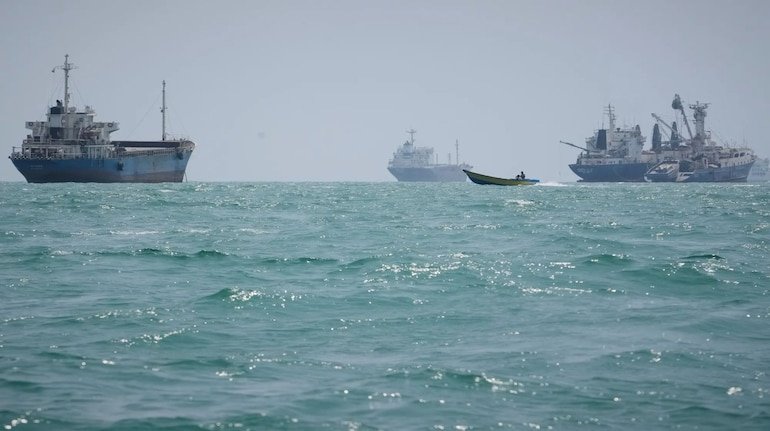
The ongoing military conflict between the US and Iran in West Asia has now reached a very dangerous point for international maritime trade and global energy security. After US Central Command (CENTCOM) destroyed five large Iranian oil tankers near the Gulf of Oman and Kharg Island, the Islamic Revolutionary Guard Corps (IRGC) has launched a fierce retaliation in the Strait of Hormuz and the Persian Gulf. Iranian forces claimed to have targeted two US warships, eight oil tankers and at least 10 ‘unauthorized’ merchant vessels that were trying to pass through the waterway without following Tehran’s regulations. Following drone and missile attacks on the oil tanker ‘Hercules Star’ anchored off the coast of Dubai and the tanker ‘New Andros’ carrying 2 million barrels of fuel oil in Iraqi waters, a fire on the ships, death of one sailor and one missing have been confirmed.
Tightening its naval blockade on the Strait of Hormuz, Iran’s Revolutionary Guards have unexpectedly expanded the scope of the ‘No-Go / Prohibited Zone’ in the sea. Iranian military spokesman Hossein Mohebbi announced on state television that in addition to the Persian Gulf, the Gulf of Oman and large parts of the Arabian Sea are now being included in the new no-go zone, whose boundaries are being extended to the Chabahar coast near Pakistan. The IRGC has bluntly warned that any foreign or commercial ship that enters this sea corridor without prior coordination or permission with the Iranian Navy will face military action and seizure. Along with this, the crew of tankers standing near the ports of Kuwait and Bahrain have been warned to leave the ship immediately.
The deadly attacks and the disruption of shipping through the Strait of Hormuz—which normally passes about one-fifth of the world’s oil and gas supplies—have roiled international energy markets. Benchmark Brent crude prices on London’s ICE Futures exchange jumped more than 2.5% to cross $100.29 a barrel, the highest level since July. According to energy analysts, daily oil flow from Hormuz has dropped from the normal 80-90 lakh barrels to just 20 lakh barrels per day. The halt in shipments of LNG and refined petroleum products from Qatar, the United Arab Emirates and Kuwait has raised fears of a sharp rise in energy prices in Asia and Europe.
US Secretary of State Marco Rubio, reacting to Iran’s latest attacks, said that America will not tolerate attacks on its ships and allies. Rubio made it clear that whenever Iran tried to fire missiles at US naval vessels, it would have to lose its oil tankers. At the same time, Tehran has made it clear that until America and its allies release its seized funds of $ 24 billion and do not stop military pressure in Lebanon and Yemen, its control and pressure on maritime trade will continue like this. This ongoing ‘tit-for-tat’ attacks between the two countries has brought the entire Middle East to the brink of full-time war.