 look news india

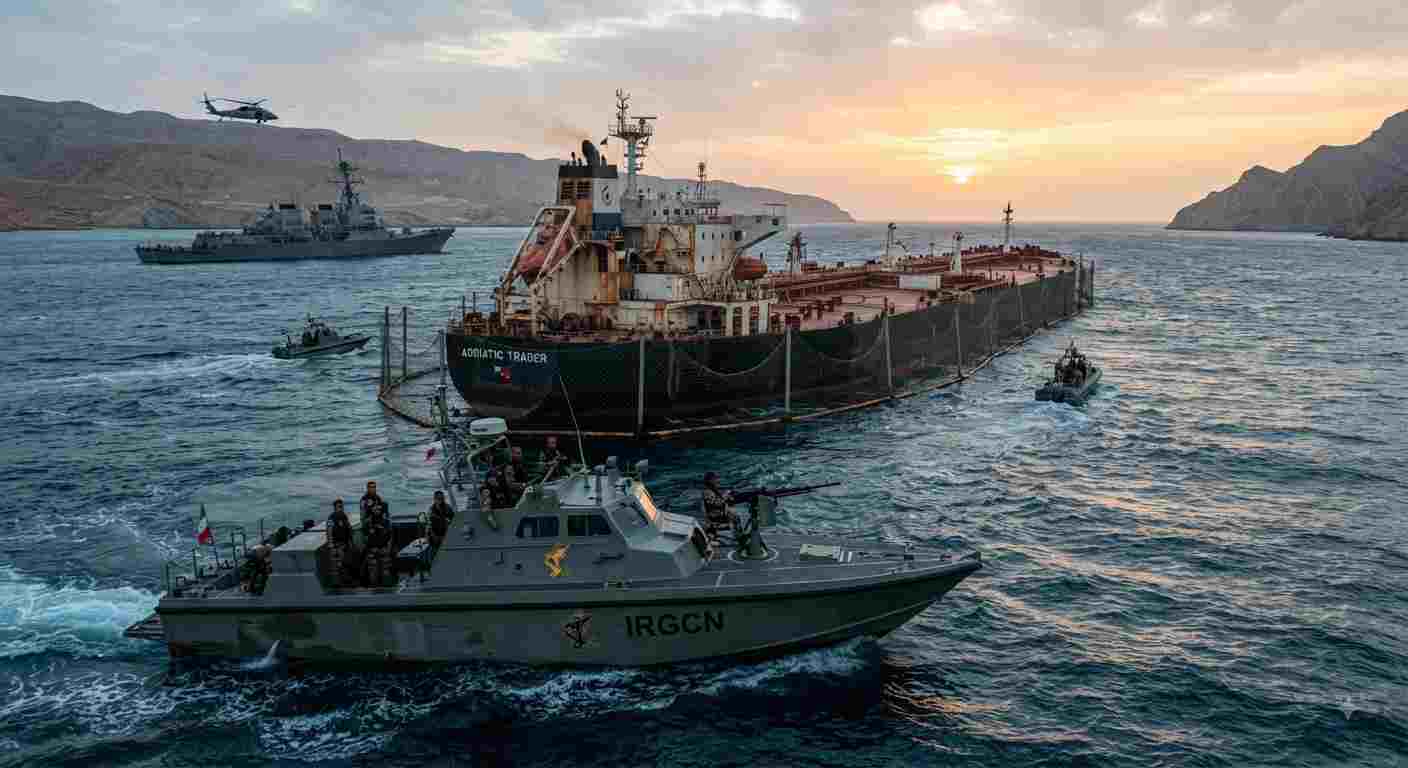
The Strait of Hormuz, a narrow sea corridor connecting the Persian Gulf and the Gulf of Oman, is considered the backbone of global energy trade. Just 33 to 39 kilometers wide at its narrowest point, this waterway is the world’s largest ‘chokepoint’ from a strategic point of view. Under normal circumstances, about 20 to 25 percent of the total seaborne trade of crude oil and petroleum products across the world passes through this narrow route alone.
The economies of major oil and gas exporting countries like Saudi Arabia, Iran, Iraq, United Arab Emirates (UAE), Kuwait and Qatar are completely dependent on this sea route. Apart from oil, about 20 percent of the total liquefied natural gas (LNG) supplied to Europe and Asia and more than 30 percent of the world’s urea and ammonia fertilizers are also exported from Hormuz. The northern part of this waterway is controlled by Iran and the southern part is controlled by Oman’s Musandam Peninsula, due to which any military movement in this region has a direct impact on the pulse of the global economy.
Background of the conflict: Military conflict and blockade between US-Israel and Iran
The current Hormuz crisis has its roots in the direct military conflict between the US, Israel and Iran. In response to Western attacks on Iran’s strategic and nuclear facilities, the Islamic Revolutionary Guard Corps (IRGC) began using the Strait of Hormuz as its strategic weapon. Iran imposed a ban on merchant ships and oil tankers passing through this waterway and warned that no ships of Western countries and their allies will be allowed to pass through here.
In response, America made heavy deployment of its naval warships, destroyers and aircraft carriers in this area, which was named ‘Wall of Steel’. The American naval blockade of Iranian coasts and ports, on the one hand, and the laying of mines in the sea and Iranian missile and drone attacks on the other, have turned the entire region into a powder keg. The result was that international shipping companies and insurance firms refused to send their huge oil tankers on this route due to fear of huge risks, reducing the traffic of more than 130 ships passing through it daily on normal days to almost nothing.
Tehran’s tough conditions and Washington’s steadfast stance: main points of the diplomatic standoff
There remains a huge political and diplomatic standoff between the two sides over the reopening of the Strait of Hormuz to normal navigation. The Iranian Supreme National Security Council and the Foreign Ministry have made it clear that this strategic waterway will remain closed until the US completely stops its military aggression and accepts their preconditions.
Iran has mainly put forward four conditions through international forums to smooth the waterway:
-
The US Navy’s blockade of Iranian ports and territorial waters must be ended immediately and unconditionally.
-
Iran should be given full financial compensation (War Compensation) for the damage caused during the military confrontation.
-
All economic sanctions imposed on Iran should be removed and its assets worth billions of dollars frozen abroad should be released.
-
The sovereign rights of the coastal countries (Iran and Oman) should be recognized by ending the unilateral dominance of American warships in the Persian Gulf.
On the other hand, the US administration’s stance is that ‘Freedom of Navigation’ in waterways is a universal right under international maritime laws and the US will not at any cost accept Iran’s unilateral control over Hormuz or its demand for tax collection from ships.
Hit to the global economy: the biggest energy disruption since the 1970s
Energy economists have termed this effective closure of the Strait of Hormuz as the world’s biggest energy supply shock since the 1973 oil crisis. Due to this disruption, crude oil (Brent Crude) jumped rapidly in the international commodity markets to a high of $100 to $126 per barrel. The breakdown of the energy supply chain has created a new wave of inflation in both developed and developing countries.
Apart from crude oil, the crisis of natural gas has also deepened. Qatar is the world’s largest exporter of LNG, with all its gas production shipped around the world via the Strait of Hormuz. Due to disruption of this supply, power generation, industrial manufacturing and chemical factories in Europe and Asian countries have come to a standstill. Additionally, strategic petroleum reserves around the world have fallen to their lowest levels in decades, limiting countries’ ability to respond to emergencies.
Exploring alternative routes and limitations: Can pipelines become an alternative to Hormuz?
As the crisis deepens, Gulf countries and global powers have begun considering accelerating alternative underground pipelines that bypass the Strait of Hormuz. The United Arab Emirates (UAE) has stepped up work on increasing the capacity of its Fujairah oil pipeline, which allows it to export oil directly from the Strait of Hormuz to the Gulf of Oman. Similarly, Saudi Arabia’s East-West Pipeline could deliver some oil to the Red Sea port of Yanbu, and Iraq and Turkey have signed agreements to increase exports through the Kirkuk-Ceyhan pipeline.
However, energy experts clarify that even all these pipelines together cannot be a substitute for more than 20 million barrels of oil per day and huge quantities of LNG coming out of Hormuz. Countries like Kuwait and Qatar do not have any direct pipeline to bypass Hormuz. Additionally, suddenly re-routing gas and LNG through pipelines is extremely complex technically and financially, making it impossible to completely eliminate Hormuz dependence in the near future.
‘Red Alert’ for India: 85% oil import and litmus test of energy security
The Hormuz crisis has the most sensitive impact on Asian economies, especially India. India imports more than 85 percent of its total domestic requirement of crude oil and about 50 percent of natural gas from abroad. About 60 to 70 percent of India’s total oil imports and a large portion of the LNG coming from Qatar reach Indian refineries through the Strait of Hormuz.
There are three major dangers of this crisis for India:
-
Current Account Deficit (CAD) and Inflation: An increase of $ 10 per barrel in crude oil prices increases India’s import bill by billions of dollars, which puts pressure on the rupee exchange rate and increases the cost of petrol, diesel, cooking gas and freight in the domestic market, increasing the burden of inflation on the general public.
-
Impact on fertilizers and agriculture: Stopping of urea and ammonia consignments from Gulf countries may affect the supply of chemical fertilizers for Kharif and Rabi crops, which may have a direct impact on agricultural production and food security.
-
Extent of strategic reserves: India’s underground ‘strategic petroleum reserves’ (SPR) at Visakhapatnam, Mangaluru and Padur can handle only a few weeks of emergency supplies. In such a situation, as part of its energy diplomacy, India has to accelerate the use of renewable energy and alternative fuels (such as ethanol and green hydrogen) along with increasing oil supplies from Russia, West Africa and America.
Oman’s mediation and the way forward: Will diplomacy yield a concrete solution?
Amidst this dire crisis, the Gulf country Oman has once again come forward in the role of an impartial and peacemaker. Intensive talks are underway in Muscat between Iranian and international representatives to finalize safe ‘transit corridors’ and technical navigation rules for ships. Recently, there have been positive signs of agreement between the two coastal countries on a new shipping route map.
The United Nations (UN) and the International Maritime Organization (IMO) have strongly appealed to both sides to exercise maximum restraint and ensure the safety of thousands of innocent sailors and ships stranded at sea. It will be clear in the coming days whether America and Iran soften their tough stance and sign a practical security agreement, or whether this strategic standoff in Hormuz will turn the world into the biggest global economic and energy crisis of the 21st century and push the world towards a new recession.