 look news india

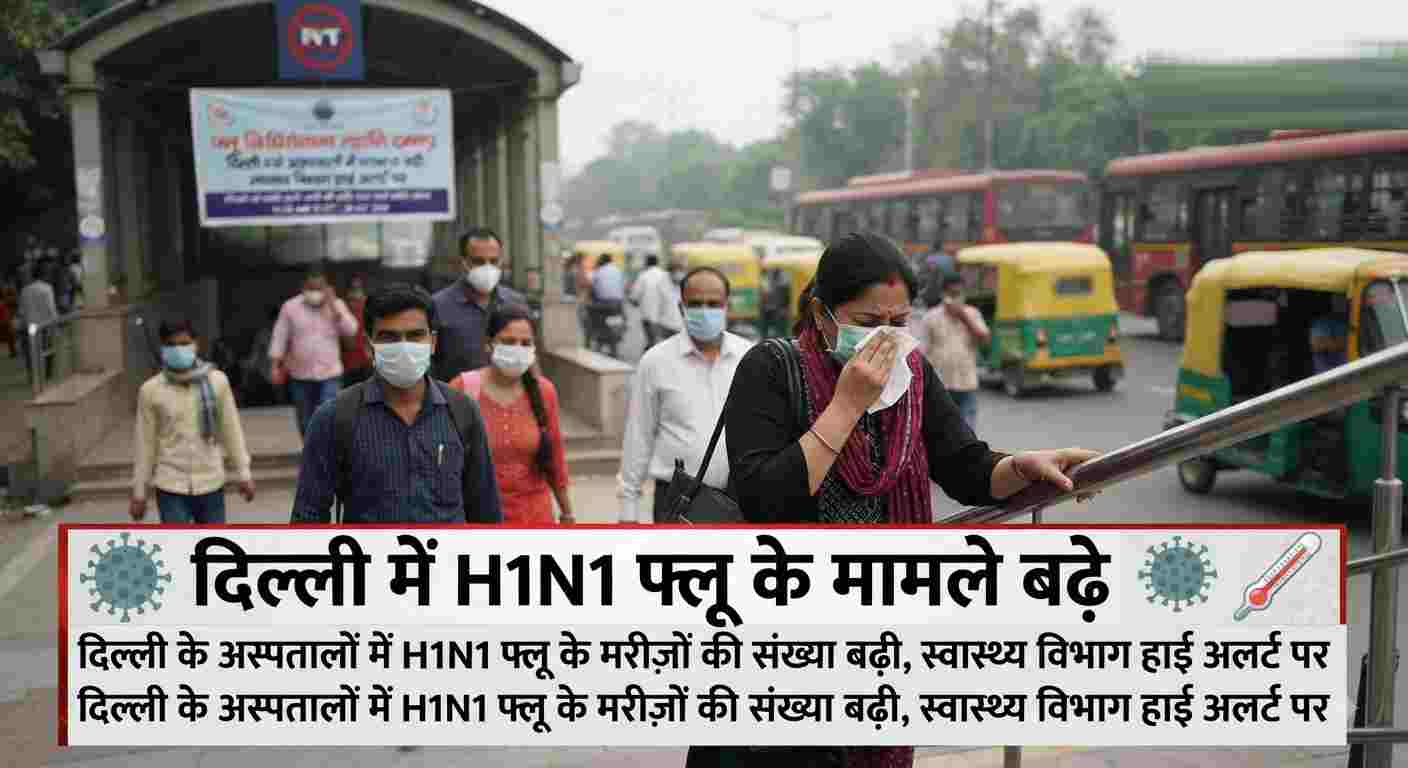
An unexpected and sharp surge in the cases of H1N1 influenza i.e. swine flu is being seen in the national capital Delhi and the entire National Capital Region (NCR) amid the monsoon season and continuously changing temperatures. According to the latest data from the National Center for Disease Control (NCDC) and the Delhi Health Department, more than 1,449 confirmed cases of H1N1 have been recorded in the capital so far this year.
This figure represents a staggering increase of more than six times compared to just 229 cases recorded in the same period last year. Not only in the capital Delhi, but also in the Out Patient Department (OPD) of government and private hospitals of Noida, Ghaziabad, Gurugram and Faridabad, there has been a huge increase of 30 to 40 percent in the number of patients suffering from high fever, dry cough, sore throat and body pain. Experts say that due to the sudden fluctuations in humidity and temperature during monsoon, the influenza virus is spreading very rapidly in the atmosphere.
Special isolation wards and ventilators ready in hospitals: Health Minister’s statement
In view of the increasing cases of infection, the Delhi government and the health department have become completely alert. Reviewing the situation, Delhi Health Minister Pankaj Singh said that adequate arrangements for special isolation wards, dedicated beds, oxygen support and ventilators have been ensured for H1N1 and respiratory infection patients in all major government hospitals of the capital—such as Ram Manohar Lohia (RML) Hospital, Safdarjung Hospital, Lok Nayak (LNJP) and Guru Teg Bahadur (GTB) Hospital.
The Health Minister assured that real-time RT-PCR testing of swine flu is being done on a large scale across the city and adequate buffer stock of essential medicines is available. The government has directed District Surveillance Units to conduct daily monitoring of influenza cases coming in clusters so that community spread of infection can be controlled in time.
What are the main symptoms of H1N1 swine flu? How is it different from normal seasonal cold?
Influenza A (H1N1) is an infectious viral disease that primarily affects the upper and lower respiratory tract (nose, throat, and lungs). Compared to the common cold, its symptoms emerge suddenly and at a much faster pace.
According to doctors, the major symptoms of H1N1 are as follows:
-
Persistent high-grade fever of 101°F to 104°F and chills.
-
Severe pain, sore throat and severe difficulty in swallowing (Sore Throat).
-
Dry Persistent Cough.
-
Extreme fatigue, headache and unbearable pain in muscles and joints (Severe Body Ache & Myalgia).
-
Runny nose or complete blockage of the nose.
-
Symptoms of vomiting, nausea and diarrhea in some patients, especially children.
If the infection becomes severe, the patient starts experiencing symptoms like shortness of breath, severe pressure or pain in the chest, blueness of lips or nails (cyanosis) and sudden drop in oxygen level. In such a situation, emergency medical help should be sought immediately without any delay.
Who are most at risk? ‘Red alert’ for patients with co-morbidity
Internal medicine experts at All India Institute of Medical Sciences (AIIMS, New Delhi) and Sir Ganga Ram Hospital say that although healthy youth recover within 4 to 6 days with symptomatic treatment and adequate rest, H1N1 can prove fatal for people with weak immunity and pre-existing serious diseases (co-morbidities).
Particularly high-risk groups:
-
Senior citizens above 60 years of age and small children below 5 years of age.
-
Patients with uncontrolled diabetes and high blood pressure (hypertension).
-
People suffering from chronic lung diseases like asthma and COPD.
-
Patients with chronic kidney disease (CKD), liver cirrhosis or undergoing dialysis.
-
Patients with heart disease (heart failure or coronary artery disease) and pregnant women.
-
Immunocompromised patients with reduced immunity due to cancer, chemotherapy or organ transplant.
In these categories of patients, swine flu virus can spread rapidly in the lungs and cause viral pneumonia, acute respiratory distress syndrome (ARDS) and multi-organ failure.
Not antibiotics, only antiviral drug ‘Oseltamivir’ is effective at the right time.
Senior pulmonologists from Apollo and Fortis hospitals have strongly cautioned the general public against indiscriminate and misuse of antibiotics. Doctors have clarified that H1N1 is a virus-borne disease, hence antibiotics like Azithromycin or Augmentin do not work at all on it.
The only certified antiviral drug for the treatment of swine flu Oseltamivir/Tamiflu Is. According to experts, the maximum benefit of this medicine is obtained only when it is started as per the doctor’s advice within the first 48 hours of the onset of symptoms. This medicine prevents replication (reproduction) of the virus and prevents the patient from going to ICU or ventilator. Therefore, in case of fever and cough, instead of buying antibiotics arbitrarily from the medical store, it is mandatory to directly contact an authorized doctor and get tested for swine flu.
Surefire prevention measures and guidelines: How to protect yourself from infection?
According to the advisory issued by the World Health Organization (WHO) and the Union Ministry of Health (MoHFW), the chain of H1N1 infection can be easily broken by following some basic precautions in daily life:
-
Regular use of mask: Be sure to wear a triple layer surgical mask or N95 mask while going to metro, buses, railway stations, crowded markets and hospitals.
-
Hand Hygiene: After coming from outside, wash hands thoroughly with soap and water for at least 20 seconds or use 70% alcohol-based hand sanitizer.
-
Avoid touching the face repeatedly: Avoid touching your eyes, nose and mouth with unwashed hands, as the influenza virus enters the body through these routes from contaminated surfaces.
-
Cough and sneeze etiquette: Always cover mouth and nose with a disposable tissue or handkerchief when coughing or sneezing and throw the used tissue in a covered dustbin.
-
Home Isolation: If a person shows symptoms of flu, then he should isolate himself in a separate room of the house for at least 5 to 7 days and should not come in direct contact with the elders and children of the family.
-
Annual Influenza Vaccine (Flu Shot): High-risk groups, the elderly, and healthcare workers should receive the quadrivalent influenza vaccine annually, as recommended by doctors, which provides strong protection against severe infection with H1N1 and H3N2.
-
Hydration and nutritious diet: To maintain the body’s immunity, take adequate amount of lukewarm water, soup, fresh fruits and vitamin C rich diet.
This surge of swine flu during the changing season in Delhi and NCR is a serious public health challenge, but with timely testing, right antiviral treatment and awareness about personal hygiene, this disease can be completely defeated. If you or anyone in your family is experiencing persistent high fever or trouble breathing, immediately consult the nearest government or private health center without any negligence.