 look news india

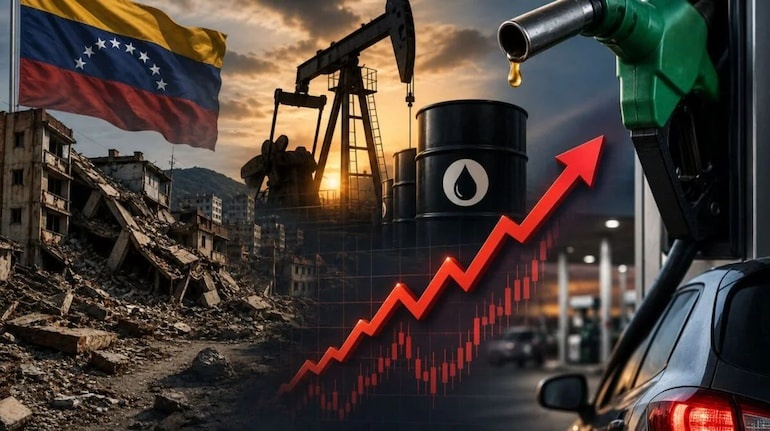
Crude Oil Price 13 July 2026: The end of the ceasefire in West Asia (Middle East) and the renewed fierce war between America and Iran have had a direct and major impact on the global energy market. On the first day of the week, today, Monday, July 13, 2026, a huge rocket-like rise was seen in the prices of crude oil. Crude oil prices in the global market have jumped by more than 4% and crossed $79 per barrel.
The main reason for this huge rise in crude oil is the increased military tension between the two superpowers over control over the world’s most strategic oil route – the Strait of Hormuz. Enraged after the attack on a commercial merchant ship in Cyprus, America launched a massive bombardment on more than 140 military bases of Iran, in response to which Iran has also targeted American bases located in Gulf countries.
Latest mathematics of crude oil and natural gas prices
There is an outcry in the international commodity market since Monday morning and prices are rising rapidly:
-
Brent Crude: Brent crude jumped more than 4% for contracts expiring in September $79 per barrel Is trading above the psychological level of. It is noteworthy that last week also a huge increase of 5.5% was recorded.
-
WTI or US Crude Variants: American crude variant West Texas Intermediate (WTI) also with sharp rise. $74 per barrel Has gone above the mark.
-
European Natural Gas Futures: After the weekend break, an increase of 2.5% has been seen in the prices of Natural Gas futures in the open European market.
Big suspense: Is the Strait of Hormuz open or completely closed?
of global energy supply (global oil supply) about 20% share There are huge contradictions in the claims of both the countries regarding the main waterway they control, the Strait of Hormuz:
-
Iran claims: The government of Iran has officially announced that this international waterway will remain completely closed “until further notice” and no ships will be allowed to pass through it.
-
US rebuttal: US Central Command has completely rejected this claim of Iran. Central Command wrote on social media platform “X”— “The Strait of Hormuz is open to all commercial vessels that wish to legally transit through this international waterway. The US military is fully prepared to ensure freedom of navigation here.”
-
Attack happened again on Sunday evening: The US military made it clear that another new round of attacks has been launched at 5 pm (Eastern Time) on Sunday evening to hold Iran responsible for the attacks on merchant ships in the Strait and to teach it a lesson.
What is the reality on the ground? Sea traffic came to a standstill
Even though America is claiming that the route is open, due to fear of war, ships have stayed away from this route. According to the Joint Maritime Information Center (JMIC), there was almost zero traffic through this main chokepoint on Sunday. Only two oil product tankers were seen approaching this chokepoint throughout the day. However, JMIC expressed relief that the Southern Alternative Route coordinated by Oman is still open for ships.
France G7 summit’s MoU fails, Iran warns
held in France last month G7 summit During this, both America and Iran had signed an important Memorandum of Understanding (MoU). This agreement included stopping the war and providing safe passage to commercial ships through the strait. But recent attacks have put this peace agreement on hold.
The International Energy Agency (IEA) had warned on Friday itself that if this tension flares up again, then by the end of the year, efforts to restock global oil reserves will face a huge setback, due to which there could be a shortage of petrol and diesel around the world.
Here, Iran’s Parliament Speaker and top negotiator Mohammad Bagher Ghalibaf has warned Washington in a stern tone and said that- “Now the era of one-sided deals is completely over. Before resuming talks with the US, Washington will have to give priority to the old promises made on the Hormuz transit and completely normalize oil exports from Iran, only then peace is possible.”