 look news india

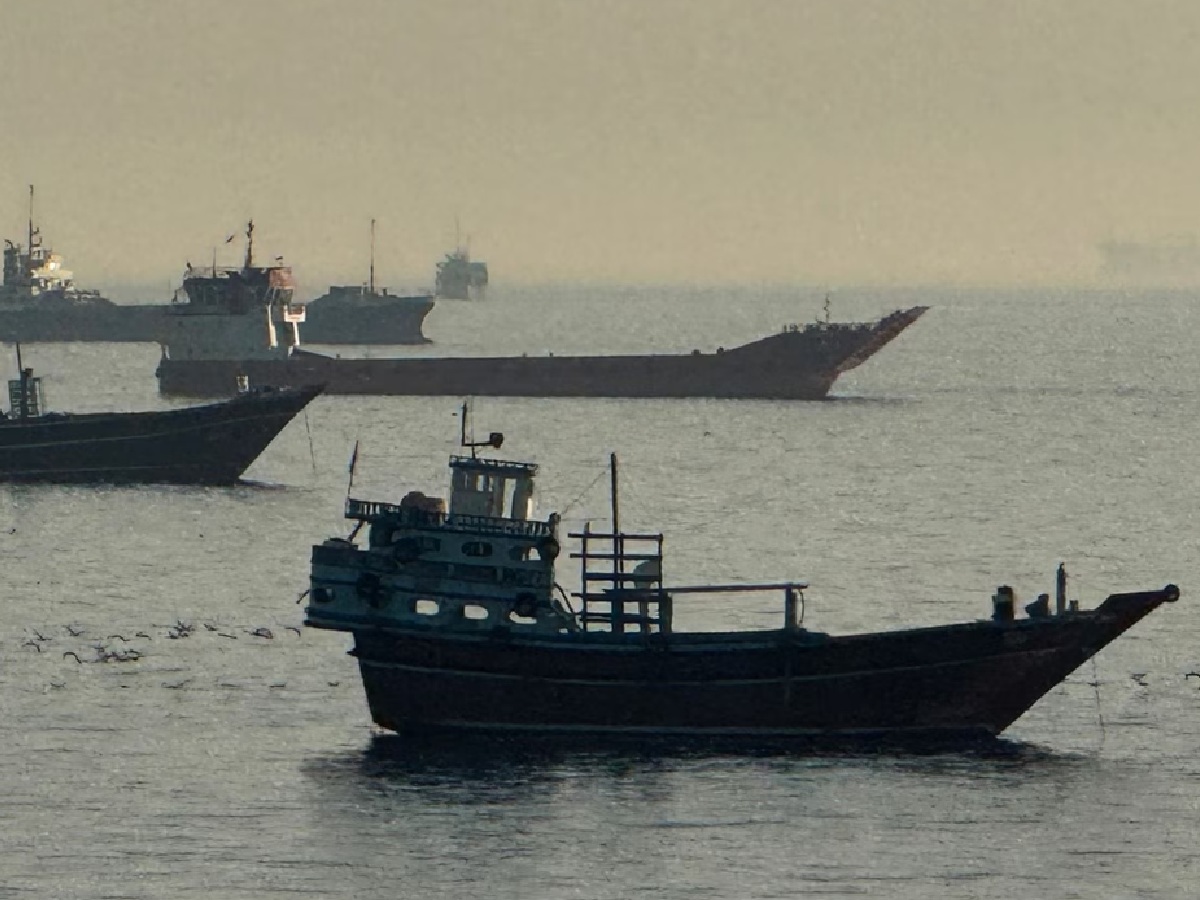
The ongoing fierce military conflict in the Middle East has once again reached a devastating level. The United States Air Force and Navy have launched a major attack targeting Iran’s strategically important Qeshm Island. After this latest military action, there are reports of closure of the world’s busiest and sensitive maritime oil route ‘Strait of Hormuz’. Iran has officially declared the movement of ships through this waterway ‘impossible’, while the US military command has rejected this claim and has boasted of maintaining freedom of global navigation.
A dozen missiles fired at Qeshm Island: US Central Command targeted 140 Iranian targets
Iran’s state news agency ‘IRNA’, quoting the island’s local governor, has confirmed that about a dozen missiles have been fired by American fighter planes since Sunday afternoon. Initial reports have left one civilian dead and two others injured in the attacks on the Persian Gulf’s largest island, home to a population of about 150,000. According to a senior US Defense Department official, this action has been taken in response to the attack on a commercial vessel by Iran, under which about 140 targets including IRGC missile sites, air defense systems and small speed boats have been demolished.
Iran’s announcement – ‘Traffic is currently impossible’: PGSA blames American activities
The Persian Gulf Strait Authority (PGSA), the Iranian authority that oversees the new traffic rules of the Strait of Hormuz, has banned the movement of global ships with immediate effect. PGSA issued an official statement on social media platform The Iranian authority has made it clear that until complete stability and peace is restored in this maritime area, the ban on entry of ships will remain in force.
America’s counterattack – ‘International waterways are completely open’: CENTCOM deployed Navy
Contrary to Iranian sanctions, the US Central Command (CENTCOM) has taken a very tough stance and clarified that the Strait of Hormuz has not been closed. “The Strait of Hormuz remains fully open to all commercial vessels lawfully transiting through international waterways. U.S. Navy warships are on standby to maintain freedom of navigation despite Iranian aggression, harassment, and arbitrary statements,” CENTCOM said in its X-post. The US Navy-run Joint Maritime Information Center (JMIC) also confirmed the southern route to Oman was open, although it warned of extreme risks on the route.
Marine traffic figures raise concerns: panic in global energy and shipping markets
Amidst the conflicting claims of the two superpowers, live satellite data from Marine Traffic, an international agency tracking maritime vessels in real time, has presented a worrying picture. After Iran’s official announcement, there has been a sudden sharp decline in the number of giant oil tankers and cargo ships passing through this route. Since one-third of the world’s total supply of crude oil and liquefied natural gas (LNG) passes through this narrow waterway, this latest military tension has given rise to fears of a huge surge in crude oil prices in the international shipping industry and global energy markets.