 look news india

India’s prestige is continuously increasing on the stage of global politics and till now 34 countries of the world have honored Prime Minister Narendra Modi with their highest civilian honour. But in the domestic politics of the country, statements that tarnish the dignity and dignity of the post of Prime Minister often come to the fore. Meanwhile, India’s Parliamentary Affairs Minister Kiren Rijiju has presented an example of Britain’s Westminster parliamentary model regarding this conduct of opposition leaders, which has sparked a new legal debate in the country’s political circles and social media. Kiren Rijiju, while sharing a video of the British Parliament, has raised the question whether India should also adopt the strict rules of the British to maintain the constitutional dignity of the post of PM?
What happened in the British Parliament? Know the inside story of the suspension of Pakistani origin MP
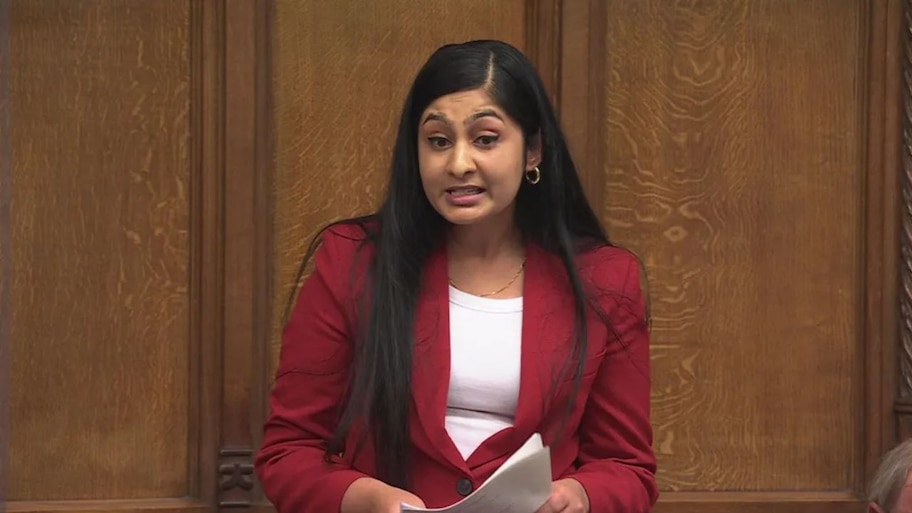
This whole matter happened in the month of April this year, when there was a heated debate going on in the British Parliament (House of Commons) regarding the appointment of Peter Mandelson as America’s Ambassador. Meanwhile, Labor Party MP and British citizen of Pakistani origin Zarah Sultana made a scathing personal attack on the then British Prime Minister Keir Starmer. He called PM Keir Starmer a ‘bare-faced liar’. Zara Sultana had said in the House that the Prime Minister is defending Peter Mandelson because he works for his personal interests and by doing so the Prime Minister is betraying the entire country.
As soon as the word ‘liar’ came out of Zara Sultana’s mouth, the Speaker of the British Parliament, Sir Lindsay Hoyle immediately intervened. He ordered Zara Sultana to immediately take back her unparliamentary words and remain within decorum. But when Zara Sultana flatly refused to withdraw her statement, the Speaker took a tough stand and said – ‘Sit down and leave the House immediately.’ For disobeying the rules, Zara Sultana was suspended from Parliament for 5 days with immediate effect. On the same day, another Reform UK MP, Lee Anderson, was also shown the door from the House for calling the Prime Minister a ‘liar’.
After all, why in Britain, action like jail and suspension is taken immediately on insulting the PM?
Britain’s Westminster model is known all over the world for its parliamentary traditions and purity of language. According to the rulebook there, there is a complete legal ban on the use of certain words inside the Parliament. Under British parliamentary rules:
-
Banned words: It is completely prohibited to call any member ‘liar’ (liar) or ‘dishonest’ (dishonest) inside the House.
-
Policies vs. Personal Comments: Any MP can strongly criticize the policies, decisions and budget of the government, but he cannot make any kind of personal or indecent comment on the Prime Minister of the country.
-
Unlimited powers of the Speaker: If any MP breaks these rules, the Speaker has the full authority to expel him from the House immediately without any delay.
What do the rules of India say and why is no action taken here?
If this strict action of Britain is compared with the Indian Parliament, then the picture looks completely different. In India too, there is a complete ban on the use of unparliamentary language in the House under Rules 380 and 381 of the rule book of Lok Sabha and Rajya Sabha. Apart from this, there is also a provision for action on Breach of Privilege under Rule 222. Many big leaders in India, from Rahul Gandhi to Mallikarjun Kharge and Adhir Ranjan Choudhary, have from time to time used words like ‘thief’ or ‘coward’ against the Prime Minister.
But in India, due to political and party pressure, there is only huge uproar and sloganeering in the House when indecent language is used, but such quick and strict suspension action against MPs is not seen as happened in Britain. At most, what happens in the Indian Parliament is that on the orders of the Speaker, those controversial words are expunged from the records of the official proceedings of the House, but no major action is taken against the guilty MP. This is why Parliamentary Affairs Minister Kiren Rijiju is now advocating the creation of a strong indigenous parliamentary structure in India, which protects the dignity of the constitutional post of the Prime Minister and makes leaders more accountable to the public.