 look news india

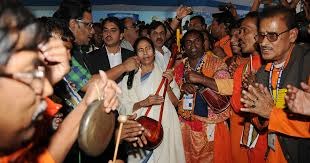
News India Live, Digital Desk: West Bengal, which was once called ‘Red Fort’ and where politics was based only on economic policies and class struggle, today the picture there has completely changed. According to a Zee News report, after the end of the Left in 2011, the war between Trinamool Congress (TMC) and Bharatiya Janata Party (BJP) is now based on religious polarization.
1. Leftist rule: When religion was a ‘private’ subject
During the 34-year Left rule (1977–2011), religion was kept away from the public platform in Bengal politics.
Framework of Secularism: During the CPI(M) era, political participation in festivals like Durga Puja or Eid was limited.
Class vs Character: The center of politics at that time was the economic problems of farmers, laborers and the middle class, and not their religious identity.
2. Mamata Banerjee and ‘Soft Hindutva’ vs ‘Minority Appeasement’
After coming to power in 2011, Mamata Banerjee changed her strategy:
Initial phase: He was often accused of ‘Imam allowance’ and catering to the Muslim vote bank, which the opposition termed ‘minority appeasement’.
Change in Strategy: Seeing the increasing influence of BJP in the 2019 Lok Sabha elections, TMC changed its stand. Now Mamata Banerjee does ‘Chandi Path’ on public platforms and her government has taken the path of ‘Soft Hindutva’ by increasing government grants for Durga Puja committees.
3. Rise of BJP and slogan of ‘Jai Shri Ram’
BJP’s entry in West Bengal completely changed the political language of the state:
Religious polarization: BJP made ‘Jai Shri Ram’ slogan a political identity and accused TMC of being anti-Hindu.
Matua Community: BJP effectively used CAA and religious card to pander to Dalit Hindu communities like Matua.
4. Why did this change happen?
According to experts, there are many social and political reasons behind this:
Opposition Vacancy: BJP filled the void created by the weakening of Congress and the Left with its religious ideology.
Identity Politics: The people of Bengal have now become more vocal about their identity, which the political parties have converted into a vote bank.