 look news india

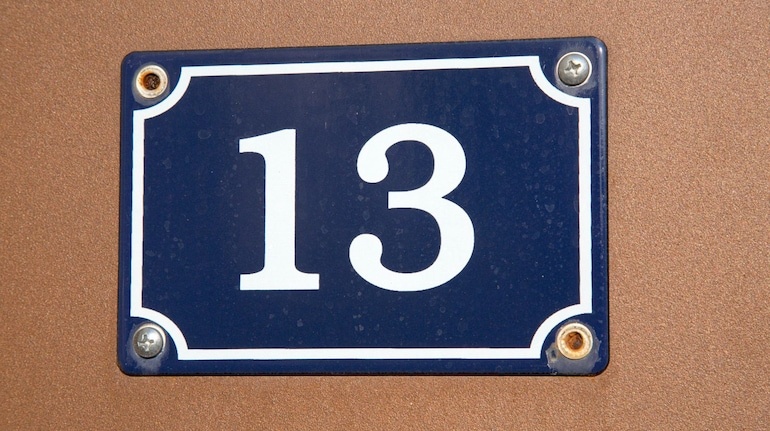
Whenever we go to stay in a hotel, our entire focus is on the luxury facilities of the room, the view from the balcony or the service there. But have you ever noticed that room number 13 or the 13th floor is missing from many big and luxurious hotels in the world? At first glance it may seem like an architect’s technical mistake or numbering mistake, but behind it lies a very interesting thinking, deep psychology and centuries-old tradition.
Hotel groups around the world decide on the rooms and floors keeping in mind the mental comfort of their guests, their preferences and cultural beliefs. This is the reason why you will see some numbers everywhere, but number 13 is deliberately removed from the map. Let us know why the hotel industry is so wary of this one number.
What is ‘Triskaidekaphobia’, which has spread the fear of number 13 across the world?
In a large part of the world, especially Western countries, the number 13 is considered extremely inauspicious and bringing bad luck. The fear and anxiety that people have about this number can be expressed in the language of medicine and science. ‘Triskaidekaphobia’ It is said.
The hotel industry is completely based on hospitality, where their only basic mantra is to provide the guest a safe and comfortable environment like home. Hotel owners know very well that if a guest is mentally uncomfortable, his entire stay experience will be spoiled. Due to this fear, the hotel business maintains a safe distance from this number.
Simple business math for hotels: Why suffer the loss of empty rooms?
Behind this strange tradition, not only superstition, but also a huge commercial and business mathematics works. Many surveys conducted globally have revealed that many passengers flatly refuse to stay in room number 13 or hesitate in sleeping there. Even if a hotel is forced to keep room number 13, the booking rates for that room fall significantly, causing direct revenue loss to the hotel.
To avoid this loss, hotels have found a smart way. They remove the 13th floor from their building plans and declare the 14th floor directly after the 12th. In some hotels, room number 13 is written as 12A, while in many places the 13th floor is named ‘M Floor’ (mezzanine) or is reserved only for staff, maintenance and technical equipment.
The game of the human mind: Avoiding unintentional hesitation
According to psychologists, the human mind feels most relaxed in those places which are completely normal, familiar and considered safe by the society. No matter how logical and free from superstition a modern man may consider himself to be, when he sees ‘Room 13’ written in a deserted corridor of a hotel, a slight hesitation or negative thought arises in his subconscious mind, albeit unknowingly. The hotel management does not want to allow any such discomfort or fear to develop in the minds of its customers.
Centuries old mythological stories made number 13 a ‘villain’
This hatred spread in the society regarding the number 13 is not new, rather its history is centuries old and it is mainly related to two big historical stories:
-
Norse Mythology: According to the ancient legends of the Scandinavian countries, once a grand banquet was organized for the gods in heaven, to which 12 gods were invited. But then the god of deceit ‘Loki’ entered there uninvited as the 13th guest. As soon as they arrived, a fierce fight started between the gods and ultimately everyone’s favorite god Balder died. Since then the number 13 started being considered destructive.
-
Christian belief (The Last Supper): According to Christian tradition, Lord Jesus Christ had the Last Supper with his disciples just one night before his crucifixion. The 13th person sitting at that table was ‘Judas Iscariot’, who betrayed Jesus Christ for the greed of a few coins. After this incident, the number 13 came to be considered a symbol of deception and death in the entire western culture.
Every country has its own story: In China the number is 4 and somewhere else the world avoids the number 420.
The interesting thing is that in every country or culture, the number 13 is not the only unlucky number. For example, in many Asian countries such as China, Japan and Vietnam numbers 4 and 9 Is considered the most inauspicious. The pronunciation of number 4 in Chinese language is very similar to the word ‘Death’, hence the number 4 is missing from hotels and lifts there, which is called ‘Tetraphobia’.
At the same time, in hotels in India and some other Asian countries, you will never room number 420 Will not be seen, because under Indian law (IPC) number 420 is associated with forgery and fraud, which may send a mocking or negative message to the guests. Similarly, some international hotels are associated with demonic powers. 666 or related to emergency accidents 911 For example, keeping rooms with numbers is also strictly avoided.
Even in this 2026 era of modernity and AI, where science is setting new records every day, the hotel industry’s belief in these age-old superstitions and beliefs of numbers proves that even today in the world of business, customer psychology and their cultural beliefs are the biggest guides.