 look news india

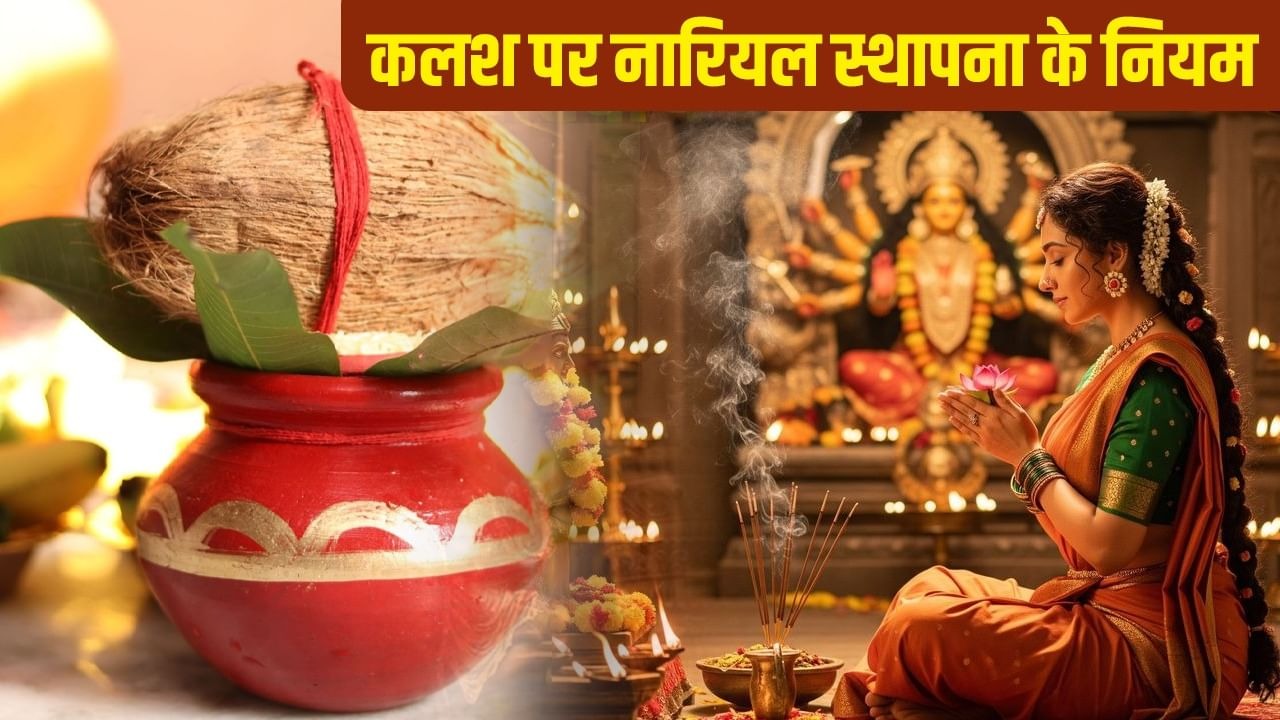
As soon as the holy festival of Navratri arrives, preparations for worship and celebration begin in every house. One of the most important rituals in these nine days worship is Diligence Or Kalash installationWe all see that a coconut is also placed with mango leaves above the urn.
But have you ever wondered why this coconut is so important? This is not just a fruit, but very deep religious and spiritual secrets are hidden behind it.
Why is the coconut placed on the urn so special?
Coconut in Hinduism ‘Shreephal’ It is said. ‘Sri’ means Goddess Lakshmi. Therefore, coconut is considered a symbol of happiness, prosperity, splendor and good fortune. Installing it over the Kalash means that we are inviting Goddess Lakshmi to our house.
- Symbol of Tridev: Three eyes made on coconut are considered a symbol of Lord Brahma, Vishnu and Mahesh (Shiva). That is, a small coconut resides in the trinity. By placing coconut on the Kalash, we also establish the power of the Tridevas in the puja.
- The holiest fruit: Coconut is a fruit that is hard from outside and soft, sweet and holy from inside. It is considered one of the pure fruits to offer to the gods.
- Renunciation of human ego: According to some beliefs, coconut is also a symbol of human head and ego. When we offer it to God, it means that we are dedicating our ego at the feet of God.
What is the correct method of installation of urn?
Kalash installation is not just a puja, but the process of installing the positive energy of the universe in a vessel.
- Choose the place: Sprinkle a place in the place of worship or in the north-east (north-east) by spraying Ganga water.
- Create Ashtadal: There, make Ashtadal (eight angles lotus) with kumkum or turmeric and place a little intact (without broken rice) on it.
- Install the urn: Take a soil or copper urn. Tie Molly (Kalava) around his neck and make a swastika on it.
- What to put in the urn: Fill Ganga water or clean water in the urn. Then add a coin, betel nut, durva, turmeric knot, akshat and flower.
- Mango leaves: Place 5, 7, or 9 mango leaves on the face of the urn.
- Keep coconut: Now take a coconut, wrap it on it and wrap it in a red cloth (chunri) and place it on top of mango leaves.
The most important thing to keep in mind: The face of coconut (on which it is connected to the branch) should always be towards the person who worships. Never keep coconut lying.
This Navratri, when you establish the urn, do these things in mind. It is not just a tradition, but is a sacred medium to call the energy of deities in his home.