 look news india

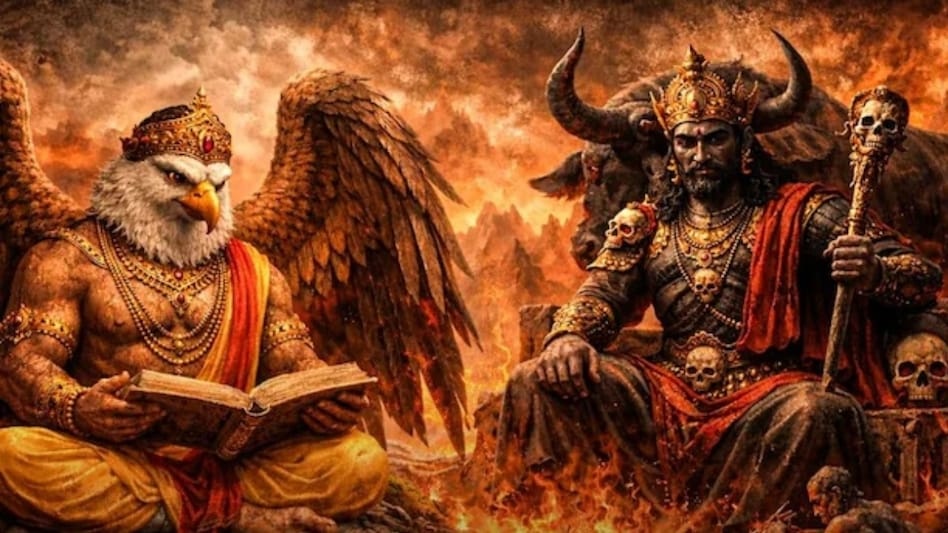
In Hindu religion, ‘Agni Sanskar’ is considered the most sacred and mandatory after death. It is believed that fire merges the body into the five elements and frees the soul from the bondage of illusion. But, you must have noticed that when small children die, they are buried instead of being cremated. Deep spiritual and logical reasons behind this are given in Garuda Purana and other scriptures.
Why are children not given Mukhaagani?
1. Purity and innocence of soul:
According to the scriptures, the purpose of Agni Sanskar is to burn the impurities of the body and free the soul from the bondage of karma. Small children are innocent and pure. They have neither committed any sin by coming into this world nor are they trapped in worldly attachments (such as money, property or relationships). Their souls are already considered pure and free, so there is no need to ‘purify’ them through fire.
2. Weak connection of body and soul:
From the spiritual point of view, man has three bodies – gross, subtle and causal body. In adults, these three bodies are very tightly connected to each other, and the energy of fire is required to separate them. In contrast, in children this association is very raw and simple. Their soul leaves the body easily without any external force.
What is the rule of Garuda Purana?
According to Garuda Purana, cremation of a child whose milk teeth have not yet erupted is prohibited. There is a tradition in various communities to bury children between 2 to 5 years of age. It is believed that till this age children do not develop the sense of ‘I’ and ‘mine’ (ego), due to which their soul has no attachment towards the body.
Scientific and natural approach
Soft body and brahma: Scientifically, the body of small children is very soft. the upper part of their head, which Brahmarandhra It is said that it does not close completely. This path for the exit of prana is already accessible, hence there is no need for a difficult process like ‘Kapal Kriya’ like that of elders.
Closeness to nature: Our body is made of soil and ultimately returns to the soil. Since the existence of children is considered closest to nature and Satvik, handing them over directly to the soil (Mother Earth) is considered the most natural and peaceful way.
emotional aspect
The death of a small child is unbearable for the family. The process of burial feels less horrific and peaceful than the fire rites. It gives psychological solace to the family that their child is resting safely in the lap of Mother Earth.