 look news india

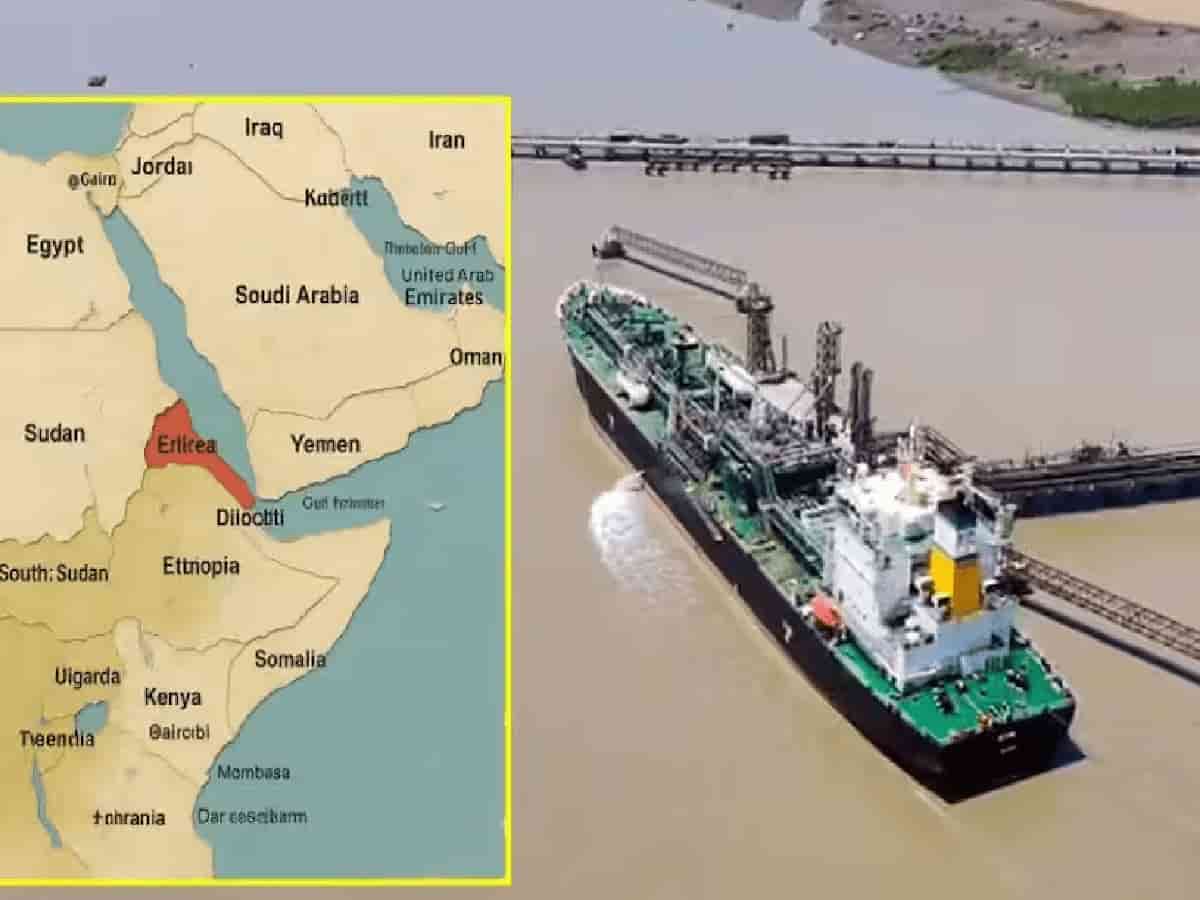
After the Strait of Hormuz, the southern gateway to the Red Sea, ‘Bab al-Mandab Strait’, has emerged as the world’s biggest flashpoint amid deepening clouds over international maritime trade and the global energy supply chain. The strategic sea route is facing unprecedented tensions after Yemen’s Iran-backed Houthi rebels launched a maritime offensive against Saudi Arabia and its allies. The question is increasingly being raised in international media and diplomatic circles whether Bab al-Mandeb is legally open or completely closed. On the ground, this waterway has not been formally declared closed under international maritime laws, but due to the direct military control of Houthi fighters, missile attacks, maritime drones and effective blockade, this route has undeclaredly become a ‘no-go zone’ for commercial shipping.
According to the latest reports from the prestigious international news agency Al Jazeera, the crisis has had a direct and devastating impact on the huge shipments of crude oil and refined petroleum products belonging to Saudi Arabia passing through Bab Al Mandeb. Saudi Arabia’s oil exports through this route have almost come to a standstill due to the Houthis’ strong artillery deployment and coastal surveillance at the mouth of this vitally important maritime chokepoint. Dozens of mega oil tankers (VLCCs) have had to anchor mid-sea or take the extremely long and expensive route around Africa and the Cape of Good Hope to their destination. This situation has not only increased pressure on Saudi Arabia’s economy, but also creates a new risk of a huge surge in global oil prices.
Strategically and geographically, the Strait of Bab el Mandeb is counted among the most fragile and important maritime chokepoints in the world. This narrow strait is located between the Arabian Peninsula (Yemen) and the Horn of Africa (Djibouti and Eritrea) of the African continent. This is the same sea waterway that connects the Red Sea in the north to the Gulf of Aden in the south-east and directly to the Indian Ocean. This is the only essential corridor for the entire maritime trade between Asia and Europe via the Mediterranean Sea and the Suez Canal. If a ship wants to pass through the Suez Canal, it has to go through Bab el Mandeb, apart from which there is no other alternative natural waterway.
The name ‘Bab Al Mandeb’ literally means ‘Gate of Sorrow’ or ‘Gate of Tears’ in Arabic. Historians and linguists say that it was so named due to the strong winds blowing in this narrow sea path, hidden rocks and huge loss of life and property due to sinking of ships in ancient times. There is also a mythological belief among the Arabs that in the distant past, an extremely destructive earthquake and a massive tsunami had killed thousands of people here, and the same terrible natural disaster had separated the Arabian Peninsula from the mainland of the Horn of Africa. In today’s modern times, this legendary ‘Gate of Sorrow’ has once again become synonymous with literal terror for seafarers and global trade around the world due to wars, missiles and geopolitical conflicts.
In recent times, the balance of ground and military control on Yemen’s western seaboard has completely changed. The Houthi rebels have advanced rapidly along the western coastline and have established effective military bases on several other major Red Sea islands, including the strategic Mayun Island (Perim Island), located in the middle of the Bab el-Mandeb. Tension reached its peak after July 20 in this entire triangle of Yemen’s west coast, the Red Sea and the Gulf of Aden. The Houthis officially announced the imposition of a complete maritime blockade of all ships, oil tankers and merchant boats belonging to Saudi Arabia in direct response to the economic sanctions and blockade imposed by Saudi Arabia on major ports and areas under their control in Yemen.
The direct result of this retaliatory blockade was that Saudi Arabia’s daily crude oil supply via the Red Sea route has completely collapsed. Although Saudi Arabia’s military leadership claims that its modern air force and navy are capable of destroying these coastal positions of Houthis in a single major military operation, Riyadh says that they are avoiding a direct heavy military attack in view of the humanitarian crisis and security of life and property of innocent civilians of Yemen. On the other hand, the Houthis have given a clear warning that until the siege of Yemen is completely ended, not a single Saudi oil tanker will be allowed to pass safely through the Red Sea.
This aggression of Houthi rebels has not been limited only to targeting ships in the open sea. They have also carried out deadly attacks using drones and ballistic missiles on civilian airports, major ports and major oil production and refining facilities of Saudi Aramco located within the borders of Saudi Arabia. These attacks have caused major damage to oil refineries and many civilians have also lost their lives. It is noteworthy that this civil war in Yemen has been going on since 2014, when Houthi rebels captured the capital Sanaa and large parts of northern Yemen. Since 2015, a Saudi Arabia-led military coalition has been supporting Yemen’s internationally recognized government, while Iran has been openly empowering the Houthis with weapons, missile technology and financial resources.
Amidst this deepening maritime crisis, a very important and emergency bilateral summit was recently held in the Egyptian capital Cairo between Egyptian President Abdel Fattah Al-Sisi and Saudi Arabia’s Crown Prince Mohammed bin Salman. In this meeting, both the leaders unanimously stressed on restoring the freedom of international navigation in Hormuz, Bab Al Mandeb and Red Sea at any cost. Both countries warned that if arbitrary occupation of these international chokepoints by any one rebel group continues, it will cause irreparable damage to the sovereignty of the entire Middle East and the global economy.
Egypt is suffering the biggest brunt of the Houthis’ control and attacks on Bab al-Mandeb. Bab el Mandeb is the main gateway directly from the Red Sea to Egypt’s Suez Canal and onwards to the Mediterranean Sea. When the Houthi group first threatened to paralyze global navigation by targeting merchant ships on the waterway nearly three years ago, shipping companies around the world diverted their ships to the remote route to Africa instead of the Suez Canal. According to Egyptian government officials, due to the Red Sea crisis, Egypt had to suffer a huge loss of about $ 11 billion (about Rs 90 thousand crore) in toll revenue from the Suez Canal, which is the largest and primary source of foreign exchange for the Egyptian economy.
Over the past two months, the Houthis have again begun targeting commercial ships in the Red Sea with drones and rockets. The Egyptian government is extremely worried by this new aggression and has appealed to immediately secure this major trade route connecting Asia and Europe. Experts believe that if this blockade of Bab Al Mandeb is not broken in the coming weeks, then there will be a huge increase in global freight rates and insurance premiums, due to which India, Europe and Asian countries may suddenly see huge inflation in the prices of imported goods, electronics and fuel.