 look news india

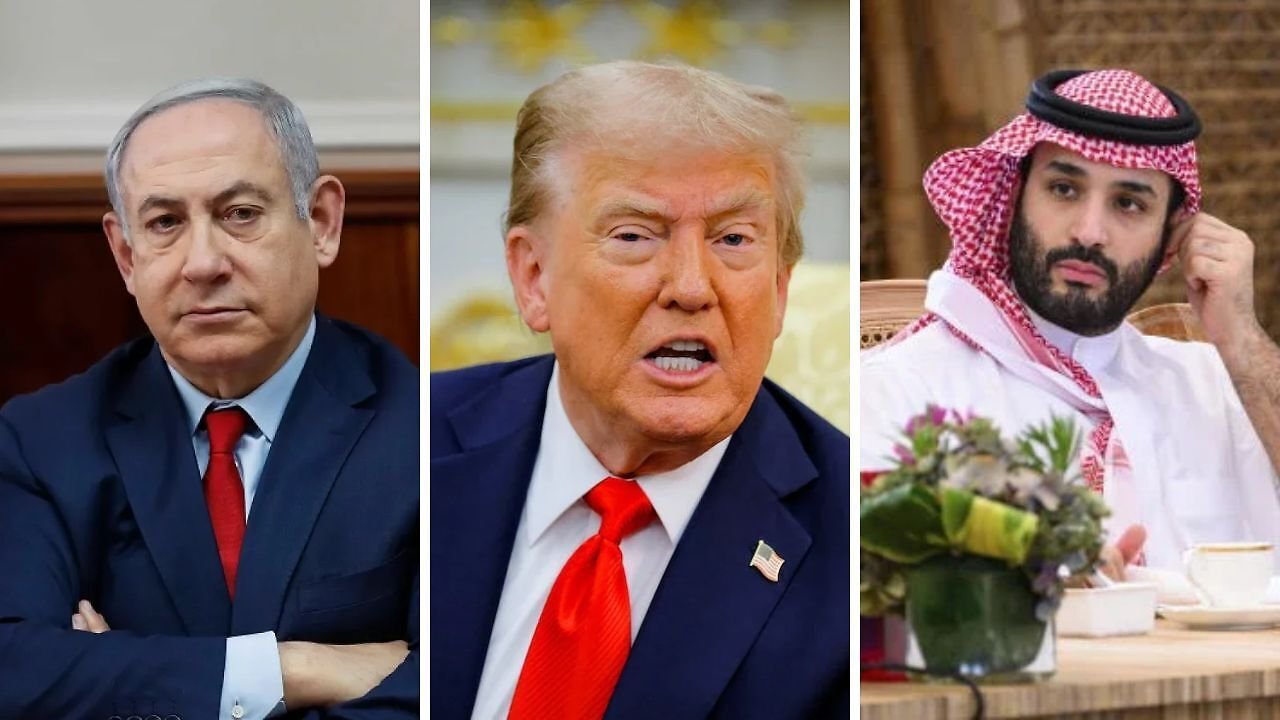
A statement by US President Donald Trump has created a stir in global diplomacy amid the increasing attacks by Yemen’s Iran-backed Houthi rebels in the Middle East, the blockade of ships in the Red Sea and the crisis looming over Saudi Arabia’s infrastructure. While talking to journalists, Trump openly said that Saudi Arabia should accept the offer of military and intelligence help given by Israel against the Houthis. Describing Israel’s cooperation as “extremely helpful”, Trump also claimed that the possibility of normalization, or the ‘Abraham Accords’ agreement, between Saudi Arabia and Israel is now stronger than ever. International affairs strategists from Lucknow to Washington, Tel Aviv and Riyadh are now analyzing whether this pressure from Trump will change the entire structure of decades-old Arab-Israeli diplomacy.
Over the past few weeks, Yemen’s Houthi rebels have stepped up their offensive inside Saudi Arabia. After the recent deadly missile and drone attacks targeting the King Khalid International Airport and oil plants in the capital Riyadh, serious questions have been raised on the internal and energy security of Saudi Arabia. In this background, the administration of Israeli Prime Minister Benjamin Netanyahu had made a direct proposal to Saudi Arabia to share air defense systems, radar tracking and joint intelligence surveillance on Houthi positions. Israel believes that the Houthi rebels are not only a threat to merchant ships and Israeli bases in the Red Sea, but that they are destabilizing the entire Gulf region.
This statement of Trump, which is going viral on WhatsApp and international media platforms, has created direct political pressure on the Saudi leadership. When Trump was asked whether Saudi Arabia should seek Israel’s help against the Houthis, he said without hesitation, “Yes, of course it should. Israel has been very helpful to Saudi Arabia.” He also claimed that Saudi Arabia is happy with the support of both Israel and the US and that the Abraham Accords are back on the table. The main agenda of Trump’s foreign policy has been to strategically engage Iran and its ‘Axis of Resistance’ (Houthi, Hezbollah, Hamas) by bringing the Sunni Muslim Gulf countries and Israel under a common defense umbrella.
Despite Trump’s open appeal, it is not easy for Saudi Arabia’s Crown Prince Mohammed bin Salman (MBS) to officially and publicly accept Israel’s military aid. There is widespread public anger against Israel across the Arab and Muslim world following the Gaza War and massive loss of life. Saudi Arabia has repeatedly reiterated that official diplomatic relations with Israel will not be established until a clear and irreversible roadmap for an independent Palestinian state with East Jerusalem as its capital is drawn up based on the 1967 borders. If Riyadh openly accepts Israeli military aid, the Houthis and Iran will publicize it throughout the Islamic world as a ‘Saudi-Jewish alliance’, which could deal a deep blow to Saudi Arabia’s image as the leader of the Islamic world.
If the ongoing behind-the-scenes intelligence cooperation is converted into a formal defense partnership, it will have far-reaching consequences:
-
Shared Air Defense Grid against Iran: The technology of Israel’s ‘Iron Dome’, ‘David’s Sling’ and ‘Arrow’ systems can provide impenetrable strength to Saudi Arabia’s ‘Patriot’ missile defense, which will enable the Houthis’ ballistic and cruise missiles to be destroyed in the sky.
-
Security of the Red Sea and Bab-el-Mandeb: Informal coordination of the Saudi and Israeli navies could secure the narrow Red Sea sea route through which about 12 percent of the world’s trade passes.
-
Extension of Abraham Accords: If Saudi Arabia increases security cooperation with Israel in any form, the stance of other Gulf countries like Oman, Kuwait and Qatar may also soften.
-
Increase in regional conflict: The Houthi leadership has already warned that any Saudi alliance with Israel would bring the Yemen war right back into Saudi cities.
Diplomatic experts believe that Saudi Arabia will prefer back-channel and secret intelligence sharing through the US rather than immediately signing any public military agreement. Riyadh wants to protect its regional oil projects and the ambitious economic goals of ‘Vision 2030’, which require a halt to Houthi attacks. This direct appeal by Trump has brought Saudi Arabia to a crossroads where it will have to strike a delicate balance between its sovereign security and its diplomatic credibility in the Muslim world.