look news india

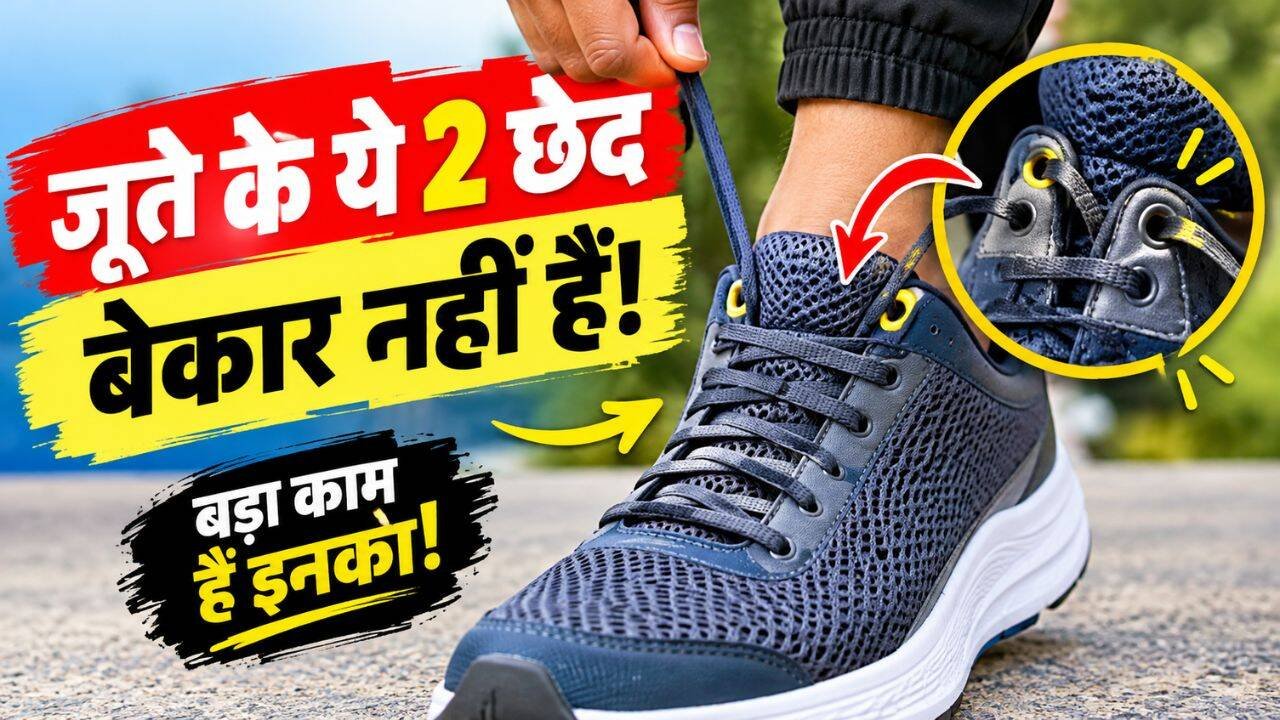
When buying sports shoes, sneakers or running shoes, you may have noticed that at the very end of the regular holes on the shoe laces, right near the ankle, there are two additional small eyelets. Most people ignore these as just a decorative design or part of additional fittings and leave these holes empty while tying the laces. But according to sports science and orthopedic experts, this is not a simple design but a very important engineering feature designed to protect the feet while running, jogging or working out. it in the world of athletics ‘Heel Lock’ Or Runner’s Lock Is called technology.
When we tie shoes normally, the foot slides back and forth inside the shoe while running or walking fast. This creates two main problems:
-
Abrasions and Blisters on Heel: Repeatedly lifting the foot up causes the heel to rub against the back of the shoe, causing the skin to peel and painful blisters to form.
-
Toe Crash and Blackening of Nails (Runner’s Toe): While running downhill, the foot slides forward, causing the toes and toes to hit the hard front part of the shoe. Due to continuous collision, blood gets accumulated in the toe nails and there is severe pain in the fingers.
When you create a ‘heel lock’ using the last holes, the shoe tightens around the ankle like a secure collar. This locks your heel firmly on the base of the shoe, preventing the foot from slipping back and forth, but also does not put any unnecessary pressure on the front toes.
This technique is very simple to use and does not require any additional accessories:
-
Create a loop: After threading the laces through the normal holes of the shoe, put the ends of the laces through the top extra hole on the same side. from outside to inside Enter. Do not pull it completely, but leave a small loop on the outside. Repeat the same process on the other side also.
-
Cross Crossing: Now take the lace on the right side through the loop on the left side, and take the lace on the left side through the loop on the right side.
-
Pull down and tie: Pull both laces firmly downwards and outwards rather than upward. By doing this, both the loops will tighten and your heel will be locked in place. After this, tie a normal knot as usual.
Apart from sports shoes, ‘Converse’ (Converse All-Star) or other canvas shoes are also provided with two metal holes on the side, just above the sole. They have two main purposes:
-
Ventilation and Air Circulation: There is no space for air circulation in these shoes made of cloth and rubber. These holes work as ventilation, due to which the sweat of the feet remains dry and the shoes do not smell.
-
Custom Tightening: If a person has very thin legs, he can make the shoes more tight and fitting in width by passing the shoe laces through these side holes.
-
Sprinters and Marathon Runners: Keeping the heels locked with every step during long distance running prevents injuries and sprains.
-
Gym and hikers: This is essential for ankle stability while running on a treadmill or climbing up and down mountains.
-
Wearing new shoes: If someone bites or blisters on the heel when wearing a new shoe, the Heel Lock technology reduces friction to zero from day one.