 look news india

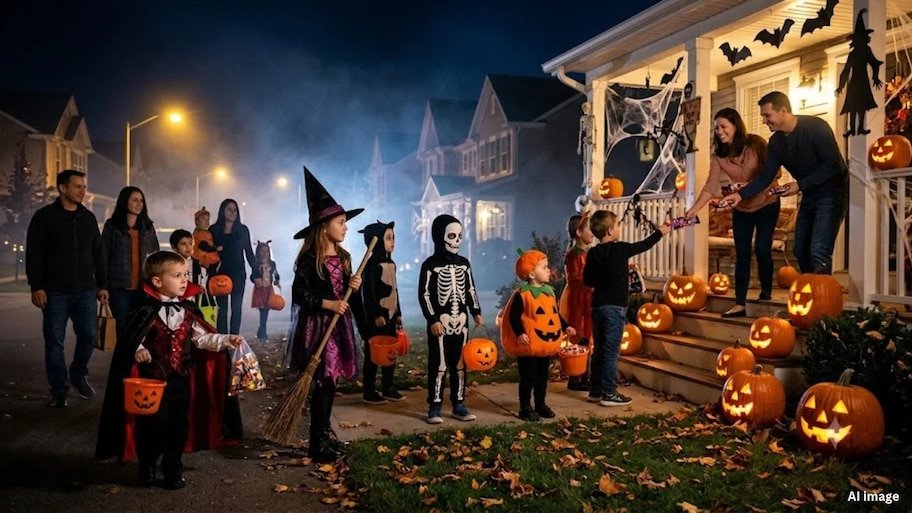
Halloween history and origin Samhain: Every year, as the evening of 31st October falls, a lot of strange and scary faces start appearing in many countries of the world. Someone becomes a vampire, someone wears a skeleton costume, and someone is seen wandering on the streets disguised as a ghost or a witch. Brightly carved pumpkins are placed outside homes and children go from door to door calling ‘Trick or Treat’. This ‘ghost festival’, which started in western countries, has today become very popular among the youth and children all over the world including India. But have you ever wondered how this festival associated with creepy symbols like spirits, skeletons and black magic began to be celebrated and why it is always celebrated on the night of 31st October? Behind it lies almost two thousand years old mysterious history and ancient beliefs.
Halloween did not originate from any modern party culture, but from an ancient religious ritual in Europe. About 2,000 years ago, people of the Celtic community lived in the areas of Ireland, the United Kingdom and northern France. According to the Celtic calendar, the new year started on 1 November. This date marked the end of summer and the harvest season and the beginning of the harsh, cold and dark winter. In ancient times, winter was often associated with human death and disease.
The Celtic people strongly believed that just on the night before the New Year, that is, on October 31, the boundary line between the worlds of the living and the dead becomes blurred. They believed that on this night the spirits, ghosts and ancestors of the other world return to earth. On this mysterious night they ‘Samhain’ Used to celebrate as a festival named.
Today people wear scary costumes on Halloween only for fun and photoshoots, but in ancient times the purpose behind it was to save their lives. The Celtic people believed that evil spirits wandering on the night of October 31 could harm living humans or identify them and take them with them.
To avoid this danger, people used to wear animal skins, skulls and scary masks while leaving their homes after sunset. They thought that when the evil spirits would see them in this scary form, they would also consider them to be ghosts or vampires and would move ahead without causing any harm. Along with this, to keep the wandering spirits calm and happy, people used to keep liquor, fruits and various types of sweet dishes at the main entrance of their houses.
The biggest and most famous symbol of Halloween is a hollowed-out pumpkin, on which scary eyes and teeth are carved and a candle is lit inside. It is called ‘Jack-o’-Lantern’. Behind this, there is a popular folk tale of ‘Stingy Jack’, a very interesting and vicious drunkard from Ireland.
According to the story, Jack, through his cunning, made the Devil climb a tree and made the mark of a cross on the tree trunk, due to which the Devil could not come down. Jack took a promise from Satan that he would never take his soul to Hell after he died. When Jack died, God did not allow him to enter Heaven because of his bad deeds and Satan did not allow him to enter Hell because of his old promise.
The devil only gave Jack a burning coal so that he could find his way in the darkness. Jack hollowed out the burning coal and placed it inside a turnip and since then his wandering soul has been wandering with the help of that light. The people of Ireland used to light lamps with scary faces carved in turnips on their windows to keep evil spirits and the shadow of Jack away from their homes. In the 19th century, when Irish people immigrated to America in large numbers, the easily available large yellow pumpkin began to be used instead of turnips, which has become the global identity of Halloween today.
When the Roman Empire conquered the Celtic lands during the 1st century AD, their traditional customs began to syncretize with Christianity. In the 8th century, Pope Gregory III established November 1 in honor of all Christian saints and martyrs. All Saints’ Day Dedicated as.
This holy day was then called ‘All-hallows’ in Old English. The evening just one night before All Saints’ Day, i.e. 31 October, came to be known as ‘All Hallows’ Eve’. Over time, this name colloquially shortened to ‘Hallowe’en’ and later formally became ‘Halloween’.
On Halloween, children dress up in strange costumes and ring the bells of neighbors’ houses and ask – ‘Trick or treat?’ It simply means “Either give us chocolate and candy (treat) to eat, otherwise we will do some mischief or prank (trick) on you.”
This tradition has its roots in the practice of ‘souling’ and ‘gaming’ of medieval England and Ireland. In those times, poor people and children used to go to rich houses and ask for ‘Soul Cakes’ (sweet breads) in exchange for prayers. They would promise that they would pray for the peace of the souls of the deceased ancestors of the house. In America in the middle of the 20th century, this tradition took on a very entertaining and friendly form, which has become the most exciting part of the children’s festival today.
This fear and superstition of ancient times has today transformed into a colorful, social and creative festival in the modern era, where people forget the busyness of their daily lives and immerse themselves in the colors of imaginary world and fun.